
The Golden Age of Curtains Twitching
There was a time, long ago, when being a neighborhood busybody required actual physical effort. You had to stand by the window, part the blinds with two fingers, and physically remember if that silver Honda Civic belonged to the Johnsons or the guy delivering the mail. It was an analog life, fraught with the risk of being seen by the very people you were judging. But thanks to the $4 billion valuation of companies like Flock Safety, we have finally automated the process of being a suspicious prick.
Now, the suburban resident doesn't need to look outside. They can sit in their climate-controlled living room and receive a push notification every time a vehicle enters the neighborhood that doesn't belong to the "authorized" list. It’s like a VIP club for people whose only personality trait is owning a lawnmower. Lawmakers are suddenly scrambling to introduce bills to curb this, which is hilarious because they spent the last decade pretending these private surveillance nets weren't just the Stasi with better branding.
The Algorithm of Infinite Suspicion
Flock’s business model is a masterpiece of psychological manipulation. They sell the idea that "safety" is just a matter of capturing enough metadata. If you can track every plate, every make, and every model 24 hours a day, you aren't just a guy living in a 3-bedroom ranch; you’re the Director of Homeland Security for Maple Street. This shift in identity is profound. The moment a resident installs an ALPR (Automated License Plate Reader), their brain undergoes a chemical transition from "neighbor" to "amateur detective with no training and too much free time."
- The system captures images of every car.
- It logs them into a searchable database shared with local police.
- It alerts the neighborhood group chat if a "suspicious" car lingers too long.
- It creates a permanent record of the pizza guy's Tuesday night habits.
This isn't about solving crimes. Statistically, your neighborhood is already safer than a padded room in a library. This is about the dopamine hit of "catching" someone doing something as nefarious as turning around in a driveway. We have successfully gamified paranoia. The 404 Media investigation highlighted how these networks create a feedback loop where every unfamiliar car is a predator and every delivery driver is a scout for a burglary ring. It’s a hobby for people who find crossword puzzles too challenging.
Community Trust on a Digital Bonfire
Nothing says "we’re a tight-knit community" like an invisible net of cameras logging your friends' license plates when they come over for a barbecue. We are witnessing the total death of the benefit of the doubt. In the old days, if you saw a car you didn't recognize, you might assume they were lost. Now, the algorithm flags them, the app pings, and the neighborhood Facebook group erupts into a frenzy of speculation about "casing the joint."
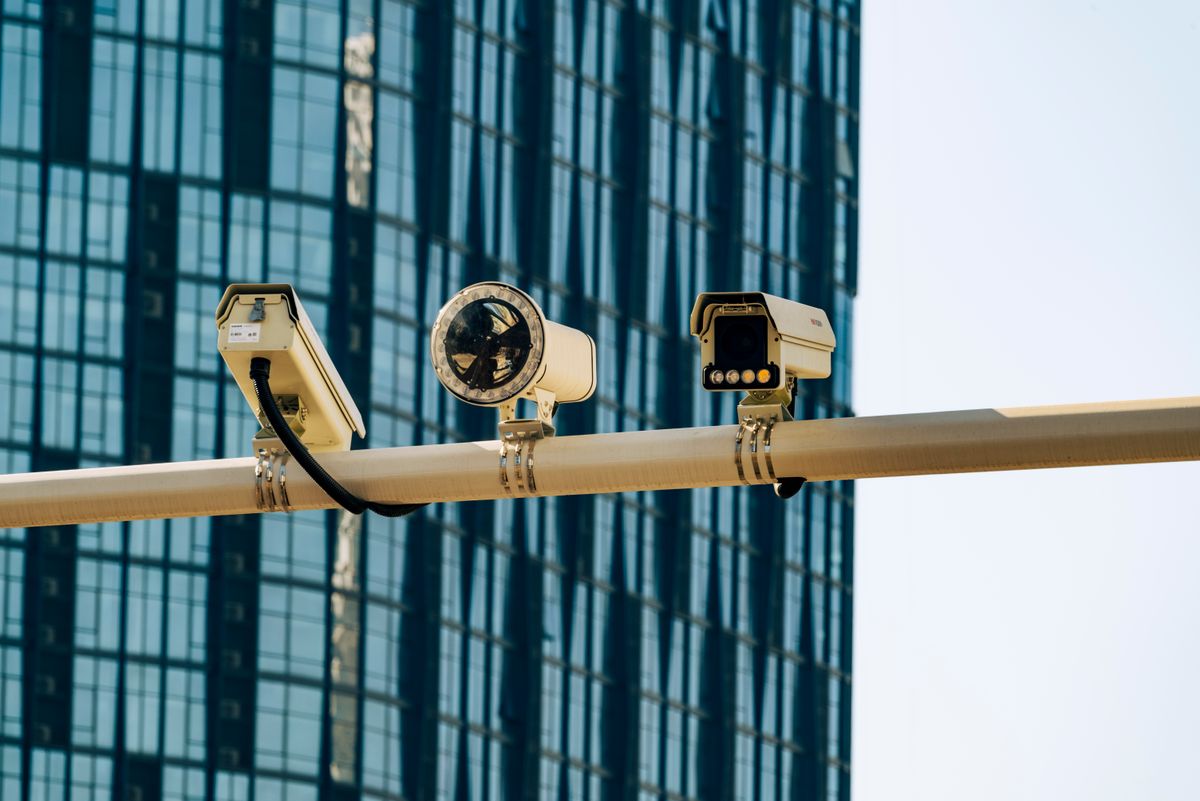
Photo by Star Zhang on Pexels
This technology creates a digital gated community without the physical gates. It’s a psychological barrier that tells everyone else they are being watched by an unblinking, unthinking eye. It turns the simple act of driving down a public road into a data point. The irony is that the people buying these systems think they are buying peace of mind. In reality, they are buying a front-row seat to a horror movie they are writing themselves. They spend their evenings scrolling through logs of silver SUVs, looking for the monster that isn't there.
What This Actually Means
The legislative pushback currently happening—with bills aimed at limiting data retention or banning private-police data sharing—is a classic case of closing the barn door after the horse has already been uploaded to the cloud. We’ve allowed private companies to build a national surveillance infrastructure by selling it one HOA at a time. It’s a brilliant strategy: why fight the government for funding when you can get Karen from the block association to pay for the cameras out of the neighborhood landscaping budget?
Ultimately, this isn't a tech problem; it's a character flaw. We’ve become a society that prefers the cold comfort of a database over the messy reality of knowing our neighbors. We want to feel safe, but we’ve confused "safety" with "control." The more we track, the more we fear. The more we fear, the more we track. It’s a spiral that ends with us all sitting in our dark houses, staring at our phones, waiting for an alert that someone has dared to exist in our general vicinity.
If the goal was to make neighborhoods feel like high-security prisons where the inmates pay the guards, then mission accomplished. We can finally sleep soundly, knowing that the 2014 Ford Focus that just drove by has been logged, tagged, and filed away in a server farm in Virginia. Sleep well, everyone. The algorithm is watching, even if your neighbors aren't talking to you anymore.
Quick Answers
Is this legal?
Mostly, yes, because privacy laws in the U.S. have the structural integrity of wet tissue paper when it comes to "public" spaces.
Does it actually stop crime?
It’s great for finding stolen cars after they've already been stolen, but mostly it just generates a lot of high-definition footage of people's bumpers.
Why are lawmakers acting now?
Because journalists finally pointed out that having a private company own a map of everyone’s movements is a bit of a PR nightmare for a "free" country.

