The Privilege of Owning Your Own Plastic
We should all take a moment to thank the hardware giants who, for years, have graciously allowed us to use their $150 mice only after we’ve installed a 450MB suite of software that starts up with Windows, tracks our location, and occasionally asks us to create a cloud account just to set a macro. It’s a beautiful system. Why would anyone want a peripheral to just work when they could instead have a dedicated 'experience center' that consumes 2% of their CPU cycles while they play Minesweeper?
Keychron has decided to ruin this perfect ecosystem by introducing QMK/VIA support to their new gaming mice. By making the firmware open-source, they are effectively telling the industry that we don't actually need a proprietary 'Gaming Engine' to tell a piece of hardware how to act like a mouse. It’s a terrifying precedent. If this catches on, people might start expecting their lightbulbs and refrigerators to function without a mandatory firmware update and a privacy policy agreement.
A Moment of Silence for the Bloatware
Think of the poor developers at Razer, Logitech, and SteelSeries who have spent years perfecting the art of the 'System Tray Icon.' These visionaries worked tirelessly to ensure that if you want to change your DPI from 800 to 1600, you have to navigate a UI designed by someone who clearly misses the aesthetic of 2005-era Winamp skins. Now, Keychron comes along and says you can just use a web browser to rebind keys and save them directly to the onboard memory. No background tasks. No 'updates available' popups in the middle of a clutch play. It’s almost like they think the hardware belongs to the person who paid for it.
This 'Right to Refine' is a direct assault on the lucrative business of data harvesting disguised as hardware utility. When your mouse software doesn't need to 'phone home' to check for the latest RGB profile of a game you don't even own, a small piece of the corporate dream dies. We’re losing the vibrant culture of having seventeen different 'Update Helpers' fighting for dominance in our Task Manager. Is this the world we want? A world of efficiency and local control? Truly, we are lost.

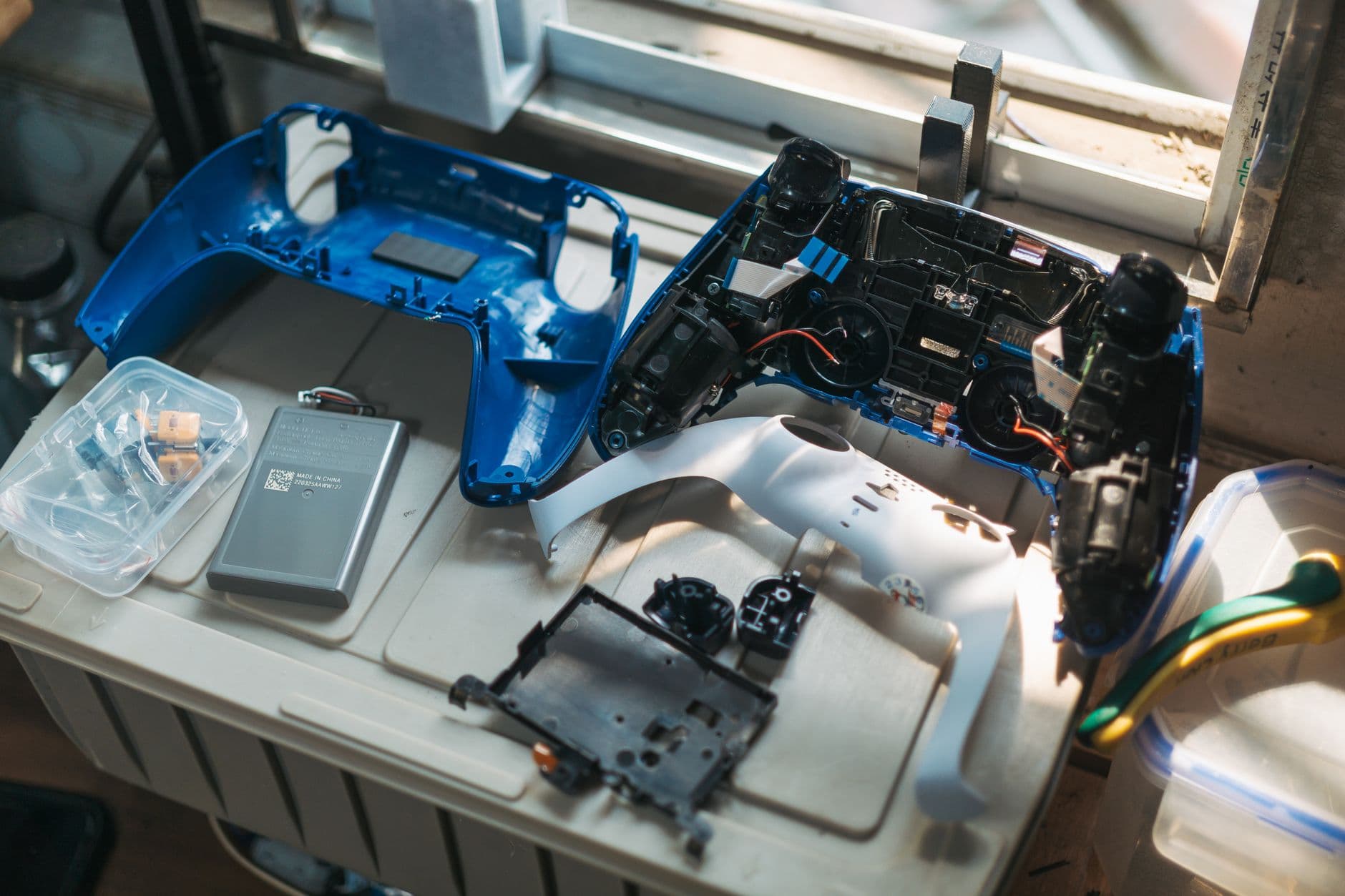
Photo by Andrey Matveev on Pexels
The High-Performance Canvas of Low-Level Code
For the uninitiated, QMK (Quantum Mechanical Keyboard) firmware is essentially the Linux of the peripheral world. It allows you to write actual code to define what happens when you click a button. In the hands of a normal person, this means the mouse does exactly what it’s told. In the hands of a power user, it means the mouse can probably be programmed to calculate their taxes or launch a localized cyberattack. The horror of it all is that once the code is flashed to the device, it stays there. You can plug that mouse into a library computer from 1998 and your custom '360-degree-no-scope' macro will still work.
Manufacturers hate this because it turns the mouse into a finished product rather than a service. If the hardware is a 'locked-down black box,' the company maintains a tether to your desktop. They can 'optimize' your experience by showing you ads for their new headset inside the mouse configuration tool. By opening the firmware, Keychron is cutting the umbilical cord. They’re suggesting that a mouse is a tool, not a subscription-to-brand-loyalty starter kit. It’s a level of transparency that makes most marketing departments break out in hives.
What This Actually Means
This shift isn't actually about the 0.01% of people who will write custom C++ scripts for their left-click. It’s a middle finger to the 'Software-as-a-Service' creep that has infected every physical object we buy. When hardware is open, it lasts longer. You don't have to throw away a perfectly good sensor in five years because the manufacturer decided to stop updating the 'Synapse' or 'G-Hub' version that supports it. It’s a move toward actual sustainability, which is much less profitable than planned obsolescence.
Keychron is betting that gamers are tired of being treated like telemetry nodes. They’re betting that we’d rather have a device that does exactly three things—track, click, and remember its settings—than a device that tries to be our best friend and social media manager. It’s a cynical, logical, and deeply refreshing approach to consumer electronics that will hopefully make the rest of the industry feel as bloated and unnecessary as the software they force us to install.
Quick Answers
Does this mean I have to learn how to code to use a mouse?
No, VIA provides a simple web interface that lets you drag and drop functions, though you're welcome to spend six hours in a terminal if you're feeling lonely.
Will this make me better at games?
It will remove the input latency caused by your bloated 'Gaming Suite' fighting for CPU resources, but it won't fix your terrible aim.
Why don't the big brands do this?
Because it's hard to sell your data to advertisers if the software that collects it doesn't exist.


