The Seven-Meter Problem
I’ve been staring at the specs for the New Glenn fairing, and the scale is starting to make my head swim. Most of the rockets we use today are essentially skinny pencils trying to poke holes in the sky. They are constrained by the 'Standard 5-meter' fairing, which sounds large until you realize that building a space station inside one is like trying to furnish an apartment by only bringing in things that fit through a mail slot. Jeff Bezos is building a seven-meter wide garage door to the stars, and I can't help but wonder what happens to our imagination when the physical walls finally move back.
For years, the conversation has been dominated by Falcon 9's cadence—launch, land, repeat. It’s impressive, but it’s a logistics play. New Glenn is a volume play. If the maiden flight scheduled for late 2024 actually clears the tower, we stop talking about how to fold things up like origami and start talking about how to build things that actually stay up there. It feels like we’ve been building the internet using only dial-up modems, and someone is about to hand us a fiber-optic cable the size of a redwood tree.
Why Methane is the Flavor of the Future
The engines powering this beast, the BE-4s, run on liquid oxygen and liquefied natural gas (methane). This isn't just a random chemistry choice; it’s a bet on a specific kind of future. Methane is the 'clean' fuel of the orbital world—it doesn't leave the gummy, carbon-heavy soot that kerosene (RP-1) leaves behind in engine guts. If you want to fly a rocket 25 times without taking the whole thing apart, you need an engine that doesn't choke on its own exhaust.
I wonder if we realize how much of our space history has been dictated by the fact that our engines were essentially high-performance grenades that we hoped wouldn't explode. The BE-4 is designed to be a workhorse, a truck engine for the vacuum. Blue Origin has already delivered these to United Launch Alliance for the Vulcan rocket, so we know the hardware works. But seeing seven of them ignited at once under a 320-foot tall booster? That is a different kind of data point entirely.
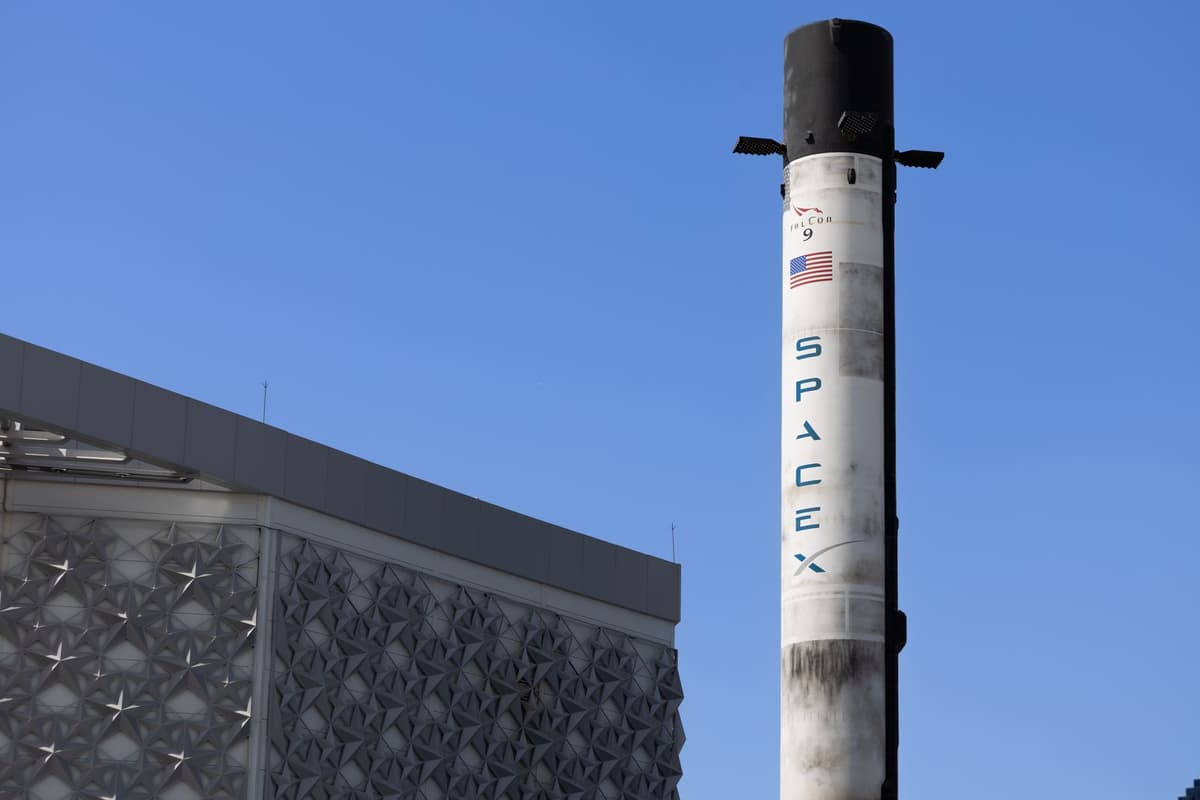
Photo by iCliff Agendia on Pexels
The Industrial Revolution Needs a Floor Plan
We keep hearing the phrase 'orbital industrial revolution,' but what does a factory in space actually look like? It probably doesn't look like the International Space Station, which is a cramped hallway of wires and experiments. If New Glenn can loft 45 metric tons to Low Earth Orbit in a reusable configuration, we are talking about massive, continuous payload volume. We are talking about the infrastructure for Amazon’s Project Kuiper, yes, but also for things we haven't named yet.
Consider the math of a mega-constellation. You aren't just launching satellites; you are launching a shell of infrastructure. If you can fit three times as many satellites under one fairing because the fairing is wider, the economics of the entire planet's connectivity shift. I find myself wondering if the 'bottleneck' isn't the cost of the fuel or the hardware, but the sheer lack of square footage in our current rockets. We've been living in a world of studio apartments, and Bezos is building a warehouse.
- Payload Volume: New Glenn’s fairing offers double the usable volume of any 5-meter class rocket.
- Reusable First Stage: Designed for 25 missions, aiming to undercut the disposable market entirely.
- The BE-4 Engine: 550,000 lbs of thrust per engine, using deep-throttling tech for precision landings.
What This Actually Means
If New Glenn succeeds, the 'space race' stops being a vanity project between billionaires and starts being a mundane utility. That sounds boring, but boring is where the revolution happens. Boring is the interstate highway system. Boring is the shipping container. We are moving from the era of the 'brave explorer' to the era of the 'orbital contractor,' and while that lacks some of the mid-century glamour, it’s the only way we actually get to stay out there.
The real test isn't just the fire and smoke of the first launch. It’s whether Blue Origin can manufacture these things at a scale that matches their ambition. They’ve built a 1.5 million-square-foot factory in Florida to do exactly that. You don't build a factory that size to launch once a year. You build it to change the fundamental throughput of the planet. I’m watching that launchpad not just for a rocket, but for the moment the ceiling on what we can carry finally disappears.
Quick Answers
Is New Glenn bigger than SpaceX's Falcon Heavy?
In terms of physical height and fairing volume, yes, it is significantly larger. While Falcon Heavy can lift more mass in its fully expendable mode, New Glenn is designed specifically for high-volume, reusable heavy lift.
Why has it taken so long to get to the launchpad?
Blue Origin's philosophy is 'Gradatim Ferociter' (Step by Step, Ferociously), which in practice has meant perfecting the BE-4 engine and the massive New Glenn structures before attempting a flight. They chose to skip small orbital rockets and go straight to the heavy-lift category.
What is the 'bottleneck' everyone is talking about?
Currently, there is more demand for satellite launches than there are available rockets. This 'launch gap' is delaying global internet projects and new space stations; New Glenn is intended to be the high-capacity bridge that closes that gap.


