
Your Car Is Not Your Car
There is a profound, almost spiritual joy in realizing that the $45,000 piece of German engineering sitting in my driveway doesn't actually belong to me. Sure, my name is on the title, and I’m the one paying the insurance premiums, but the software inside treats me like a suspicious houseguest who might accidentally steal the silverware. I wanted to change the clock from Daylight Savings Time. The car, in its infinite, cloud-connected wisdom, decided that this was a privilege I hadn't earned.
In the old world—the dark ages of the 1990s—you changed the time by pressing a button labeled 'Clock.' It was a radical, lawless time. Today, my vehicle’s clock is tied to a GPS module that is tied to a cellular data plan that expired three months ago. Because I declined to pay $15 a month for 'Connected Services,' my car has decided to live in a permanent state of 1:00 PM in late October. It’s a bold aesthetic choice, but it makes me late for dental appointments.
To fix this, I had to download a suite of 'unauthorized' diagnostic tools from a forum hosted in a country that I’m pretty sure doesn't have an extradition treaty with the United States. I had to bypass three layers of encrypted firmware just to tell the dashboard that the sun stays up an hour longer now. I’m not a mechanic anymore; I’m a digital insurgent fighting a guerrilla war against my own infotainment system.
The Subscription to Existence
Manufacturers have finally realized that selling you a product once is a terrible business model. The real money is in holding your own hardware hostage and charging you a ransom to use the features you already paid for. We are moving toward a future where 'ownership' is just a long-term rental agreement with a very aggressive Terms of Service. If you don't keep the credit card on file updated, your heated seats turn into blocks of ice and your high beams start asking for a 5-star review.

Photo by Daniel Andraski on Pexels
This isn't just about cars, though they are the loudest offenders. It’s the printer that refuses to scan a document because you’re low on cyan ink. It’s the smart lightbulb that requires a firmware update and a Facebook login before it will agree to illuminate your hallway. We have surrounded ourselves with plastic and silicon snitches that report back to the mothership every time we try to exert a modicum of control over our environments.
We call this 'innovation' because calling it 'extortion via code' sounds a bit too honest for a quarterly earnings call. The goal is to create a frictionless experience, where the friction only occurs when you try to fix something yourself. If you can't open the casing without a proprietary pentalobe screwdriver and a prayer, you don't own it. You’re just the guy who gets to pay for the repairs when the planned obsolescence kicks in right on schedule.
The Right to Tinker is a Felony
The Digital Millennium Copyright Act (DMCA) was originally intended to stop people from pirating Metallica albums, but it has evolved into a magnificent shield for companies that hate the idea of a local repair shop. By claiming that changing your own settings or repairing a screen is 'circumventing digital rights management,' corporations have successfully turned the act of tinkering into a legal gray area.
I am technically a 'hacker' now because I wanted my speedometer to be accurate. I am the Neo of the 2022 crossover SUV segment. The sheer absurdity of needing a 'jailbreak' for a toaster or a tractor is the peak of our current civilization. John Deere, for instance, has spent years convincing farmers that they don't actually own the software that runs their harvesters. If a sensor blows in the middle of a harvest in Iowa, the farmer has to wait for a certified technician to drive out with a laptop, rather than just swapping the part and moving on with their life.
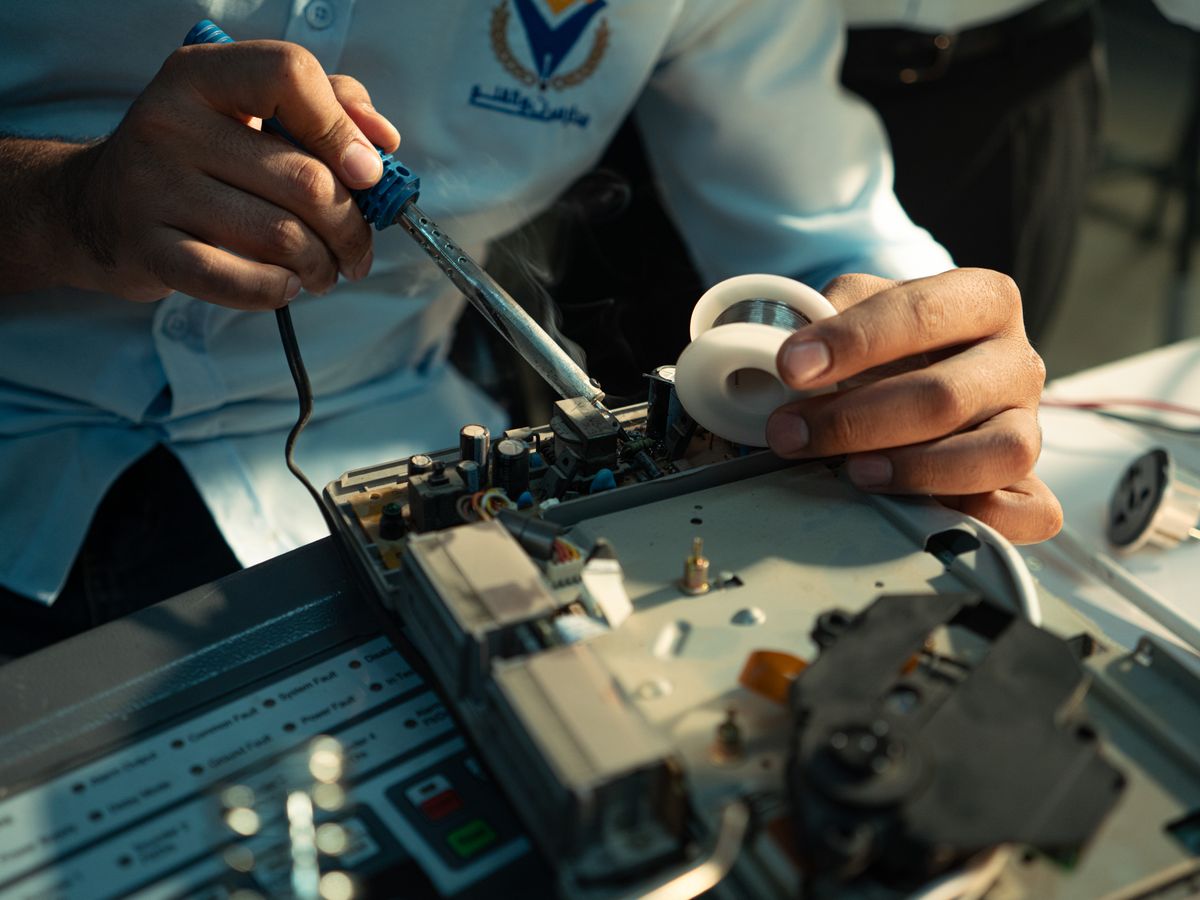
Photo by khezez | خزاز on Pexels
This trend toward 'Software-Defined Everything' is really just code for 'User-Defined Nothing.' When everything is a service, nothing is yours. We are building a world of disposable, unfixable bricks that we lease from billionaires who would prefer we didn't ask too many questions about why the clock is wrong.
What This Actually Means
We are sleepwalking into a state of digital serfdom where we occupy our lives at the pleasure of the manufacturer. The 'Right to Repair' movement isn't just about being able to swap a battery; it’s about the fundamental principle that if you buy something, you should be allowed to break it, fix it, or change the clock on it without asking for permission.
If we continue to accept that 'software' is a magic word that cancels out property rights, we shouldn't be surprised when our homes, cars, and even our medical devices start demanding a monthly subscription to keep functioning. I shouldn't need a PhD in computer science and a burner laptop to adjust the GMT offset on my dashboard.
The fact that I had to 'jailbreak' my car to change the time isn't a success story of my technical prowess. It’s a depressing indictment of a consumer landscape that views the customer as a nuisance to be managed rather than an owner to be respected. Next time, I think I’ll just wear a watch. Assuming the watch manufacturer doesn't push a mandatory update that disables the hands until I watch a 30-second ad.
Quick Answers
Is it illegal to jailbreak my own car?
It depends on who you ask and which lobbyists paid for the last round of legislation, but generally, the DMCA makes 'circumventing access controls' a legal minefield. Most manufacturers will tell you it voids your warranty and possibly summons a demon.
Why can't I just change the time in the settings?
Because your car's UI was designed by a committee that believes 'user autonomy' is a bug, not a feature. They want you to stay connected to their ecosystem so they can harvest your driving data and sell it to your insurance company.
Will Right to Repair laws fix this?
They are a start, but as long as features are locked behind server-side authentication, a screwdriver won't help you. We need laws that mandate local, offline control for basic hardware functions.


