
For two decades, the world treated Iraq as a piece of terrain where outside actors worked out their grievances. Washington, Tehran, and Ankara used Baghdad as an arena, measuring influence in militia counts, air strikes, and broken alliances. That legacy has cost Iraq trillions in lost human capital and locked its economy into an oil-dependent coma. Now, the Iraqi state is attempting something fundamentally different: securing its sovereignty through concrete, steel, and logistical gravity.
The initiative is known as the Development Road, a $17 billion transit spine consisting of 1,200 kilometers of high-speed rail and multi-lane highway stretching from the Grand Faw Port on the Persian Gulf to the Turkish border at Fishkhabur. Signed into an initial quadripartite agreement in April 2024 between Iraq, Turkey, Qatar, and the United Arab Emirates, the project is an assertion of agency. Iraq is no longer asking to be protected; it is trying to make itself indispensable.
The Geography of Survival
To understand the Development Road, you have to look at the geography of friction. Ships moving between East Asia and Europe currently face high insurance premiums, naval skirmishes in the Red Sea, and the physical bottleneck of the Suez Canal. The route around the Cape of Good Hope adds ten to twelve days of steaming time. Iraq is offering a land bridge that trims transit between the Gulf and European railheads down to twenty-five days total.

Photo by Wolfgang Weiser on Pexels
This is not a standalone highway through the desert. It anchors to the Grand Faw Port, an engineering venture already consuming billions in state capital along the southern tip of the Al-Faw peninsula. If the port achieves its planned capacity, it will outstrip Dubai's Jebel Ali in raw container volume by the late 2030s. Infrastructure at this scale forces neighbors to cooperate. War is easy when the land is empty or chaotic. It becomes expensive when every artillery barrage risks shutting down a rail corridor moving billions of dollars in daily trade.
- The project integrates 1,200 kilometers of dual-track electrified rail capable of moving passenger trains at 300 km/h and freight at 140 km/h.
- Parallel expressways will facilitate freight trucks, cutting transit time across Iraq to under sixteen hours.
- Energy pipelines and fiber-optic backbones will run alongside the transit corridor, tying Turkey's grid deeper into Gulf power generation.
Baghdad wants to make regional stability lucrative. When stability pays dividends, sovereignty ceases to be an academic concept.
Challenging Two Competing Visions
The corridor does not exist in a vacuum; it cuts directly across two competing global logistics blueprints. To the east, Iran has spent decades trying to position itself as the sole north-south gateway through the International North-South Transport Corridor (INSTC), aiming to link Russia and India through Iranian rail lines. A successful, modern transit route through Iraq that bypasses Iranian territory entirely threatens to undermine Tehran's economic leverage. Iran cannot easily shut down a highway in which its own regional partners, Qatar and the UAE, have invested capital.
To the south sits the India-Middle East-Europe Economic Corridor, or IMEC, unveiled at the 2023 G20 summit in New Delhi. Backed heavily by the United States, IMEC envisions goods moving from India to the UAE by sea, across Saudi Arabia and Jordan by rail, into the Israeli port of Haifa, and then onward to Europe. Yet the political architecture of IMEC fractured after October 7, 2023. Normalization between Saudi Arabia and Israel is stalled indefinitely, leaving IMEC suspended in diplomatic limbo.
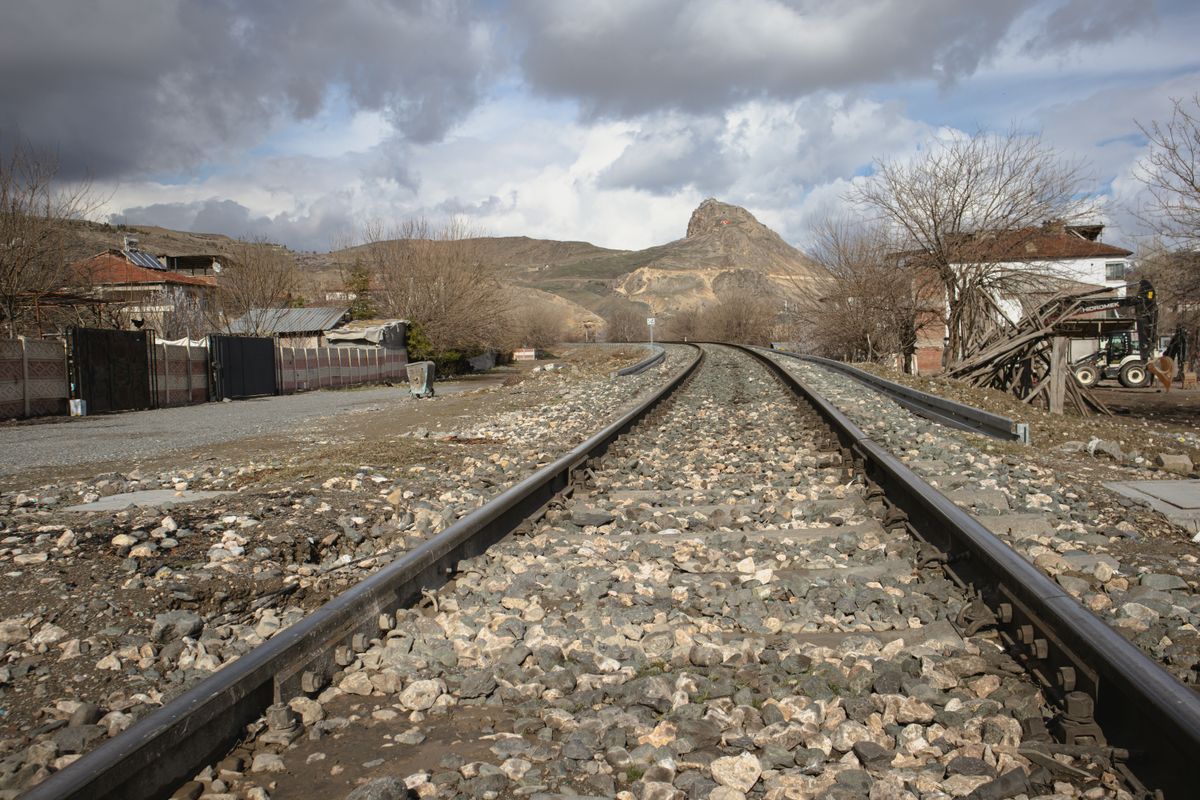
Photo by Zülfü Demir📸 on Pexels
Iraq is stepping into that vacuum. While Western and Gulf planners debate the feasibility of routing rail through the Levant, the Development Road offers an alternative that bypasses Israel entirely, integrates Turkey—a NATO power furious at being excluded from IMEC—and links the Gulf monarchies directly to European consumer markets. Turkey’s President Recep Tayyip Erdoğan was explicit on this point: there is no corridor without Turkey. Iraq has handed him the leverage he wanted, and Turkey has handed Iraq an economic lifeline to the West.
The Obstacles Beneath the Pavement
Ambition does not guarantee execution, especially in Mesopotamia. Iraq must surmount institutional failures that have wrecked previous modernization efforts. Corruption within state contracting remains a structural hazard. Entrenched political factions often view infrastructure projects not as national assets, but as opportunities for patronage and rent extraction.
Security is equally volatile. The proposed northern alignment runs dangerously close to areas where Turkish armed forces routinely engage the Kurdistan Workers' Party (PKK) inside Iraqi territory. To safeguard the route, Baghdad recently banned the PKK, signaling a rare security alignment with Ankara. Yet southern Iraq presents its own risks. Iran-aligned armed groups have run illicit protection economies around ports and borders for years. If these militias perceive the Development Road as an existential threat to Tehran's transit dominance, sabotage remains an ever-present contingency.
Finally, financing demands sustained discipline. Iraq expects to fund its share through oil revenues and sovereign bonds, but oil prices are notoriously volatile. Relying on Gulf sovereign funds requires Baghdad to maintain an investment climate with legal guarantees, regulatory transparency, and dispute-resolution mechanisms that currently do not exist in Iraqi commercial law.
What This Actually Means
The Development Road is fundamentally an argument about what kind of country Iraq intends to be. If it fails, Iraq remains an oil well encircled by rival militias, vulnerable to the strategic whims of Washington and Tehran. If it succeeds, even partially, it permanently changes the balance of power in Southwest Asia.
By tethering Gulf capital to Turkish manufacturing and European demand, Baghdad is constructing a network of dependencies that make its internal stability an international imperative. For a generation, Iraq has been shaped by the foreign policies of other nations. Through this seventeen-billion-dollar transit line, it is finally writing a foreign policy of its own.
The real test will not be whether engineers can lay tracks across Nineveh and Basra. The test is whether Baghdad's political class can resist cannibalizing the project long enough for the first freight train to reach the border.
Quick Answers
What is the Development Road project?
A $17 billion infrastructure initiative by Iraq to construct a 1,200-kilometer rail and highway corridor connecting the Persian Gulf to Europe via Turkey.
How does this project impact Iran's regional influence?
It bypasses Iranian territory, offering a direct alternative to Tehran-controlled trade corridors and diluting Iran's ability to use transit routes as geopolitical leverage.
Why does Turkey support the Iraqi route over IMEC?
The Western-backed IMEC project bypasses Turkey entirely through Israel and Greece, whereas the Iraqi corridor terminates at the Turkish border, positioning Ankara as Europe's primary gateway to Gulf trade.
When is the Development Road scheduled for completion?
The first phase, centered on the operational launch of the Grand Faw Port and the southern rail links, is targeted for completion by 2028, with full multi-phase completion projected by 2050.

