
The Mystery of the Identical Electron
Every time I flip a light switch, I’m participating in a massive, invisible auction. But here is the part that keeps me up: an electron doesn't know who owns the wire it's traveling through. It doesn't get faster or 'higher quality' because a board of directors in another state is monitoring the quarterly earnings report. Yet, according to recent data, if you get your power from an investor-owned utility (IOU), you are likely paying roughly 23% more than your neighbor three towns over who gets theirs from a municipal provider.
I’m trying to wrap my head around where that 23% actually goes. It isn't just a 'profit margin'—that would be too simple. It represents a fundamental friction between two entirely different reasons for existing. One organization exists to keep the lights on so the mayor doesn't get fired; the other exists to ensure a 7% dividend growth rate so the CEO doesn't get fired. Both are logical systems, but they produce wildly different monthly bills for the exact same physical reality.
The Friction of Fiduciary Duty
There is this concept called 'Incentive Friction' that I’ve been chewing on. In a standard market, if a company raises prices by 23%, you go to their competitor. But utilities are natural monopolies. You can't exactly run your own copper wire to the next county because you're annoyed with the service fee. This creates a strange paradox where the utility’s legal obligation to maximize shareholder value actually creates an incentive to make the service more expensive, not more efficient.
Think about how IOUs are regulated. In many states, they aren't allowed to make a profit on the electricity itself; instead, they earn a guaranteed rate of return on 'capital expenditures.' If they build a $100 million substation, they get to charge customers enough to recoup that plus a 10% profit. If they find a way to fix the old substation for $10 million, they actually make less money for their shareholders. Why would any rational actor choose the cheaper path in that scenario? It’s a system that seems designed to prioritize gold-plated infrastructure over lean operations.
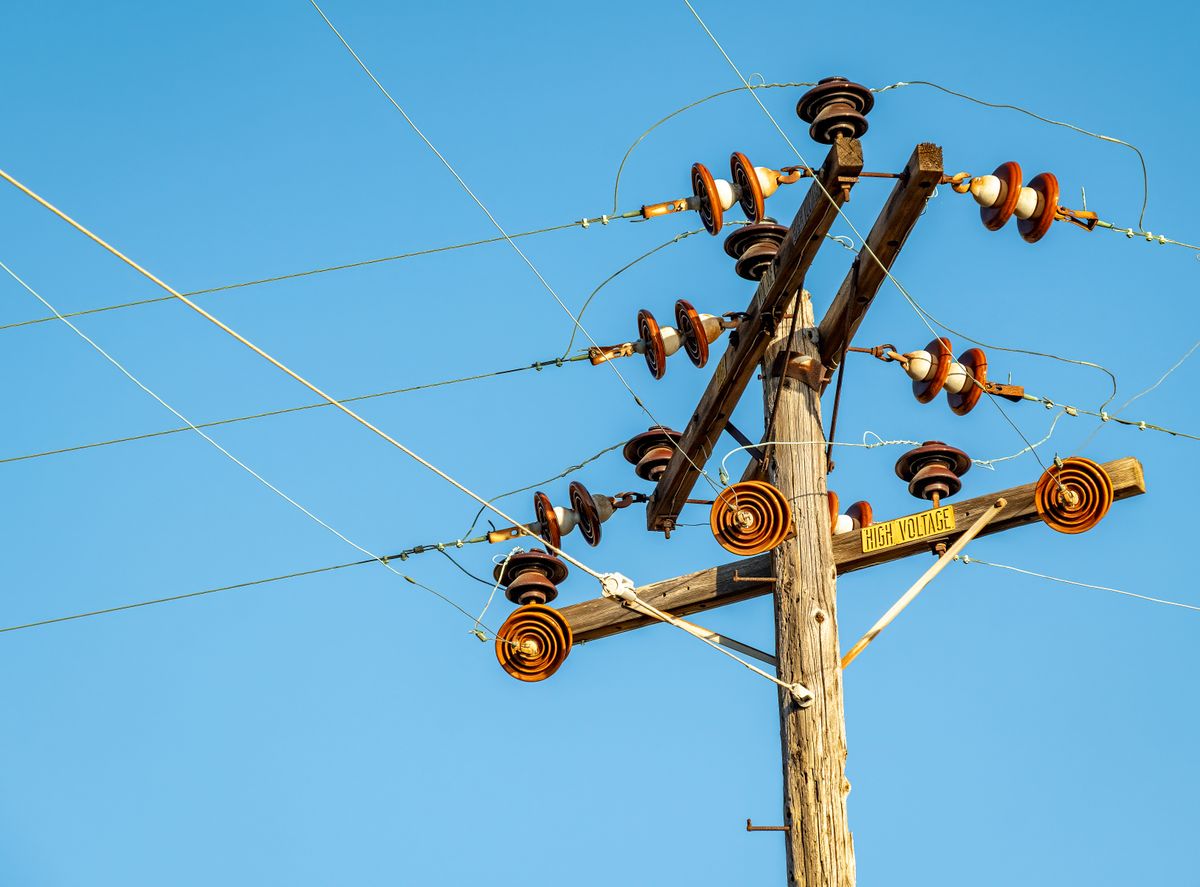
Photo by David McElwee on Pexels
The Climate Change Multiplier
Now, add a layer of complexity: the world is getting hotter and more volatile. We are asking utilities to do two impossible things at once: harden the grid against wildfires and hurricanes, and transition the entire energy mix to renewables. This requires billions in new spending. If a municipal utility borrows that money, they do it through tax-exempt bonds at low interest rates. If an IOU does it, they often use a mix of high-interest corporate debt and equity that expects a massive return.
I wonder if the 'investor-owned' model was a luxury of a more stable era. When the climate was predictable and the grid was already built, the efficiency of private management might have made sense. But in an era of constant rebuilding, the cost of private capital becomes a staggering weight. We’re essentially asking citizens to pay a 'risk premium' to investors for the privilege of having a grid that doesn't burn down their house. Is that a bug in the system, or is it the entire point of the system?
What This Actually Means
We are reaching a tipping point where the 'efficiency' of the private sector is being outpaced by the sheer cost of its own capital requirements. When a municipal utility in Nebraska or Washington state can provide the same service for three-quarters of the price, it suggests that the 'innovation' promised by private markets isn't happening in the delivery of electricity. It’s happening in the accounting departments.
This isn't an argument for total nationalization—that brings its own set of bureaucratic nightmares—but it is a genuine question about where the 'value' is. If the 23% gap continues to widen as we electrify everything from our cars to our stoves, the social contract of the utility might just snap. We might find that the most 'productive' thing an economy can do is stop trying to turn every light bill into a profit center.
In the end, I keep coming back to the pole in the ground. It doesn't care about the stock market. It just wants to hold the wire. Maybe our mistake was thinking the pole needed a boss who answers to Wall Street instead of the people living under the wire.
Quick Answers
Why are public utilities usually cheaper?
They don't pay dividends to shareholders, they have access to lower-interest government municipal bonds, and they are often exempt from federal income taxes.
Is the service quality worse with municipal power?
Actually, data often shows municipal utilities have shorter outage durations because their crews are local and their primary metric is 'customer satisfaction' rather than 'cost-per-mile maintenance.'
Can I choose between a public or private provider?
Usually, no. Utilities are 'natural monopolies' granted by the state, meaning your provider is determined entirely by your physical address.

