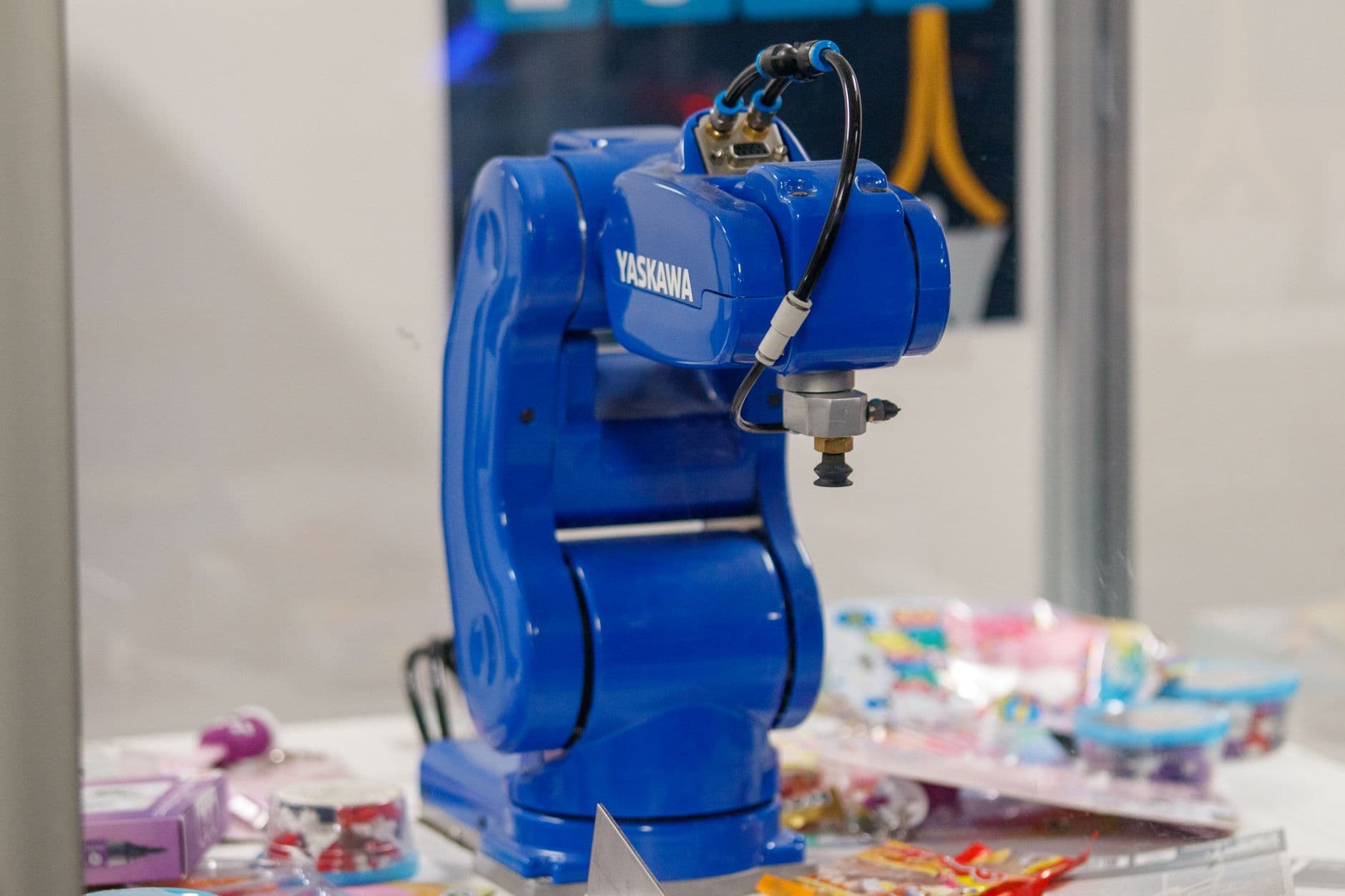
The Glitchy Reality of Being a Meatbag
Human beings are remarkably good at not falling over, which is honestly a miracle considering we are basically wet bags of salt water balanced on two calcium sticks. We take for granted a concept called foot locking. In the world of video games, this is the mathematical wizardry that ensures a character’s foot actually stays glued to the digital dirt instead of sliding three inches to the left while the rest of the body moves forward. Without it, every hero looks like they’re doing a very unconvincing Michael Jackson tribute act.
For decades, robotics has suffered from a terminal case of "Bambi on Ice" syndrome. We build these billion-dollar metal marvels, pack them with enough computing power to simulate the heat death of the universe, and then they immediately succumb to their greatest nemesis: a slightly damp piece of linoleum. The problem is terrain-blindness. Most robots don't actually "feel" the ground; they just assume it’s there until their sensors scream in agony because their knee is suddenly where their chin used to be.
Now, researchers are stealing the homework of game developers to solve this. By applying Inverse Kinematics (IK)—the math that calculates how joints should bend to keep a hand or foot at a specific point—directly into the nervous systems of neuro-prosthetics and the silicone skin of soft robots, we are finally teaching machines how to stop sliding around like a drunk toddler in a bowling alley.
The Mathematical Anchor is My New Best Friend
Inverse Kinematics sounds like something you’d study if you hated yourself in grad school, but it’s actually just a fancy way of working backward. Standard kinematics says, "If I move my hip 30 degrees and my knee 45 degrees, where does my foot end up?" Inverse Kinematics says, "My foot needs to be on that specific rock so I don't die; how do I contort the rest of my body to make that happen without snapping my femur?"
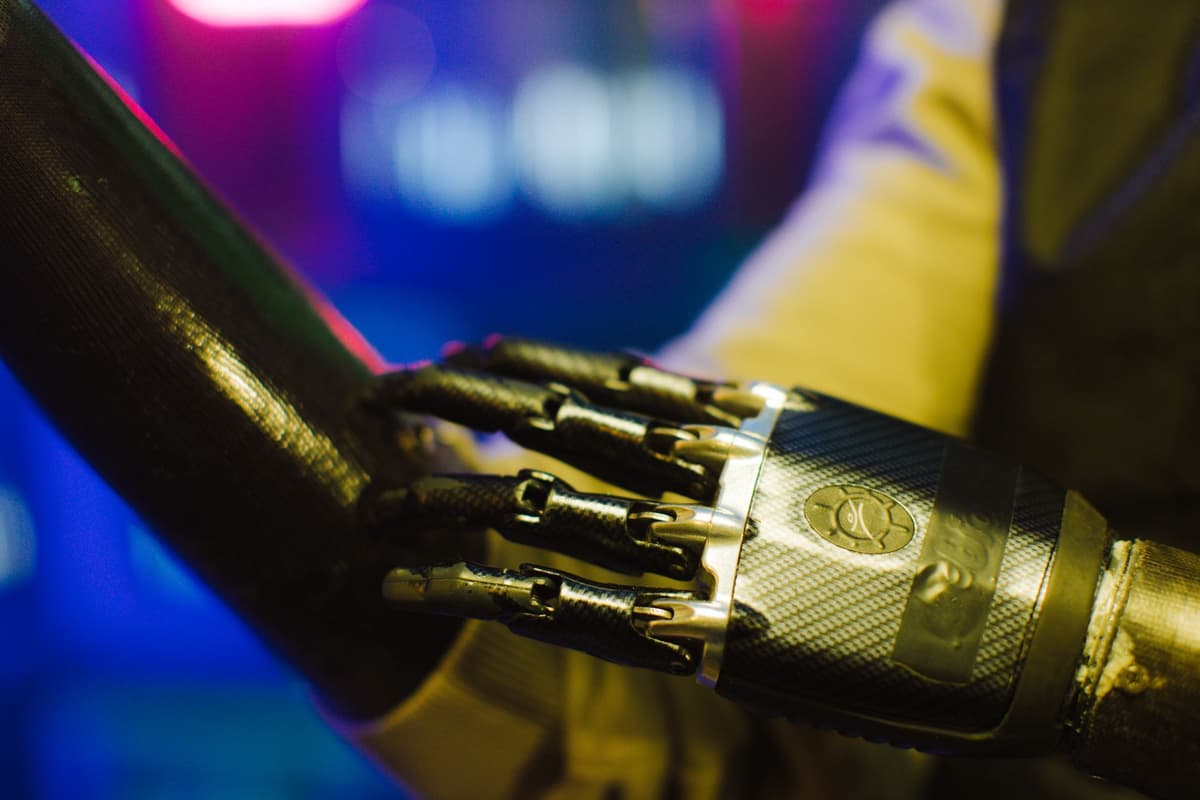
Photo by Yaroslav Shuraev on Pexels
In new neuro-prosthetics, this is becoming a literal lifesaver. Scientists are integrating "foot-locking" algorithms that predict ground stability before the foot even lands. It’s like having a tiny, caffeinated accountant in your prosthetic leg who frantically calculates the friction coefficient of a patch of moss before you commit to the step. This creates a "bio-mechanical anchor." The limb isn't just reacting to the ground; it’s anticipating the betrayal of the terrain.
This isn't just about smooth walking; it's about dignity. There is nothing more humbling than a $2 million DARPA-funded robot doing a full-body faceplant because it touched a banana peel. By treating the point of contact as a fixed mathematical constant—a lock—the rest of the robotic assembly can adjust its center of gravity in real-time. It’s the difference between walking down the street and performing a high-stakes interpretive dance where the floor is trying to divorce you.
Soft Robots and the Squishy Revolution
Then we have the soft robots. These are the machines made of silicone and dreams that look like sentient calamari. Traditionally, controlling them has been a nightmare because they have an infinite number of ways to bend. If you tell a rigid robot arm to move, it moves. If you tell a soft robot arm to move, it might just sag sadly or wiggle like a tube man at a used car dealership.
By implementing foot-locking math into these squishy systems, engineers are creating "proprioceptive ghosts." The robot calculates where its "limbs" should be locked in space to maintain stability, even if the body itself is flexing and stretching like a piece of overchewed saltwater taffy. It’s a bridge between the digital world of perfect geometry and the physical world of messy, unpredictable physics.
Imagine a search-and-rescue robot that can navigate a collapsed building. In the past, it would get stuck because it couldn't figure out if a pile of rubble was a floor or a suggestion. With advanced IK and foot-locking, it can "probe" the environment, locking its contact points mathematically before shifting its weight. It’s essentially teaching robots how to have "vibes" about the ground. If the vibes are off, the foot doesn't lock, and the robot doesn't fall.
What This Actually Means
We are moving toward a world where the line between "animation" and "biology" is getting dangerously thin. The same math that makes sure a Call of Duty soldier doesn't clip through a staircase is now helping a war veteran walk across a gravel driveway without thinking about it. That is objectively cool, even if it started because we wanted our digital elves to look slightly more realistic while they threw fireballs.
This "terrain-blindness" fix is the final boss of bipedal movement. Once we master the bio-mechanical anchor, robots won't just be tools; they'll be graceful. Or, at the very least, they’ll stop falling over in viral YouTube compilations that make us feel superior to our future metal overlords.
Ultimately, the goal is a prosthetic that feels like a part of you because it understands the world the same way your brain does: by assuming every surface is a potential trap. We’re giving machines the gift of healthy paranoia, and honestly? It’s about time.
Quick Answers
Is my leg going to start thinking for itself?
Not exactly, but your prosthetic might start making split-second math decisions faster than you can realize you're about to slip on a wet floor.
Why did it take this long to use video game math?
Because calculating 1,000 joint adjustments per second in a computer is easy; doing it in a physical limb that has to deal with mud, gravity, and the laws of thermodynamics is a massive pain in the neck.
Will this make robots run faster?
It’ll make them run more confidently. Instead of tentative stabs at the ground, they can plant their feet with the unearned confidence of a man in a mid-life crisis buying a jet ski.


