
It turns out the digital heavens run on municipal tap water and sheer audacity. Thanks to a local government employee who apparently believed that drawing a black rectangle over text in Adobe Acrobat permanently banishes those numbers into the void, the curtain slipped. We now know that a single Google data center cluster in The Dalles, Oregon, consumed over 355 million gallons of water in 2021 alone, more than doubling its footprint over a few short years while city officials dutifully spent tens of millions of taxpayer dollars upgrading the local water capacity to accommodate it.
For an entire decade, the tech industry pulled off the neatest trick in corporate history. They branded industrial computing as "the cloud," evoking a lightweight, ethereal vapor floating somewhere above the troposphere, entirely untethered from mundane things like pipes, coal trains, and local aquifers. But server racks do not run on mist. They run on 12-foot concrete conduits pumping drinking water directly out of rivers to keep graphics cards from melting into high-fructose silicon slop while generating pictures of anime dogs.
Now that the black highlighter has failed, the secret is out: the cloud is not an atmosphere. It is a slaughterhouse for public utilities.
The Windowless Gray Box Approach to Civic Harmony
For years, the architectural philosophy behind data centers was identical to that of an unlisted CIA black site. You buy a couple hundred acres of cheap farmland just outside a mid-sized city, surround it with anti-ram perimeter fencing, and drop a featureless corrugated metal box the size of three aircraft carriers into the landscape. No windows. No sidewalks. No aesthetic nod to the local geography. Just two security guards, six diesel backup generators the size of school buses, and an uninterrupted hum that rattles the dental work of anyone living within a half-mile radius.

Photo by David McElwee on Pexels
This was considered brilliant urban planning by local economic development councils, who are historically suckers for the word "innovation." The pitch was intoxicatingly simple: free tax revenue without the mess of actual people. A warehouse logistics hub brings truck traffic, wear-and-tear on roads, and hundreds of workers who demand things like schools, housing, and crosswalks. A data center, by contrast, brings thirty permanent employees, twenty-eight of whom just monitor the air conditioning. It is a ghost town that pays property taxes.
Except the ghost town has an insatiable drinking problem.
When a single facility drinks up to a quarter of a municipality's annual water supply during a historic drought, the architectural fiction of the "quiet corporate neighbor" collapses. You cannot pretend a facility is invisible when the residents down the road are being asked not to water their tomato plants so that an algorithm can efficiently scrape Reddit posts.
Let Them Heat Pools: The Sudden Pivot to Civic Goodwill
Faced with the horrifying reality of public scrutiny, hyperscale operators and their architectural firms are suddenly discovering a profound, tear-jerking commitment to civic integration. If the community is going to notice that a building uses as much electricity as a city of 150,000 people, the building must now be rebranded as an act of municipal charity.
Enter the integrated "utility hub" aesthetic. In places like Finland and Denmark, data centers are frantically running copper pipes to adjacent neighborhoods, bragging that their waste heat is warming the local public swimming pool and heating greenhouses for heirloom radishes. It is an extraordinary public relations pivot. You are not enduring a planetary-scale heat sink in your backyard; you are receiving the benevolent byproduct of a sovereign compute node that graciously keeps your municipal sauna at a balmy eighty degrees Celsius.
We are now seeing architectural renderings that would make a Soviet central planner blush:
- Data centers wrapped in living green walls, strategically draped with ivy to disguise the massive acoustic baffles required to keep cooling fans from driving neighbors insane.
- Roof-top public parks perched on top of multi-megawatt switchgear vaults, allowing citizens to walk their dogs directly above the infrastructure generating corporate executive compensation.
- Water-treatment facilities masquerading as modern art installations, where greywater is recycled through an aesthetic series of constructed wetlands before being evaporated into the sky by rows of chillers.
It is civic placation dressed up as progressive urban design. If you wrap enough Scandinavian timber around a 200-megawatt substation, people might forget that the facility is pulling more load from the regional grid than every hospital in the county combined.
The Zoning Lie of the Light Industrial Zone
The fundamental absurdity here lies in municipal zoning codes that were written when "data processing" meant six people in short-sleeved shirts feeding punch cards into an IBM mainframe in an office park. Data centers are still routinely classified as "light industrial" or commercial business uses, placing them in the same legal category as an auto-body repair shop or a commercial bakery.
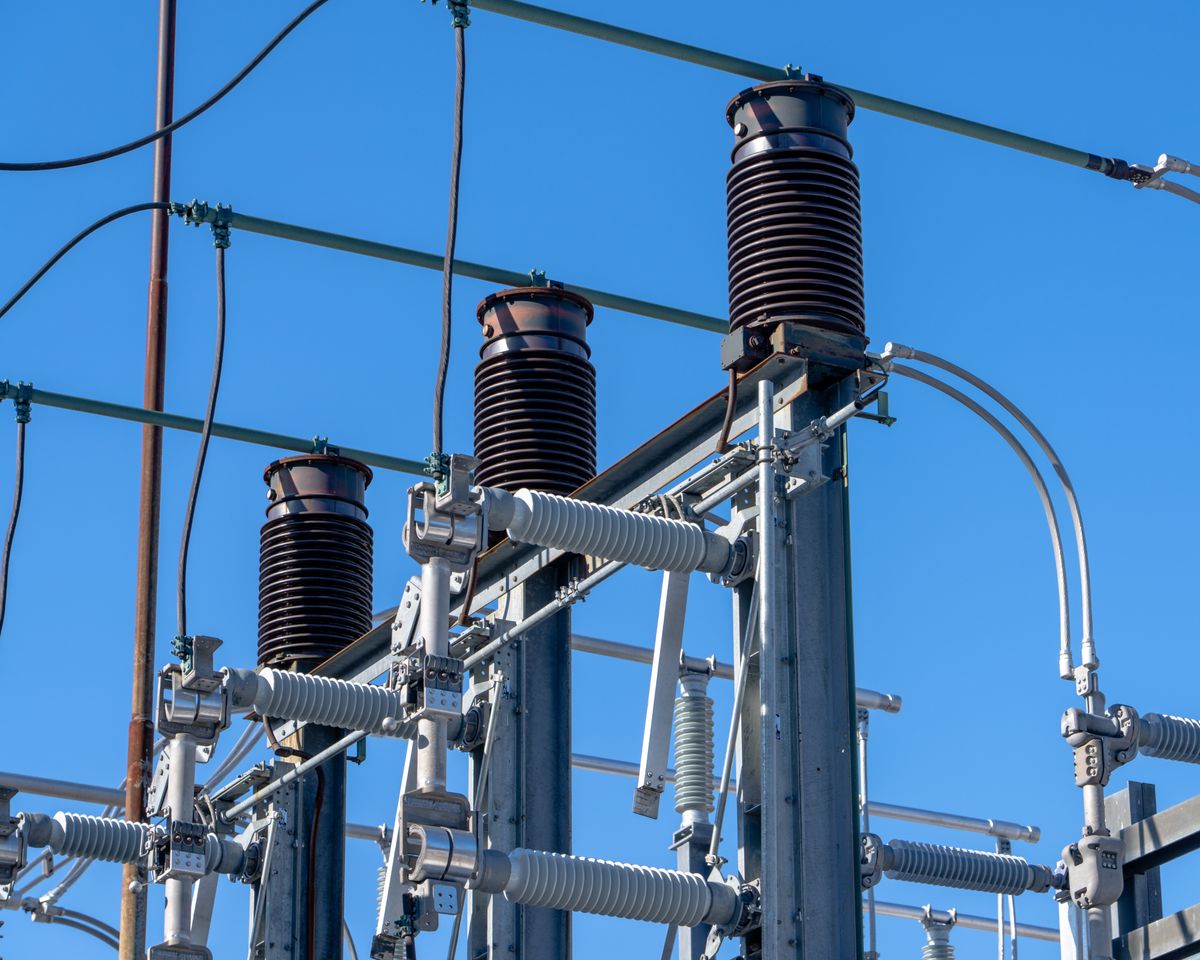
Photo by Phil Evenden on Pexels
Call an iron foundry light industrial and the town council will laugh you out of the room. Yet an enterprise cluster drawing 300 megawatts of power and vaporizing millions of gallons of treated municipal water is rubber-stamped through administrative zoning panels because it doesn't emit black smoke from a visible smokestack. The smokestack is just located three states away at a natural gas plant running at ninety-eight percent capacity to keep the facility humming.
Urban planning departments are finally waking up to the realization that they did not approve a tech office; they approved a decentralized thermodynamic anomaly. Cities like Frankfurt and Dublin are slamming the brakes on new permits, abruptly discovering that you cannot build a net-zero residential district when a three-block server complex is squatting on the local substation like an electric dragon sleeping on a pile of gold.
If these facilities are going to colonize our urban peripheries, the bare minimum requirement is that they stop lying about what they are. They are heavy industry. They are the new oil refineries of the cognitive economy, and they belong under the same regulatory microscope we reserve for chemical plants and paper mills.
What This Actually Means
The era of the invisible server warehouse is over, killed not by grassroots environmental activism or forward-thinking urban policy, but by an incompetent PDF export that accidentally put raw infrastructure numbers into the daylight. Now that the true resource price tag has been audited, data center architecture is going to undergo a forced metamorphosis from brutalist concrete bunkers to deeply performative municipal showpieces.
Expect tech companies to spend millions on timber facades, district heating pipe networks, and beautifully landscaped storm-water retention ponds. They will offer to warm your municipal libraries with the exhaust from their tensor processing units, and they will run advertisements celebrating their closed-loop greywater initiatives. It will look like thoughtful civic architecture, but it is entirely a survival reflex.
Do not mistake the decorative greenery for genuine civic integration. A server farm with a wildflower meadow on the roof is still a massive drain on physical reality, designed to turn real-world water and electricity into virtual equity. If cities are going to let them drink the well dry, they should at least stop pretending it is an architectural triumph.
Quick Answers
Why was Google's water consumption redacted in the first place?
Tech companies routinely classify their resource consumption metrics as proprietary trade secrets, arguing that revealing electricity and water volumes would give competitors insight into their hardware deployment densities and computing capacity.
Does district heating from data centers actually work?
Yes, technically. Low-grade waste heat can be captured through heat exchangers and piped to district heating networks, but the infrastructure is expensive to install retroactively and only works efficiently in dense, cold-climate urban areas that already possess municipal steam or hot-water piping systems.
Why do data centers consume so much water instead of using closed-loop air cooling?
Evaporative cooling uses far less electricity than giant industrial air conditioners (chillers). Companies rely on water evaporation because water is historically underpriced compared to power, making it significantly cheaper to consume municipal drinking supplies than to burn extra megawatts running massive fans.

