The modern appliance market has become a minefield of intentional obsolescence and rent-seeking behavior. We are currently living through the 'Subscription-of-Things' era, where a $900 Mitsubishi split-system air conditioner is sold as a platform for data harvesting rather than a cooling device. By keeping these machines 'dumb' or locking their smart features behind proprietary, cloud-dependent APIs, manufacturers ensure that the consumer remains a perpetual tenant in their own home.
This is why the movement to bridge non-Wi-Fi appliances using the ESP32—a $4 microcontroller—is the most significant consumer pushback in a decade. It is not about the novelty of a phone app; it is about the cold, hard necessity of local control. When you solder a chip to a control board to bypass a manufacturer’s cloud, you are performing a political act of digital sovereignty. You are deciding that the functionality of your home should not depend on whether a server in Virginia stays online or whether a corporation decides to sunset a product line from 2019.
The Architecture of Forced Dependency
Corporate IoT strategy is built on a single, cynical premise: control the interface, control the user. By moving the 'brain' of an appliance from the local hardware to a remote server, companies like Samsung, LG, and Mitsubishi create a choke point. If you want to integrate your AC into a wider home automation system, you are often forced to use a proprietary bridge that costs $150 and requires a persistent internet connection. This is an artificial barrier designed to extract recurring value from a one-time purchase.
Consider the failure rate of these cloud services. Between 2021 and 2023, major smart home platforms experienced dozens of significant outages that left users unable to control their heating or security systems. A 'smart' home that cannot function during an internet outage is not smart; it is fragile. The DIY movement rejects this fragility. By using ESP32 chips running open-source firmware like ESPHome or Tasmota, users are creating a parallel infrastructure that operates entirely on a local network. No pings to external servers, no data packets sent to marketing partners, and zero monthly fees.
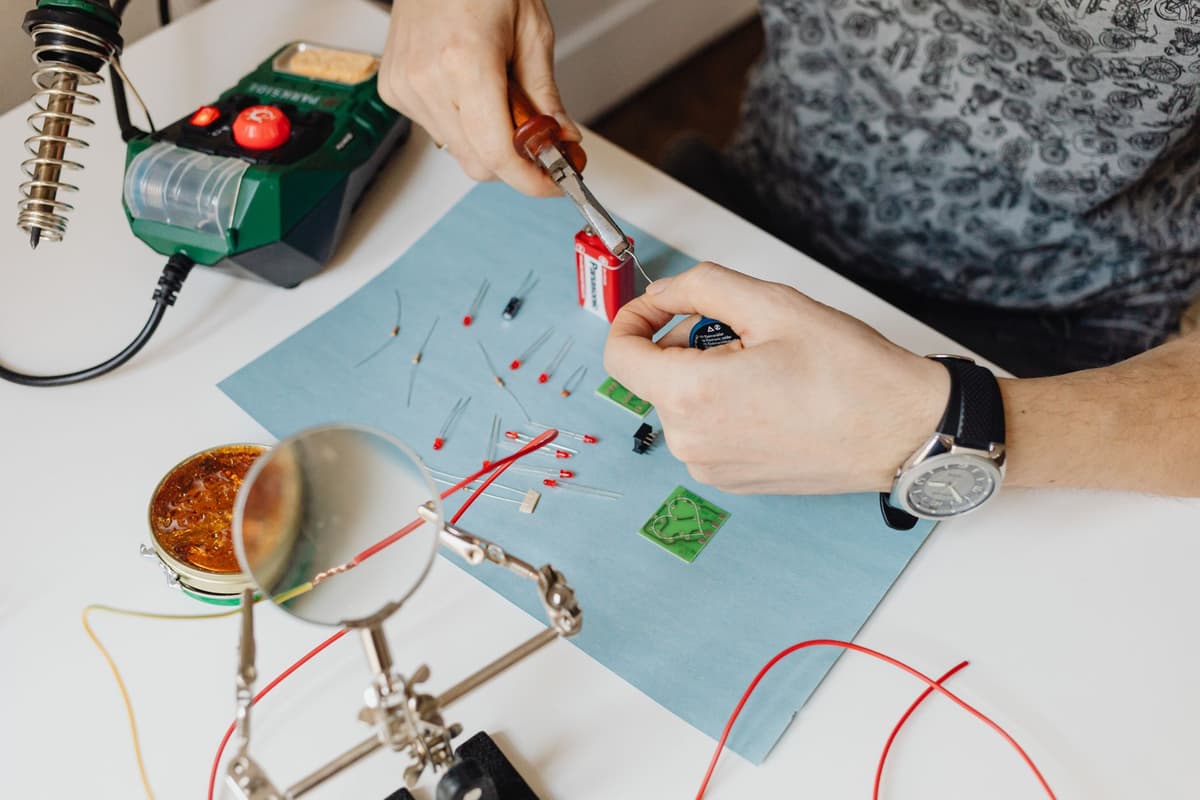
Photo by https://kaboompics.com/ on Pexels
Privacy as a Hardware Feature
We must address the reality of what these appliances are actually doing when they connect to the internet. A Wi-Fi-enabled air conditioner doesn't just regulate temperature; it reports usage patterns, peak activity times, and geographic data. This information is a goldmine for utility companies and data brokers who want to build a profile of your domestic life. When a manufacturer offers a 'convenient' app, they are often trading that convenience for a permanent window into your private residence.
Retrofitting a 'dumb' unit with a microcontroller eliminates this telemetry entirely. The ESP32 acts as a translator, converting your local commands into the infrared or serial signals the appliance understands, while acting as a firewall against corporate data mining. This 'air-gapped' rebellion ensures that the only entity aware of your cooling preferences is the controller sitting on your own shelf. It turns privacy from an abstract policy into a physical hardware reality.
The Economic Logic of Repair
The financial implications of this shift are staggering. A proprietary Wi-Fi adapter for a Mitsubishi unit can retail for upwards of $180, yet it offers less flexibility than a $5 ESP32 and a few hours of configuration. Furthermore, these official modules are often the first things to break or go out of support. By learning to interface with the raw serial headers of our appliances, we are effectively future-proofing our homes against the inevitable day a manufacturer decides a device is 'legacy.'
- Cost Efficiency: A total system overhaul with DIY microcontrollers often costs less than a single month of premium subscription fees for some 'smart' ecosystems.
- Longevity: Local control means the device works as long as the hardware holds out, regardless of the manufacturer's financial health.
- Interoperability: Open-source firmware allows a Mitsubishi AC to talk to a Honeywell sensor and a Lutron light switch without needing a dozen different bridge devices.
This isn't just about saving money; it's about the fundamental right to repair and modify the objects we own. If you cannot change how your air conditioner communicates, you do not truly own it—you are merely licensing its use from the manufacturer.

Photo by Iban Lopez Luna on Pexels
What This Actually Means
The rise of the ESP32-modified home is a signal that the 'Smart Home' as envisioned by Silicon Valley has failed the consumer. People do not want more subscriptions; they want tools that work reliably and privately. The technical barrier to entry for these modifications is dropping every day, as communities share wiring diagrams and configuration YAML files openly. What was once the domain of hardcore electrical engineers is now accessible to anyone with a soldering iron and a sense of frustration.
We are moving toward a bifurcated world of domestic technology. On one side, there will be the 'convenience' class, who pay monthly for the privilege of being monitored. On the other, there will be the sovereign class, who buy high-quality 'dumb' hardware and provide their own intelligence. The latter is the only sustainable path forward for a society that values privacy and ownership. The revolution won't be televised, but it might just be programmed over a serial port.
Quick Answers
Is it dangerous to modify my own appliances?
If you are working with low-voltage serial headers or infrared, the risk to the appliance is minimal, but you must always disconnect power before opening any chassis. Avoid touching high-voltage components like capacitors or mains wiring.
Does this void the manufacturer's warranty?
Almost certainly. However, the trade-off is gaining a device that will likely outlive its warranty period by a decade because you've removed the software-based expiration date.
Why not just buy a 'smart' AC from the start?
Because 'smart' appliances are built to be obsolete. A 'dumb' AC with a DIY smart interface gives you the best of both worlds: industrial-grade cooling hardware and modern, private software control.


