
The Illusion of the Locked Door
I truly admire the collective optimism of the cybersecurity industry. We spend our lives obsessing over 256-bit encryption, multi-factor authentication, and complex salt-and-hash passwords, all while the literal slab of silicon running the show has a built-in 'admin' mode for strangers. It’s like installing a $10,000 titanium deadbolt on your front door while leaving a literal tunnel from the street directly into your living room. But hey, at least the deadbolt looks impressive to the neighbors.
The recent revelations about backdoors in legacy x86 architectures are a masterclass in irony. We’ve been told for decades that the 'Root of Trust' is the foundation of modern computing. As it turns out, that foundation is about as solid as a sandcastle in a monsoon. The discovery that certain processors contain hidden execution environments—often referred to as 'Ring -2' or 'Ring -3'—means there is a layer of authority on your computer that your operating system doesn't even know exists. It’s a ghost in the machine, except this ghost has a government contract and a very high clearance level.
Imagine buying a safe that is marketed as impenetrable. You put your life savings in it. Years later, you find out the manufacturer sent a master key to every local locksmith 'just in case' you forgot your combination. That is the current state of global hardware infrastructure. We aren't just building on shaky ground; we are building on ground that has been pre-mined by the people who sold us the dirt.
Foundries Of Infinite Trust
The supply chain is a beautiful, terrifying web of blind faith. Most of us assume that when a design leaves an architect’s desk at Intel or AMD, it arrives at the foundry and gets printed exactly as intended. This assumes that the people at the foundry—the ones physically etching billions of transistors onto a wafer—are just disinterested observers. In reality, the foundry level is the perfect place to slip in a few thousand 'extra' transistors that provide a neat little bypass for anyone who knows the secret knock.
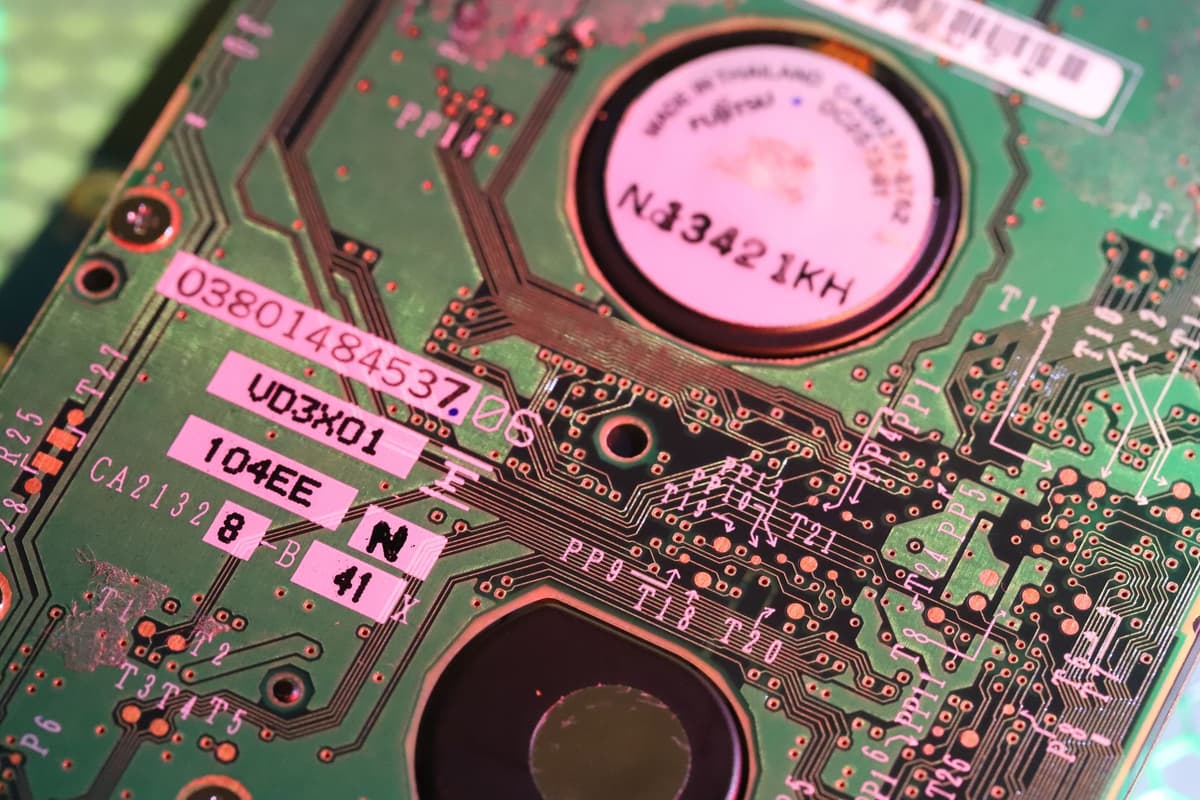
Since 2017, when researchers started poking at the Intel Management Engine (ME), we’ve known that there’s a tiny, separate computer inside your computer. It runs its own operating system (Minix, usually), has its own networking stack, and can see everything you do. You can’t turn it off. You can’t audit it. It’s a black box inside a black box. The industry calls this 'manageability.' A more honest term would be 'unsupervised surveillance,' but that doesn't look as good on a quarterly earnings report.
What makes this particularly hilarious is that these hardware-level vulnerabilities are functionally unfixable. You can’t 'patch' a physical circuit path. If the backdoor is etched into the silicon at a 7nm scale, your only real option is to throw the computer in a lake and start over. But don't worry, the next computer you buy will almost certainly have a different, newer secret door. It’s the circle of life, if life was designed by a paranoid intelligence agency.
Why Your VPN Is Basically A Security Blanket
I love watching people argue about which VPN provider 'doesn't log data' while they are typing on a machine that has a hardware-level bypass. It’s adorable. It’s like arguing about the color of the curtains while the house is being demolished by a wrecking ball. If the CPU is compromised, the encryption happens on a compromised platform. The keys are visible before they are even used. The 'secure tunnel' you’re paying $9.99 a month for is just a transparent pipe to anyone sitting at the hardware level.
- Software security is a polite suggestion to a hardware-level attacker.
- Encrypted RAM doesn't matter if the processor itself is the one leaking the data.
- Your 'secure boot' process is just a theater performance for a CPU that already decided who the lead actor is.
We have reached a point where 'secure computing' is a marketing term, not a technical reality. The global silicon supply chain is so concentrated—with a handful of foundries in Taiwan, Korea, and the US doing the heavy lifting—that compromising a significant portion of the world's digital infrastructure only requires a few well-placed 'features' at the manufacturing stage. It’s remarkably efficient. Why hack ten million individual laptops when you can just hack the blueprint for the chip that goes into all of them?
What This Actually Means
This isn't just a 'legacy' problem. While the most famous backdoors are found in older x86 chips, the structural incentive to include them has only increased. Governments want access. Corporations want 'telemetry.' And the rest of us just want our laptops to not get too hot while we watch Netflix. As long as the physical creation of chips remains a proprietary black box, the concept of 'digital privacy' is effectively a LARP (Live Action Role Play) for tech enthusiasts.
We are currently operating on a system of 'Security through Ignorance.' We assume the hardware is honest because the alternative is admitting that we have no control over the devices that run our lives, our banks, and our power grids. If you think about it too hard, you’ll end up living in a cabin in the woods with a typewriter, and even then, you’d probably worry that the ribbon was bugged.
Ultimately, the 'Silicon Trust' paradox proves that you can't build a fortress on top of a trapdoor. We will continue to buy the chips, we will continue to download the 'security updates,' and we will continue to act surprised when someone finds another secret room in the basement of our CPUs. It’s not a bug; it’s a business model. And business is booming.
Quick Answers
Can I disable the backdoor in my current computer?
Generally, no; these are baked into the hardware or low-level firmware that you don't have permission to modify. Some projects like 'me_cleaner' try to neuter the Intel Management Engine, but it’s like trying to perform surgery on yourself with a spoon.
Are ARM chips or Apple Silicon safer than x86?
They are newer and have different designs, but they aren't magic. Any proprietary chip designed behind closed doors and manufactured in a third-party foundry is subject to the same 'trust us, we’re the good guys' logic that got us into this mess.
Should I be worried about my personal data?
Only if you value it. If you've already accepted that your fridge is spying on you and your phone knows your heart rate, a hardware-level backdoor in your CPU is just another guest at the privacy funeral.


