The World’s Worst Reality Show Just Got Renewed
I have spent the last three years convinced that my identity was safe because I used 'liveness' checks for my telehealth appointments. You know the drill: the app asks you to turn your head left, then right, then blink, like you’re a hostage trying to signal the FBI through a very glitchy Ring camera. I thought I was being high-tech and secure. In reality, I was just providing free, high-definition B-roll for a group of hackers who had a live feed of every identity verification scan for over a year.
We aren't talking about a leaked password here. You can change P@ssword123 to IhateComputers456 in thirty seconds. You cannot, however, change your cheekbones. You can’t exactly 'reset' your retinas or your thumbprints unless you’re planning on a very messy weekend involving a belt sander and a total lack of self-preservation. These hackers didn't just steal a key; they stole the physical mold of the lock and the door it’s attached to.
A Year of High-Def Foreheads
Think about the sheer volume of content these people had. For 400-plus days, they watched millions of us in our most vulnerable state: sitting in our dimly lit bedrooms, wearing a shirt we found on the floor, trying to prove to a piece of software that we are a real human being who deserves a Z-Pak. It’s the ultimate voyeurism, but instead of anything interesting, it’s just a never-ending montage of people squinting at their phone screens while holding a driver's license that has a photo from 2014 where they still had hope in their eyes.

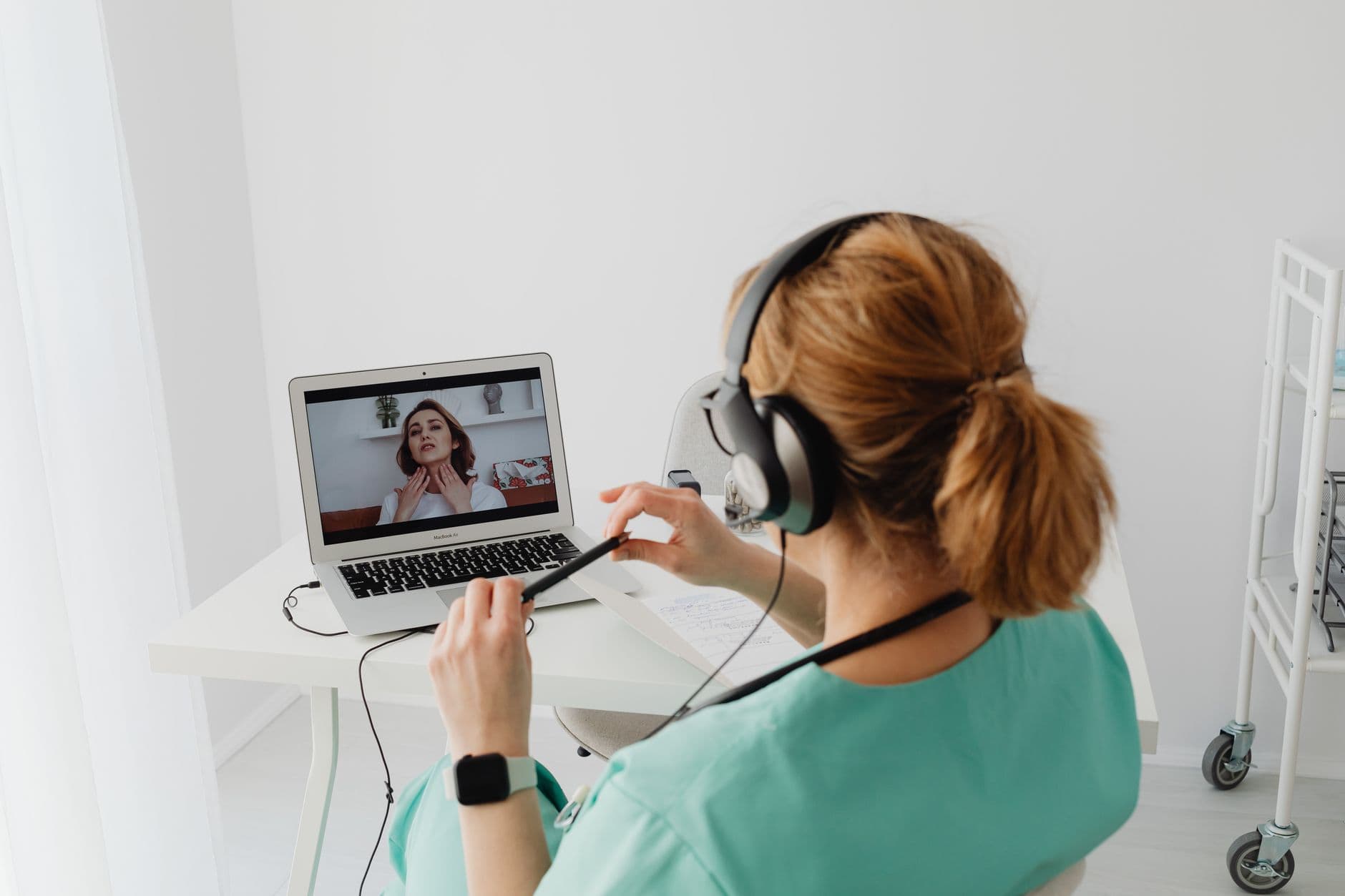
Photo by SHVETS production on Pexels
This wasn't some sophisticated heist involving lasers and a man in a black turtleneck dropping from the ceiling. This was a wide-open pipe. These identity verification companies, the 'titans' of security who charge telehealth providers a fortune to ensure the person ordering Ozempic is actually the person on the insurance card, essentially left the back door open, the front door off its hinges, and a 'Welcome' mat made of unencrypted biometric data. If I left my house this vulnerable, a raccoon would be the legal owner of my mortgage within forty-five minutes.
- They saw your high-resolution 'liveness' scans.
- They saw your government IDs in 4K clarity.
- They watched you fail the 'blink now' test three times because your camera lens was smudged with pizza grease.
Why Your Face Is The Ultimate Unpatchable Bug
The telehealth revolution promised us we’d never have to sit in a waiting room with a man coughing directly into our open mouths ever again. And that’s great! But the price of admission was handing over our biometric 'seed' data to companies that apparently have the digital structural integrity of a wet graham cracker. Once a hacker has a high-res video of you proving you are alive, they have the ultimate skeleton key for every future verification you will ever attempt.
In the old days, identity theft meant someone bought a jet ski in Florida using your Social Security number. It was annoying, but you could call the bank and sort it out. Now? If a bad actor has your biometric 'liveness' data, they can basically act as your digital ghost. They can bypass the very systems meant to protect your medical records and insurance. You are essentially a walking, talking security breach. Every time you walk past a facial recognition scanner at the airport, a server in a basement somewhere is probably cheering.
The Irony of the 'Liveness' Test
The most hilarious part—if you have a very dark sense of humor—is that these tests were designed to stop deepfakes. The whole point of the 'turn your head' dance is to prove you aren't a static photo or a 3D mask. But by capturing and then losing that data, these companies have provided the perfect training set for the next generation of AI-driven identity fraud. We have literally fed the beast the exact ingredients it needs to impersonate us perfectly.
It’s like building a vault to protect the world’s only diamond, but the vault records a 360-degree high-speed laser scan of the diamond and then uploads it to a public Pinterest board labeled 'Cool Rocks We Found.' We are currently living in a world where my face is less secure than my Netflix login, mostly because Netflix actually notices when someone from a different zip code tries to use it.
What This Actually Means
What this actually means is that the concept of 'biometric security' is currently a flaming dumpster fire floating down a river of broken promises. We’ve been told that our bodies are the ultimate password, but we forgot that passwords can be changed and bodies are fairly permanent features of our existence. We are entering an era where 'proving who you are' is going to become an increasingly surreal arms race involving things like DNA sequencing or perhaps just a very specific secret handshake you only do with your pharmacist.
For the millions of remote patients whose data was part of this year-long broadcast, the damage is done. You are now a permanent resident of the internet’s 'Identity For Sale' department. We need to stop treating biometric data like it’s just another string of numbers. It’s not. It’s the physical manifestation of your existence, and once it’s leaked, you’re basically just a guest star in your own life.
Ultimately, we have to demand that these 'verification' companies be held to a standard higher than 'we forgot to check if the feed was public.' Until then, maybe just try to look really ugly during your next telehealth scan. Distort your features. Wear a fake mustache. Give the hackers something they’ll want to delete immediately out of pure aesthetic disgust.
Quick Answers
Can I change my biometrics if they were stolen?
Unless you are a character in a spy movie with access to a high-end plastic surgeon and a total lack of nerve endings, no. You are stuck with the face you have, for better or worse.
Should I stop using telehealth services?
Not necessarily, but you should probably treat every 'liveness' check like you're performing for a hostile audience. Ask the provider exactly who is processing that video and where it's being stored.
Is there any way to get my data back?
Once data is on the internet, it’s there forever, like that embarrassing video of you doing the Macarena at a wedding in 1996. You can't get it back; you can only hope the hackers find someone more interesting to impersonate.


