
Finding a living creature that swam through the Great Lakes before the first steam engine was patented changes the moral math of conservation. These 400-year-old sturgeon represent a biological continuity that we assumed was severed by the ecological violence of the 19th century. They are not just 'natural resources' to be managed; they are the last physical witnesses to a pre-industrial nutrient cycle that once fed an entire continent without depleting its capital.
For decades, our approach to fisheries has been a managed retreat—setting quotas just high enough to prevent total collapse but too low to ever allow the ecosystem to thrive. These ancient individuals prove that our baseline for 'normal' is catastrophically low. We have been trying to conserve a ghost of a system, unaware that the original architects of that system were still alive, buried in the silt, waiting for us to notice the scale of our ambition's failure.
The Fallacy of the Shifting Baseline
Modern ecology suffers from a 'shifting baseline' where each generation of scientists accepts the degraded state of the world they inherited as the standard for restoration. If you started your career in 1990, a healthy lake looks like a place with a few thousand sturgeon. But these 400-year-old fish suggest a baseline that is nearly unrecognizable to the modern eye. Before the commercial collapse of the 1880s, sturgeon were so plentiful they were stacked like cordwood on the shores of Lake Ontario and burned for fuel because they clogged fishing nets intended for 'more valuable' species.
This historical myopia has led us to focus on 'species management'—a bureaucratic exercise in counting heads to ensure we don't hit zero. It is a defensive, fearful posture. By realizing these fish live for centuries, we have to acknowledge that a single human life is too short a lens through which to view environmental health. We are currently making policy decisions for creatures whose life cycles demand a 200-year planning horizon, yet we struggle to look past the next fiscal quarter or election cycle.
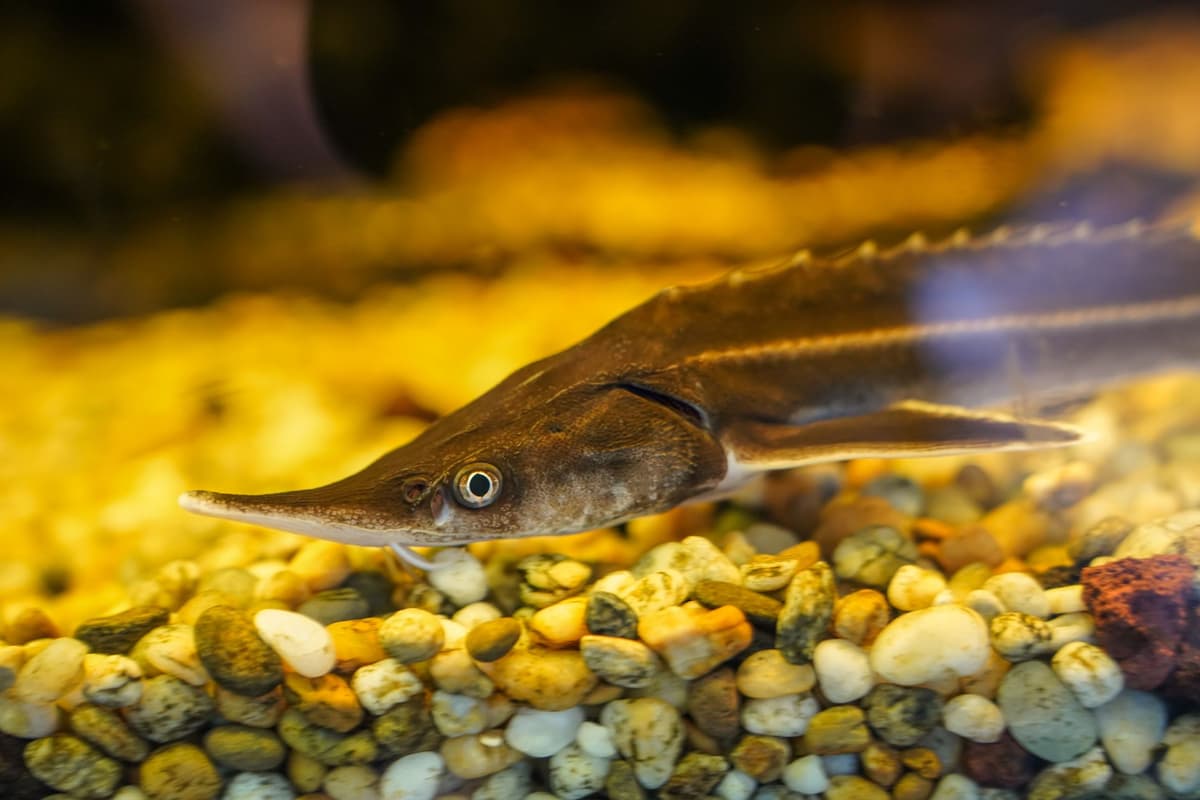
Photo by Vladimir Srajber on Pexels
From Management to Culinary Restoration
The shift toward 'culinary restoration' is perhaps the most radical departure from traditional environmentalism. For too long, we have treated 'nature' as something to be cordoned off behind a glass wall, separate from the dinner table. But indigenous communities have long understood that you cannot save a species by making it irrelevant to the culture. If a fish is no longer part of the local diet, it loses its political and social constituency. It becomes a museum piece rather than a cornerstone of food sovereignty.
Indigenous food systems were built on the concept of reciprocity, where the act of harvesting was tied to the responsibility of stewardship. By reconstructing the flavor profiles and nutrient cycles of the pre-industrial sturgeon, we aren't just playing with nostalgic recipes. We are attempting to reconnect a broken metabolic circuit. The fat of a sturgeon, rich in specific fatty acids shaped by a pristine watershed, is a biological record of what this land is capable of producing when it isn't being poisoned by agricultural runoff.
Restoring these fish to the table requires more than just clean water. It requires the restoration of the 'pre-industrial palate'—a recognition that our current industrial diet of corn, soy, and confined animal protein is an ecological anomaly. The sturgeon is a high-density protein source that thrives on the natural detritus of a healthy lake bed. It is the ultimate low-input, high-yield food source, provided we stop treating the lakes as a sewage system for the Midwest's factory farms.
The Infrastructure of Extinction
The primary barrier to sturgeon recovery isn't a lack of desire; it is the physical infrastructure of the 20th century. Dams built in the early 1900s blocked the spawning runs that these 400-year-old fish have been trying to access for centuries. Imagine a creature born in 1620, returning to the same river for four hundred years, only to find a concrete wall blocking its path for the last eighty. It is a testament to their resilience that they haven't vanished entirely.
- Over 3,000 dams currently obstruct the tributaries of the Great Lakes.
- Sturgeon require clean, rocky substrate for spawning, much of which is now buried under industrial silt.
- A female sturgeon may take 20 to 25 years to reach sexual maturity, meaning every individual lost is a multi-decade setback.
We cannot have food sovereignty without structural change. To truly embrace the sturgeon as a future food source, we have to be willing to decommission obsolete hydroelectric dams that provide negligible power but cause total ecological blockage. We have to prioritize the migratory paths of ancient fish over the convenience of stagnant reservoirs. This is a choice between a living heritage and a decaying industrial past.
What This Actually Means
The discovery of these ancient fish is a second chance we didn't earn. It provides a biological bridge to a time before we broke the world's nutrient cycles. If we treat this as just a neat trivia fact for science journals, we have failed. This is a mandate to rethink the entire North American relationship with food and land. We must move beyond the 'protection' of endangered species and toward the active 'participation' in their ecosystems.
True food sovereignty means the Great Lakes region should be able to feed its people from its own waters, as it did for millennia. The sturgeon is the key to that future because it is a link to that past. We are not just saving a fish; we are attempting to recover a lost way of existing on this continent—one where the health of the water is directly reflected in the health of the people who eat from it.
This will require a level of patience that is currently absent from our culture. We have to plan for a harvest that our grandchildren will enjoy, protecting fish that will outlive us all. If we can't learn to think on the timescale of a sturgeon, we will never be able to solve the ecological crises we've created. The fish have done their part by surviving; the rest is on us.
Quick Answers
How can a fish live for 400 years?
Sturgeon have extremely slow metabolisms and cold-water habitats that allow for incredible longevity, provided they avoid predators and human interference. Their biology is designed for endurance rather than rapid turnover.
Is it ethical to eat an endangered species?
The goal of culinary restoration is to recover the population to the point where sustainable, traditional harvesting is possible again. It is about moving from 'endangered' to 'abundant' through active stewardship rather than passive observation.
Why does the age of the fish matter for food?
Older fish indicate that the ecosystem was once capable of supporting long-term life cycles. Their survival provides the genetic blueprint and the environmental data needed to reconstruct the original, nutrient-dense food systems of the region.


