Math That Solves the Trust Problem
I’ve always found it strange that we treat medical data like a dragon’s hoard—guarded, static, and ultimately useless if it stays buried in a basement. We keep it locked up because we have to; a leak isn't just an inconvenience, it’s a permanent exposure of your biological blueprint. But Google is pushing a flavor of cryptography called Fully Homomorphic Encryption (FHE) that feels like magic. It allows a computer to perform calculations on encrypted data without decrypting it first. Imagine a blindfolded jeweler reaching into a locked box with gloves, cutting a diamond perfectly, and never once seeing the gem or having the key to the box.
This isn't just a clever trick for IT departments. It changes the fundamental math of human trust. Usually, if I want a brilliant AI to tell me if a mole is cancerous, I have to hand over a high-resolution photo of my skin and a chunk of my identity. With FHE, the AI processes a scrambled mess of digital noise. It spits out a result that is also a scrambled mess. Only I, the person with the key, can translate that noise back into the answer: "It’s benign." The AI learned nothing. The server saw nothing. The breakthrough here is speed; FHE used to be millions of times slower than standard computing, but we’re finally hitting the point where it’s practical for real-world use.
A Global Brain Without the Privacy Hangover
What happens when every hospital on earth can pool their data without actually sharing it? Right now, rare diseases are a nightmare to solve because no single doctor sees enough cases to spot the pattern. If a researcher in Tokyo wants to compare a genetic marker with a clinic in Berlin, they have to navigate a labyrinth of international privacy laws, HIPAA regulations, and institutional paranoia. It usually takes years. Most of the time, they just give up.
If we move this into a zero-knowledge framework, those barriers evaporate. We could effectively create a global, real-time research pool. An AI could scan five million encrypted genomes to find the three people who share a specific mutation, all while the owners of those genomes remain completely anonymous. It turns the entire human race into a collaborative laboratory. I find myself wondering if the reason we haven't cured more orphan diseases isn't a lack of brilliance, but a simple lack of secure plumbing. We've had the water; we just didn't have the pipes.
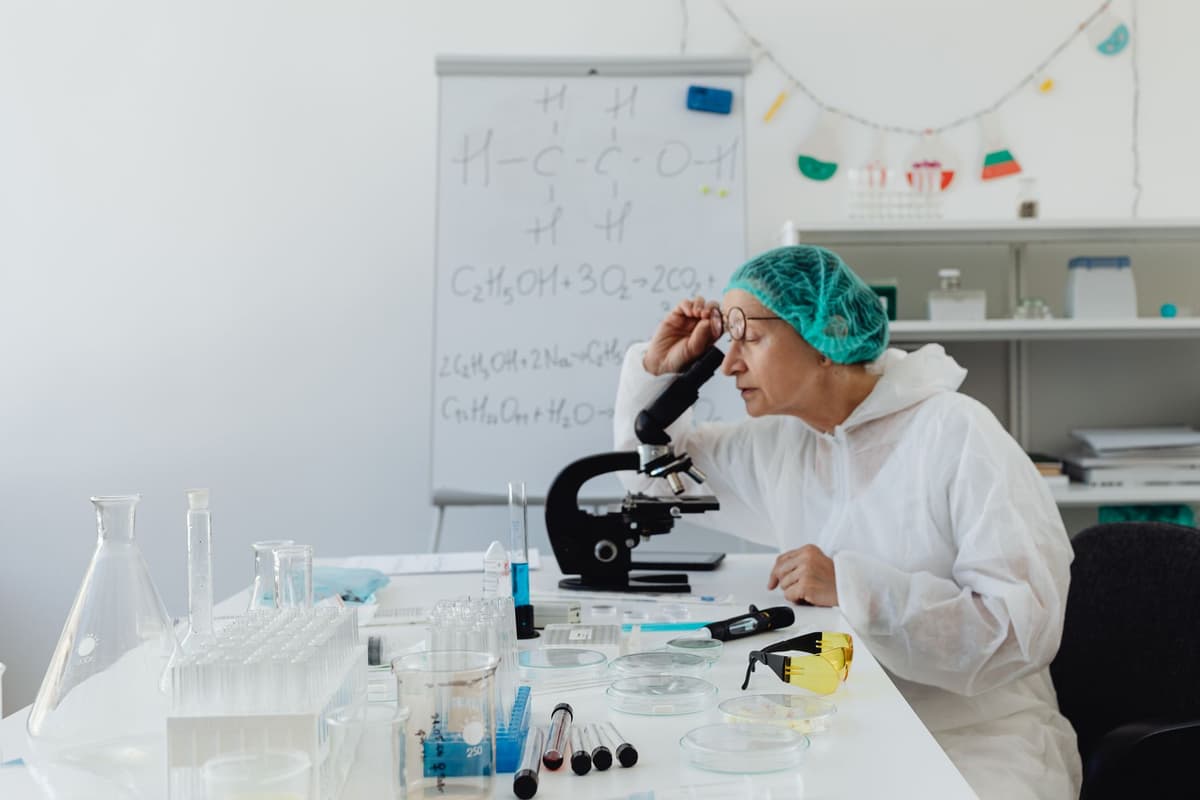
Photo by https://kaboompics.com/ on Pexels
The Sovereignty of the Sequence
There is a deeper philosophical shift happening here that I’m still trying to wrap my head around. For the last twenty years, the trade-off for using cool technology has been our privacy. We gave up our location for maps, our interests for social connection, and our shopping habits for convenience. We’ve been conditioned to believe that data utility and data privacy are on opposite ends of a seesaw. If one goes up, the other must go down. This technology suggests that the seesaw is a lie.
If we can get the "value" of the data (the diagnosis, the trend, the cure) without the "risk" of the data (the leak, the insurance discrimination, the stalking), what does that do to the business models of the future? Companies like Google have built empires on seeing everything. If they are now building tools that intentionally keep them in the dark, it implies a massive shift in how they value information. They are realizing that being a "trusted vault" is more profitable than being a "data broker."
What This Actually Means
This is the beginning of the end for the "Privacy vs. Progress" debate. If we can prove that FHE works at scale for medical diagnostics, there is no reason it shouldn't be the default for everything—your bank records, your private messages, your smart home data. We are moving toward a world where "computation" and "observation" are two different things. You can have a smart life without a surveillance life.
I’m curious to see how quickly the medical establishment adapts. Doctors are notoriously slow to trust new tech, and for good reason. But when the choice is between keeping data locked in a silo where it helps no one, or putting it into a global engine where it stays private but saves lives, the moral high ground shifts. We might look back at 2024 as the year we finally figured out how to share our secrets without losing them.
It makes me wonder what else we’ve been hiding from ourselves simply because we were afraid of being seen. If the fear of exposure is removed, how much faster does human knowledge move? We're about to find out.
Quick Answers
Is my doctor already using this?
Probably not yet, as most current applications are in the research and pilot phase between major tech firms and large hospital networks.
Does this mean AI won't be biased?
No, the AI can still be biased based on the data it's trained on; it just won't know the specific identity of the person it's currently analyzing.
Is 'zero-knowledge' actually 100% secure?
In theory, yes, because the math is sound, but in practice, the security depends on the implementation and the strength of the encryption keys used.