The transition from 'melting' to 'extinct' marks a profound shift in how we process planetary decay. For decades, we treated glacial retreat as a generic symptom of a warming world—a rounding error in a sea of rising Celsius. The Global Glacier Extinction Explorer changes the vocabulary. By cataloging the specific cultural, hydrological, and spiritual identities of 485 glaciers projected to vanish, we have moved from a framework of mitigation to one of memorialization. This is a digital necrology for the structures that literally hold our world together.
When a glacier dies, it doesn't just leave behind a dry valley; it leaves a hole in the legal and cultural fabric of the surrounding civilizations. We are witnessing the birth of a new kind of cartography, one that maps what is about to be missing. This isn't about 'saving the planet' in the abstract anymore. It is about acknowledging that specific, named entities that have defined human borders and survival for millennia are being erased from the map in real-time.
The Legal Vacuum of Vanished Borders
International law is remarkably ill-equipped for a world where geographical features simply stop existing. Glaciers are more than just ice; they are the physical anchors for water rights treaties and national boundaries. When the ice disappears, the legal definitions of 'upstream' and 'downstream' become fluid in the most dangerous way possible. We are looking at a future where 1.9 billion people who rely on glacial runoff for drinking water and agriculture find themselves in a jurisdictional void.
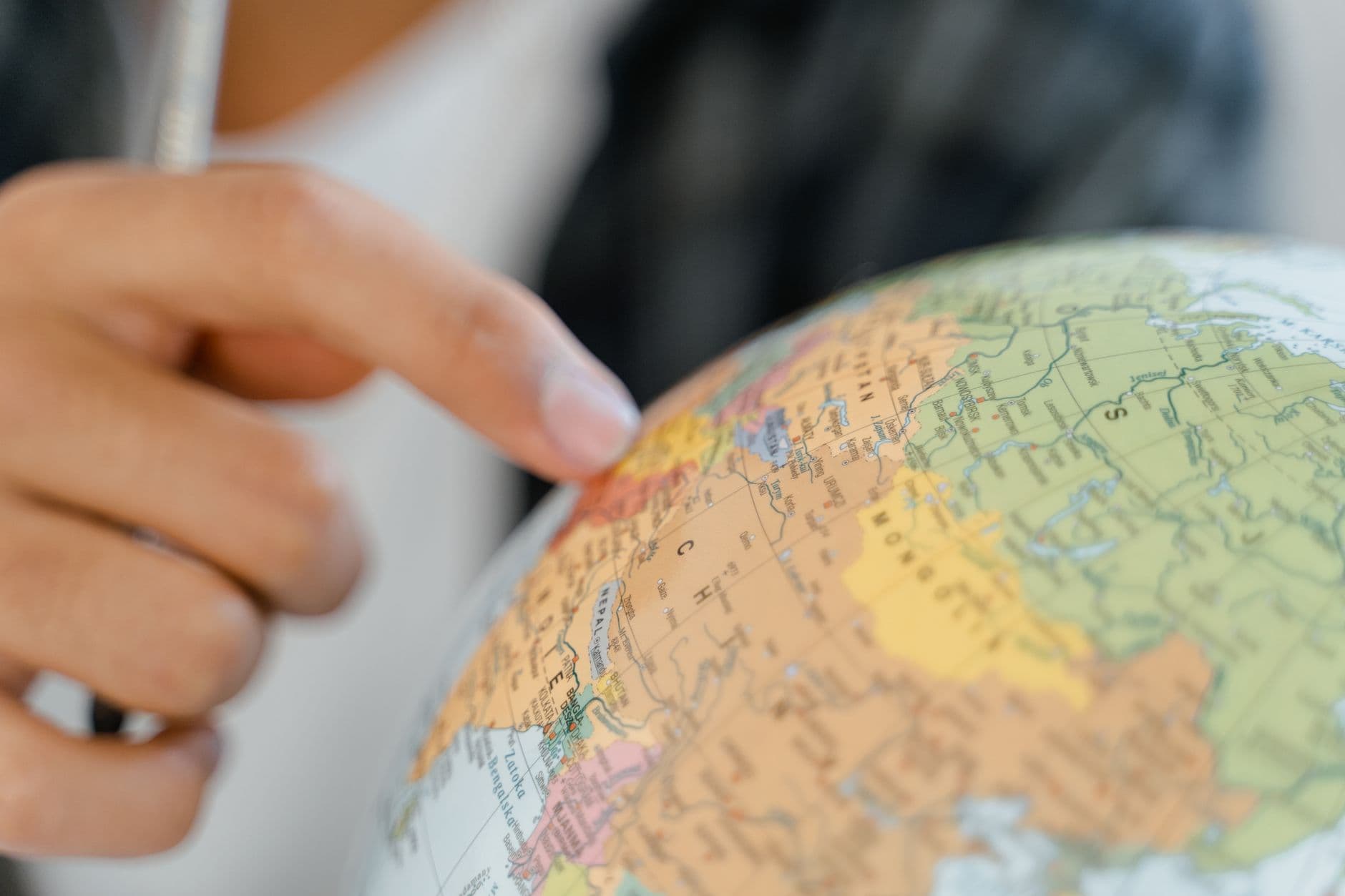
Consider the 1960 Indus Waters Treaty between India and Pakistan. It relies on the predictable flow of glacier-fed rivers. As the Explorer identifies specific glaciers in the Karakoram and Himalayan ranges that are slated for extinction, it simultaneously identifies future flashpoints for nuclear-armed conflict. Once the 'water tower' is empty, the treaty it supported becomes a suicide pact. We have no framework for the 'post-glacial' era of international diplomacy, and the clock is ticking faster than the ink can dry on new proposals.

Photo by Raziuddin Farooqi on Pexels
Furthermore, the concept of 'extinction' for a geographical feature introduces a terrifying new precedent in property and sovereignty law. If a mountain peak was defined by its permanent ice cap, and that cap vanishes, does the elevation change trigger a reassessment of territorial waters or airspace? These aren't academic musings. They are the looming crises of the 2030s and 2040s, as the first wave of the 485 listed glaciers reaches its terminal point.
The Death of Cultural Identity
Beyond the legalities lies the total erasure of indigenous and local heritage. For many communities, a glacier is not a resource; it is a deity, a calendar, and an ancestor. The Explorer’s decision to include cultural identities in its database is a necessary, if heartbreaking, acknowledgment that we are losing more than H2O. We are losing the physical manifestations of human belief systems that have survived for ten thousand years.
In the Andes, the disappearance of a specific glacier can mean the end of a pilgrimage that has defined a community for centuries. When that ice is gone, the ritual dies with it. This is a form of 'slow violence' that traditional climate metrics fail to capture. By naming these glaciers and recording their stories, the Explorer forces us to look at the human cost of our carbon output. It shifts the burden from 'global' responsibility to a very specific, localized grief.
This memorial framework serves a dual purpose. It acts as a witness to the crime, ensuring that future generations know exactly what was here before the silence took over. But it also highlights the profound inadequacy of our current conservation efforts. You cannot 'conserve' a glacier that has already passed its tipping point; you can only document its decline and attempt to manage the chaos that follows its departure.
The Hydrological Reality of a Dry World
We must confront the hard numbers behind this necrology. The first 485 glaciers on the list represent the primary water source for some of the most vulnerable populations on Earth. By 2050, many of these will be reduced to stagnant ponds or bare rock. The loss of seasonal meltwater means the loss of the 'buffer' that keeps rivers flowing during dry seasons. Without that buffer, the agricultural output of entire regions will collapse.
- The loss of the 'cryosphere buffer' will lead to a 20% decrease in summer river flows in some alpine regions.
- Over 200,000 glaciers exist worldwide, but the 'First 485' represent the vanguard of a total systemic failure.
- The cost of replacing glacial water storage with man-made dams and reservoirs is estimated in the hundreds of billions of dollars, a debt many affected nations cannot carry.
This is the brutal math of extinction. We are trading permanent, self-regulating freshwater systems for temporary, expensive, and fragile human infrastructure. The Explorer makes it clear that we are not just losing ice; we are losing the planet's most efficient life-support system. Once these 485 anchors are gone, the stability of the entire mountain-to-sea ecosystem begins to unravel.
What This Actually Means
The Global Glacier Extinction Explorer is the final admission that the 'mitigation' phase of the climate crisis has failed for a significant portion of our geography. We are now in the era of hospice care for the planet's ice. By framing this as a necrology, we are finally being honest about the finality of the situation. You don't negotiate with an obituary; you learn from it, and you prepare for the world that exists after the subject is gone.
This shift to a memorial framework should be a wake-up call for the legal and political sectors. We need 'Extinct Feature' protocols in international law immediately. We need to decide, now, how water will be shared when the glaciers that provided it are nothing but entries in a digital archive. The data is clear, the names are listed, and the dates are set. The only thing left to determine is how we will handle the silence that follows.
True climate action now requires us to look at this list and realize that these are not just statistics. They are the landmarks of our civilization's survival. If we cannot save the ice, we must at least have the courage to build the legal and social structures that can survive its absence. Otherwise, we will find ourselves wandering a map that no longer matches the earth beneath our feet.
Quick Answers
Why call it a 'necrology' instead of just a database?
Because 'database' implies something that can be updated or reversed, whereas 'necrology' acknowledges that for these 485 glaciers, the end is mathematically inevitable. It shifts the tone from scientific observation to a permanent record of loss.
How does a disappearing glacier affect international borders?
Many treaties define borders based on the ridgeline of a glacier or its drainage basin; as the ice thins and moves, the physical 'line' disappears, leading to territorial disputes over the revealed land and the remaining water.
What happens to the 1.9 billion people who rely on this water?
They face a transition from predictable, gravity-fed water to 'water stress' where they must rely on erratic rainfall or expensive, energy-intensive pumping and desalination. It is a fundamental shift from resource abundance to permanent scarcity.


