
The Industrial Hole-to-Heaven Pipeline
For decades, the Lusatian region of Germany was a charming vista of brown coal pits and massive machinery designed to chew through the earth like a hungry termite in a lumber yard. Now, the plan is to flip the script. Since we can't exactly put the dirt back—physics is a real buzzkill like that—the genius move is to just add water. We aren't restoring nature; we are building a brand-new version of it from scratch, presumably because the original version didn't have enough designated windsurfing zones.
This isn't your grandfather’s conservation where you plant a few trees and wait for the squirrels to return. This is 'Post-Extractive' engineering, a fancy way of saying we broke the landscape so thoroughly that the only way to fix it is to keep breaking it in a different direction. By 2030, the goal is to have 23 brand-new lakes covering roughly 14,000 hectares. It’s the ultimate DIY project, except instead of a spice rack, it’s a regional ecosystem that requires constant chemical monitoring so the water doesn't accidentally dissolve the tourists.
Just Add Lime and Hope for the Best
One minor detail about turning a coal mine into a lake is that the ground is essentially a giant tea bag of iron and sulfur. When you hit it with water, the resulting brew has a pH level roughly equivalent to stomach acid or a very aggressive vinegar. To prevent the Lusatian Lake District from becoming the world’s largest collection of orange-tinted death traps, the engineers have to dump massive amounts of limestone into the water. It’s a bit like trying to fix a bad soup by dumping a whole box of baking soda into the pot while the guests are already sitting at the table.
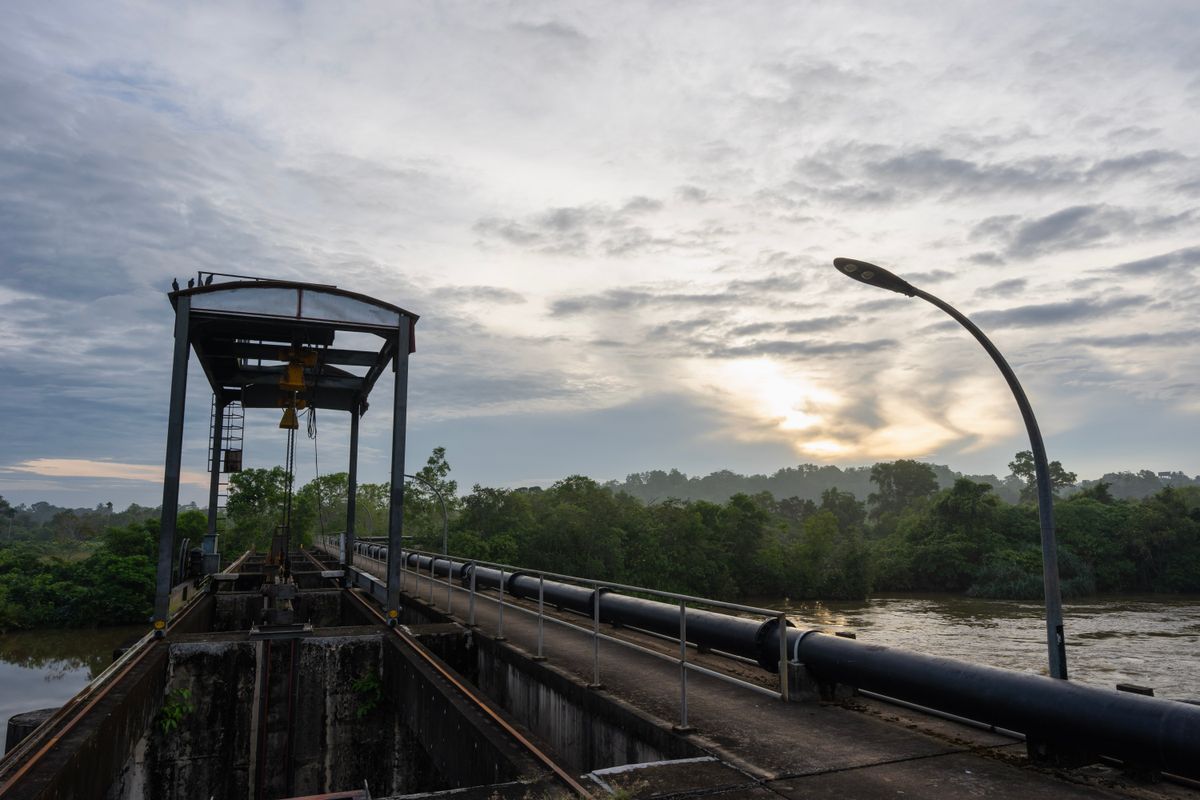
Photo by Thilina Alagiyawanna on Pexels
The sheer scale of the hubris is almost impressive. We have moved past the era of 'oops, we shouldn't have done that' and into the era of 'we can fix this with enough pumps.' The water levels are managed by a complex system of pipes and canals because, naturally, a man-made lake doesn't know how to behave like a real one. If the pumps stop, the system fails. It’s nature on a life-support machine, plugged into a power grid that—ironically—was probably built using the very coal that created the holes in the first place.
The Economy of Controlled Flooding
There is a certain poetic irony in watching a region transition from a 'coal economy' to a 'wetland economy.' The plan is to replace dirty mining jobs with the high-stakes world of paddleboard rentals and lakeside cafes. It’s the ultimate pivot. Instead of digging up the past, the locals are now tasked with selling the aesthetic of a 'restored' wilderness to Berliners who want to feel at one with nature without actually dealing with the messiness of an unmanaged forest.
- The project has already cost over 11 billion euros since the 1990s.
- It involves moving more than 3 billion cubic meters of earth, which is a lot of shoveling just to make a beach.
- The 'new' nature is so fragile that entire shorelines have to be reinforced with hidden concrete to prevent them from sliding into the abyss like a bad metaphor for the global economy.
We are essentially creating a theme park version of the biosphere. It looks like a lake, it acts like a lake, and if you don't look too closely at the monitoring stations every few miles, you might even forget that you're swimming in a highly regulated industrial byproduct. It’s the 'I Can't Believe It's Not Nature' of environmental policy.
What This Actually Means
What we are witnessing in Lusatia is the final surrender of the idea that nature can heal itself. We’ve decided that the planet is just another piece of infrastructure that needs a 50-year maintenance plan and a dedicated budget line. If you break the world badly enough, you don't get the old one back; you get a shiny, artificial replacement that requires a manual and a team of technicians to keep the water blue.
It’s a bold strategy. We are betting that our engineering can outrun our appetites. By turning these toxic pits into a 'climate-resilient wetland,' we get to pat ourselves on the back for being green while ignoring the fact that we spent a century turning the area into a moonscape. It’s the ecological equivalent of buying a carbon offset after flying a private jet to a climate conference—it looks great on a spreadsheet, but the atmosphere still knows what you did.
Ultimately, the Lusatian Lake District is a monument to human persistence. We are so committed to our lifestyle that we will literally reshape the crust of the earth twice—once to take what we want, and once to hide the evidence. If the result happens to be a nice place for a boat ride, then I suppose that’s just the cherry on top of our terraformed sundae.
Quick Answers
Is the water actually safe to swim in?
Mostly, as long as the lime-dumping ships stay on schedule and the pH levels don't plummet back into 'battery acid' territory. Just don't think too hard about what's at the bottom.
Will the original ecosystem ever come back?
No, that's gone forever. This is a new, 'curated' ecosystem that prefers stable water levels and tourists who pay for parking over the messy unpredictability of actual wilderness.
Why didn't they just fill the holes with dirt?
Because dirt is expensive and water is (relatively) cheap, plus you can't sell a 'Luxury Dirt Pit Resort' to weekend travelers from the city.

