Nature’s Spicy New Weather Update
French firefighters recently had the distinct pleasure of battling a pyrocumulonimbus. For those who don't speak 'Earth is angry,' that’s a thunderstorm generated by the heat of a massive fire. It’s a self-sustaining loop where the fire gets so bored with burning trees that it decides to start its own meteorological department. The fire heats the air, the air rises, it cools, it creates a cloud, and then that cloud throws lightning bolts back down to start more fires. It is the ultimate display of vertical integration, and frankly, Jeff Bezos should be taking notes on this level of efficiency.
We spent the last century convinced that a few rows of cleared trees—the classic 'firebreak'—would be enough to keep the flames at bay. That was adorable. It turns out that when the fire can literally fly over your little dirt path using its own private thunderstorm, your 50-foot gap in the woods looks less like a defense and more like a suggestion. The pyrocumulonimbus doesn't care about your property lines or your local zoning ordinances. It has a schedule, and that schedule involves turning the sky into a furnace.
Designing the Wind to Stop the Fire
Since we can’t stop the planet from cooking, urban planners have pivoted to 'atmospheric architecture.' This is the high-concept way of saying we need to build cities that don't accidentally act as bellows for the apocalypse. The idea is to design urban canyons and heat-sink plazas that disrupt the microclimates these fires need to thrive. Instead of just building a park because it looks nice, we’re now supposed to calculate how a 'cool-air reservoir' in a sunken plaza can prevent a neighborhood from becoming a convection oven. It’s a charming shift from 'let’s have a nice fountain' to 'let’s try not to create a chimney effect that incinerates the bistro.'
Architects are now obsessed with 'aerodynamic roughness.' The goal is to make the city’s skyline so jagged and annoying that a fire-generated storm can't gain enough momentum to function. We are essentially trying to trip the wind. Imagine a $500 million skyscraper whose primary design feature is that it's supposed to be an aerodynamic speed bump for a fire cloud. It’s the kind of innovation you only get when you’ve successfully ignored every other warning sign for fifty years.

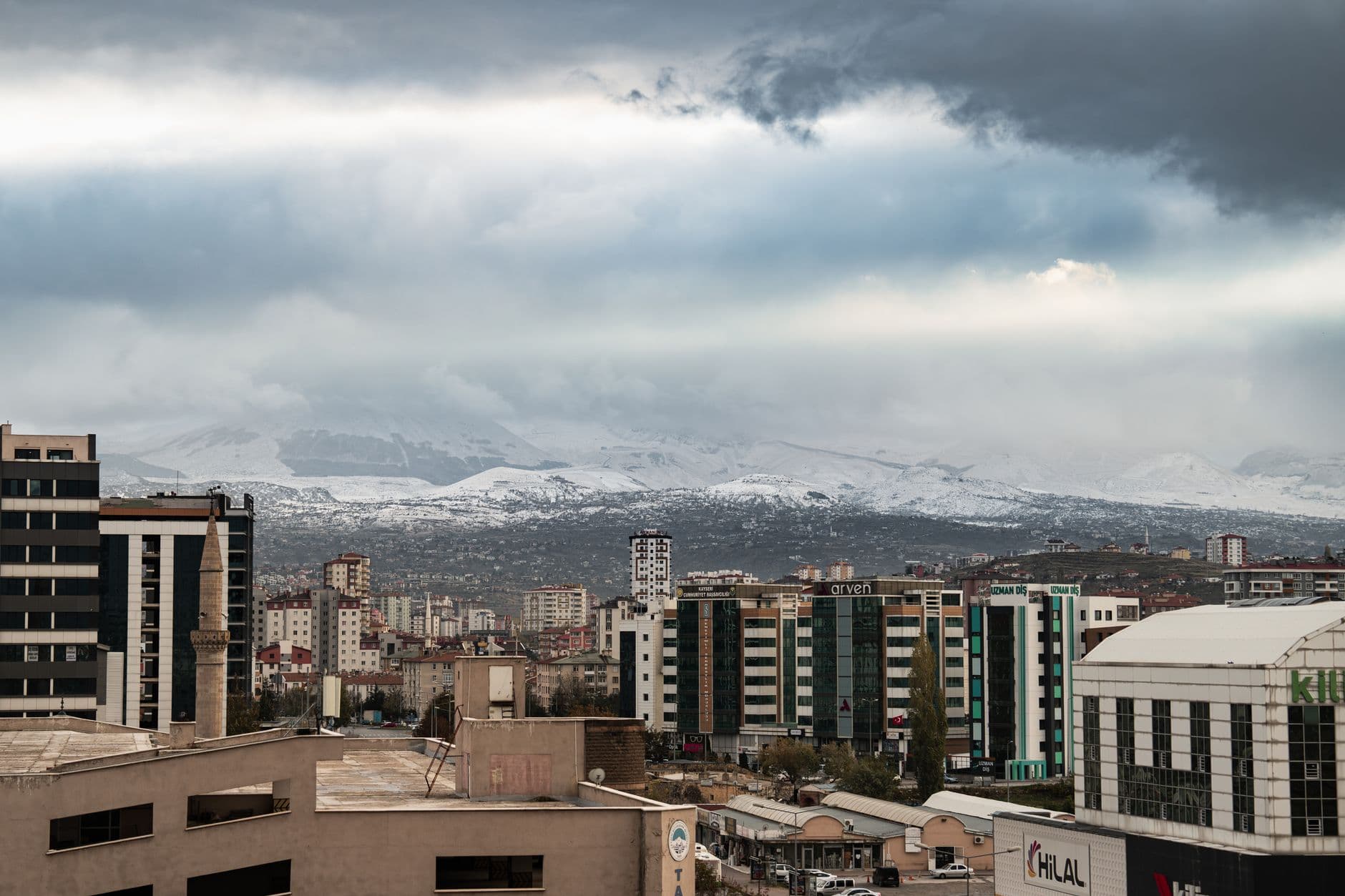
Photo by VISHWANATH on Pexels
The Luxury of Not Spontaneously Combusting
Of course, these 'pyro-resilient' features won't be in the social housing blocks or the aging suburbs. No, 'atmospheric architecture' is the next big thing for high-end developments. You can already see the brochures: 'Live in the Quartz District, where our patented thermal-disruption corridors ensure your morning latte won't be interrupted by a localized fire-storm.' We are moving into an era where 'not being inside a fire-generated vortex' is a premium amenity. If you can't afford the heat-sink plaza, I suppose you'll just have to settle for the traditional experience of watching the sky turn purple and angry.
The math here is staggering. In 2023, wildfires in Europe burned over 500,000 hectares, but the real cost isn't just the timber. It’s the realization that our infrastructure is basically a collection of heat-conductive materials waiting for a spark. Traditional firebreaks were a 2D solution to a 3D problem. Now we’re trying to build 4D cities that manipulate the air itself, which is a lot of work just to avoid the simpler solution of, you know, not letting the planet get this hot in the first place.
What This Actually Means
It means that the 'fire season' has officially graduated from a seasonal nuisance to a full-blown atmospheric event. We are no longer just fighting flames on the ground; we are fighting the physics of a changing sky. Urban planning is no longer about where people want to live; it’s about where the air won't turn into a jet engine. If your city doesn't have 'heat-sink plazas' or 'disruptive canyons' in its ten-year plan, you might want to invest in a very large fan or a very good insurance policy.
The irony is that we’re trying to use more concrete and more 'design' to fix a problem caused by our obsession with building things. We’re doubling down on architecture to save us from the consequences of our architecture. It’s a bold strategy. Let’s see if the 2,000-degree fire cloud appreciates the aesthetic of our new aerodynamic plazas.
Ultimately, 'atmospheric architecture' is just a fancy way of admitting we’ve lost control of the outdoors. We are building sophisticated cages for ourselves, hoping the bars are thick enough to keep the weather out. It’s brilliant, really. We’ve managed to turn the fundamental elements of life—air and heat—into enemies that require a specialized engineering degree to manage.
Quick Answers
Can a thunderstorm actually start from a fire?
Yes, it’s called a pyrocumulonimbus, and it happens when intense heat creates an updraft so strong it forms a storm cloud capable of producing lightning and 'fire whirls.'
Will 'atmospheric architecture' actually work?
In theory, yes, by breaking up the wind patterns and cooling the air near the ground to prevent the fire from feeding on itself, but it’s an expensive way to fight physics.
Is this happening everywhere now?
It’s becoming much more common in places like France, Canada, and Australia as wildfires get hotter and larger, making these 'fire-storms' a regular feature of the summer.


