
We have finally reached the pinnacle of human achievement: the total elimination of the struggle against a stubborn piece of kale. For millennia, our ancestors wasted precious biological energy grinding down fibrous roots and tearing through actual muscle tissue like common predators. It was undignified. It was loud. It involved way too much saliva. Thankfully, the $2 trillion global food processing industry has stepped in to save us from the sheer physical trauma of mastication by pre-digesting our meals in a factory so we don't have to do it at the table.
The 'Texture Gap' is the latest scientific term for the fact that we are essentially eating flavored air and calling it a feast. Because modern ultra-processed foods possess the structural integrity of a damp sponge, our brains have no idea when the meal is actually over. We are trapped in a state of 'hedonic hunger,' a psychological purgatory where you’ve consumed 1,200 calories in six minutes but your brain is still waiting for the mechanical signal that you’ve actually done the work of eating. It’s a metabolic glitch that makes us feel like we’re starving in the middle of a buffet, all because we didn't have to chew hard enough to break a sweat.
The Tragedy of the Idle Jaw
Your jaw was designed to exert roughly 150 pounds of force, a biological marvel capable of crushing nuts and grinding grains. In 2024, the most strenuous activity that jaw performs is gently compressing a marshmallow-soft brioche bun that has been engineered to melt upon contact with human breath. We have outsourced the mechanical work of our stomachs to massive steel vats in industrial parks, leaving our evolutionary signaling pathways wandering around lost and confused. When you eat something that requires zero effort, your brain assumes you’ve merely encountered a very delicious, calorie-dense fog.
This lack of resistance isn't an accident; it’s a design feature. Food scientists spend thousands of hours perfecting the 'melt-in-mouth' profile because if you don't have to chew, you don't have to stop. A study published in the journal Nature notes that people eat ultra-processed foods roughly 50% faster than unprocessed ones. That’s not a efficiency win; it’s a biological bypass. By the time your stomach realizes it’s full, you’ve already managed to swallow a three-day supply of sodium and enough emulsifiers to coat a mid-sized sedan.
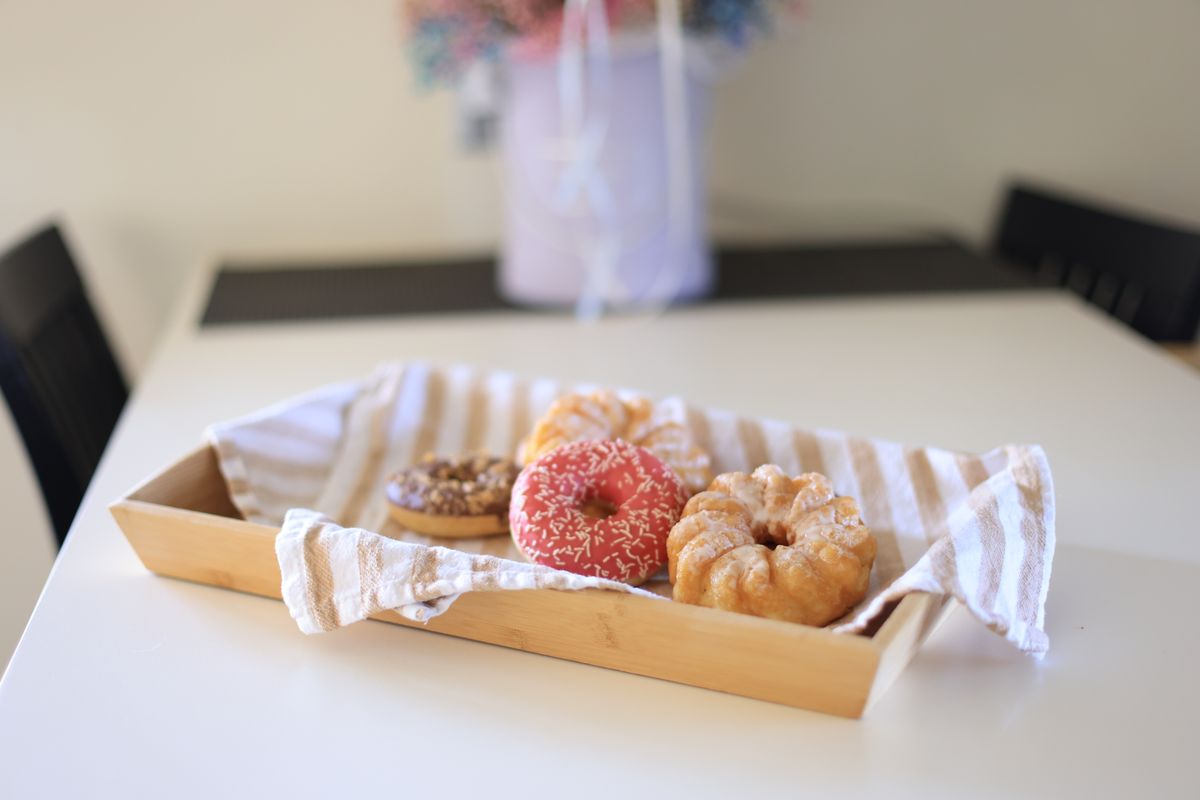
Photo by Valeria Boltneva on Pexels
Solving the Problem of Being Too Full
The beauty of this system is that it creates a feedback loop of perpetual dissatisfaction. In the old days—say, 10,000 BC—if you wanted the hit of dopamine that comes from sugar, you had to fight a beehive or spend an afternoon picking tiny berries while trying not to be eaten by a leopard. Now, you can get that same hit from a tube of neon-colored sludge while sitting perfectly still. But because the sludge offers no tactile feedback, the brain’s 'satiety center' stays in sleep mode. You aren't hungry for calories; you’re hungry for the sensation of having eaten, which the food itself is specifically designed to withhold.
We have created a world where 'mouthfeel' has replaced 'nutrition' as the primary metric of success. The softer the food, the more we can cram in before the internal alarm goes off. It’s a brilliant business model: sell people food that doesn't feel like food, so they buy more food to compensate for the feeling of not having eaten. We are the only species on Earth that has managed to make eating a passive activity, turning a survival necessity into a high-speed delivery system for industrial additives.
The Evolutionary Irony of the Smoothie
Nothing encapsulates this failure better than the modern obsession with pulverizing everything into a liquid. We take perfectly good vegetables, strip them of their structural dignity in a high-speed blender, and then wonder why we’re hungry twenty minutes later. We’ve decided that the 'work' of eating is an inconvenience to be optimized away, like a slow internet connection or a long commute. We want the nutrients, but we refuse to participate in the biological ritual required to register their arrival.
Even 'healthy' processed foods fall into this trap. A protein bar with the consistency of fudge doesn't trigger the same metabolic cascade as a piece of chicken or a handful of almonds. You can't trick two million years of hominid evolution with a clever marketing campaign and some chicory root fiber. Your brain knows you’re cheating. It knows you haven't put in the reps. And its revenge is a nagging, persistent urge to go back to the pantry for 'just one more bite' of something that doesn't require a tooth to function.
What This Actually Means
We are currently participating in a massive, unplanned biological experiment to see what happens when an apex predator stops using its teeth. The result isn't just weight gain; it's a fundamental decoupling of our senses from our survival needs. We are physically full but neurologically empty, wandering through grocery store aisles like ghosts looking for a crunch that never comes. The 'Texture Gap' isn't just a quirk of food processing; it's a sign that we've become too efficient for our own good.
If you want to feel full, you might actually have to perform the manual labor of biting something that fights back. A raw carrot isn't just a delivery vehicle for Vitamin A; it’s a signal to your hypothalamus that the hunt is over and the feast has begun. Until we bridge the gap between the calories we swallow and the effort we exert, we’re going to keep feeling like we’re starving in a world made of soft, delicious, calorie-dense pillows.
Quick Answers
Is my blender making me fat?
It’s certainly helping by removing the 'chew tax' evolution placed on your calories, allowing you to consume a bucket of spinach in twelve seconds without your brain noticing.
Why can't I stop eating potato chips?
Because they are engineered to shatter and disappear instantly, providing a momentary illusion of texture followed by an immediate lack of physical mass that leaves your brain asking where the rest of the meal went.
Should I just start chewing more?
Ideally, yes, but good luck finding something in the middle aisles of a supermarket that requires more than a casual nudge from your tongue to dissolve into a bolus.

