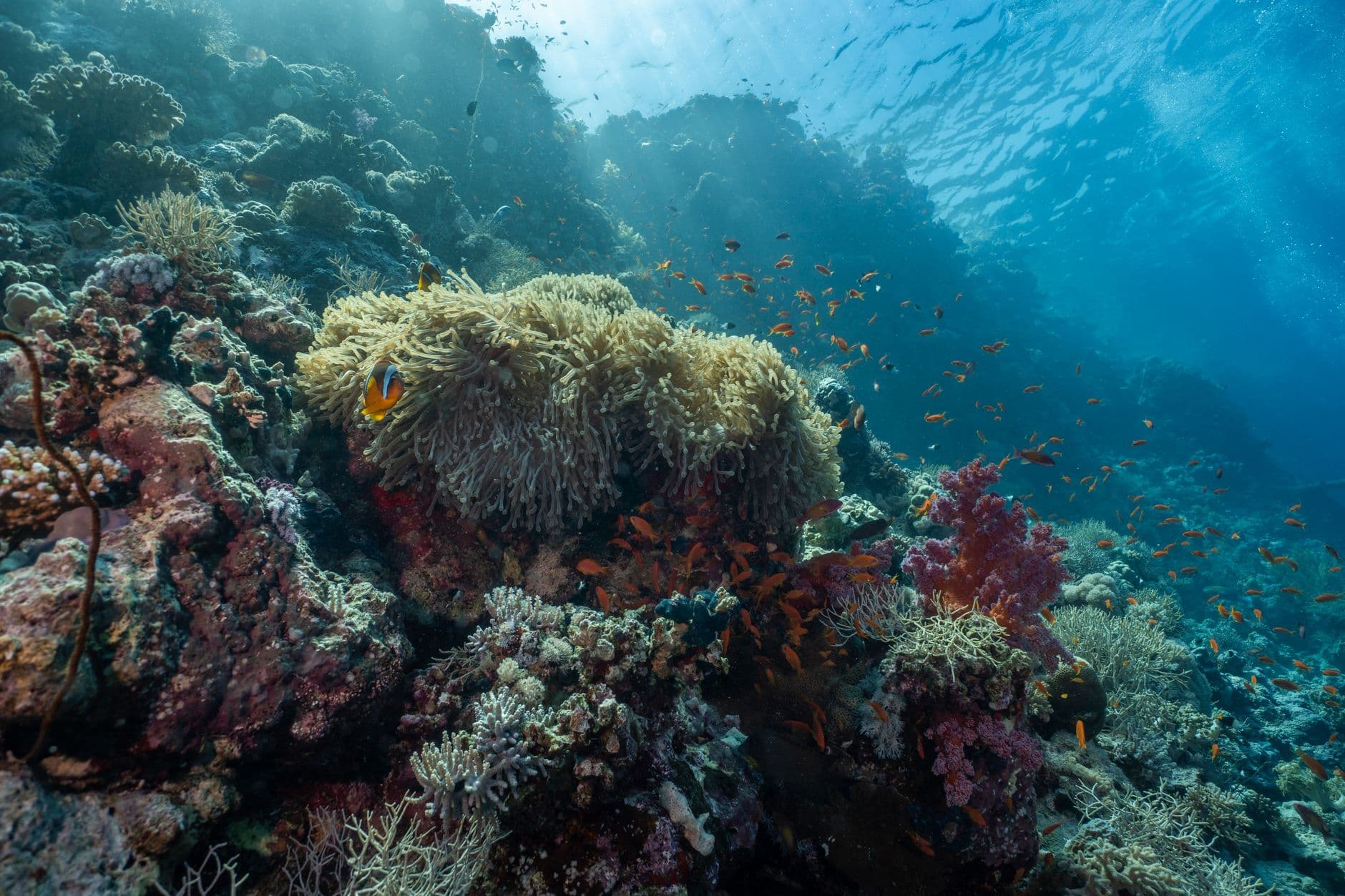
The Pressure That Should Kill Everything
Imagine taking a human protein—the delicate, folded origami of amino acids that keeps your brain firing and your heart beating—and dropping it 3,000 meters below the surface of the Pacific. At that depth, the pressure is roughly 300 times what we feel at sea level. For most terrestrial life, that kind of force acts like a microscopic trash compactor. It doesn't just crush bones; it physically unfolds the proteins themselves. When a protein loses its shape, it loses its function. Life, quite literally, stops working.
Yet, we are seeing these 'alien' sharks—creatures like the bluntnose sixgill or the ghost shark—gliding through that abyss with the casual grace of a goldfish in a suburban pond. They aren't just surviving; they are thriving in a state of 'Extreme Physiology.' I find myself wondering how a vertebrate can maintain cellular integrity when the very physics of their environment is trying to turn their internal chemistry into a chaotic soup. We’ve known about deep-sea life for a long time, but we are only just now realizing that these sharks are essentially biological vaults holding the secrets to structural stability.
Solving the Protein-Folding Puzzle
The medical community is currently obsessed with protein misfolding, and for good reason. It is the smoking gun behind Alzheimer’s, Parkinson’s, and ALS. In these diseases, our proteins lose their shape and clump together like wet hair in a drain, eventually killing the neuron. For years, we’ve tried to fix this using terrestrial models—mice, fruit flies, yeast. But those organisms evolved in the comfort of 1 atmosphere of pressure. They don't have to be experts at keeping their proteins together.
These deep-sea sharks do. They utilize a suite of 'piezolytes'—small molecules that act like chemical scaffolding, pinning proteins into their correct shapes even under crushing weight. Researchers are now pivoting toward 'Extremophile Pharmacology,' asking if we can synthesize these stabilizers for the human brain. If a shark can keep its metabolic pathways clear while being squeezed by miles of ocean, surely there is a lesson there for a human brain struggling to keep its proteins folded correctly over an 80-year lifespan.
Photo by Scott Webb on Pexels
The Metabolism of the Midnight Zone
It’s not just about the pressure, though. Down there, the temperature hovers just above freezing, and food is a luxury that might show up once a month in the form of a falling whale carcass. This has forced these sharks to develop a metabolic efficiency that feels almost supernatural. Their cells operate on a different clock. Scientists are discovering that their metabolic adaptations involve unique ways of handling cellular stress and oxygen deprivation—things that happen to human tissue during a heart attack or a stroke.
I’m curious about the trade-offs. Evolution never gives you a free lunch. If these sharks have perfected the art of cellular resilience, why haven't these traits surfaced in shallower waters? It seems nature has locked these high-performance biological 'upgrades' in the one place we can't easily reach. We are looking at a library of genetic solutions that has been evolving in total darkness for 400 million years, and we’ve only just cracked the front door open with a few remote-operated vehicles.
What This Actually Means
This shift toward Extremophile Pharmacology suggests that the next great medical breakthrough won't come from a computer simulation or a synthetic chemistry lab, but from the belly of a creature that hasn't seen the sun in a millennium. We are moving away from trying to 'fix' human biology with man-made chemicals and toward 'borrowing' the hardened, battle-tested mechanics of organisms that live at the edge of what is physically possible. It’s a humbling realization: the cure for your grandmother’s dementia might be encoded in the liver of a shark that lives in a trench off the coast of Fiji.
We have to wonder what else is down there. If a shark can teach us how to prevent neurodegeneration, what could a deep-sea crustacean teach us about bone density? What could a hydrothermal vent worm teach us about heat-shock proteins and cancer? The ocean isn't just a resource for food or a heat sink for the planet; it is a massive, untapped pharmacopeia of extreme solutions to universal biological problems.
Ultimately, this discovery redefines our relationship with the deep. It’s no longer just a weird, scary place with glowing fish. It’s a laboratory where the most difficult problems in biology have already been solved. We just need to be smart enough—and curious enough—to go down there and read the results.
Quick Answers
Why are these sharks called 'aliens'?
They often possess translucent skin, glowing eyes, or prehistoric features that haven't changed in millions of years because their environment is so stable.
How does this help with Alzheimer's?
Scientists are studying the sharks' 'piezolytes,' which are molecules that prevent proteins from unfolding and clumping, a primary cause of many brain diseases.
Can we just eat the sharks to get these benefits?
No, the concentration of heavy metals like mercury in deep-sea predators is dangerously high, and the specific proteins must be isolated and synthesized in a lab to be safe for humans.


