
The Digital Shadow on the Sidewalk
There is a specific kind of satisfaction in an isometric grid. It is the math of the impossible—a 3D representation where nothing recedes into a vanishing point, and everything stays perfectly, stubbornly proportional. I was messing around with Cube Type, one of those slick browser-based tools that turns simple text into extruded, axonometric blocks, and I realized I wasn't just looking at a font. I was looking at the blueprint for the apartment complex they just finished down the street. It is as if the software we use to design our digital lives has finally gotten bored of the screen and decided to start colonizing the physical world.
We are witnessing a strange reversal of influence. For decades, digital design tried to mimic the messy, tactile reality of the physical world through skuomorphism and organic curves. Now, the physical world is trying to mimic the clean, stackable logic of the pixel. When you look at the recent trend of 'modular' architecture—buildings that look like a collection of shipping containers or a high-stakes game of Tetris—you aren't seeing a tribute to Bauhaus. You are seeing the axonometric revival. It makes me wonder if we are building for humans anymore, or if we are building for the software that makes the rendering process easier.
The Allure of the Stackable City
Why are we so obsessed with the block right now? Part of it is purely economic, of course. Prefabricated modules are cheaper to build in a factory and crane into place than custom-poured concrete curves. But there is a deeper, more aesthetic curiosity at play here. In an isometric system, every angle is 30 degrees. There is no distortion. It provides a sense of structural legibility that our chaotic, organic cities usually lack. When a building looks like it was generated by a typography tool, you understand how it works just by looking at it. You see the seams. You see the stack.
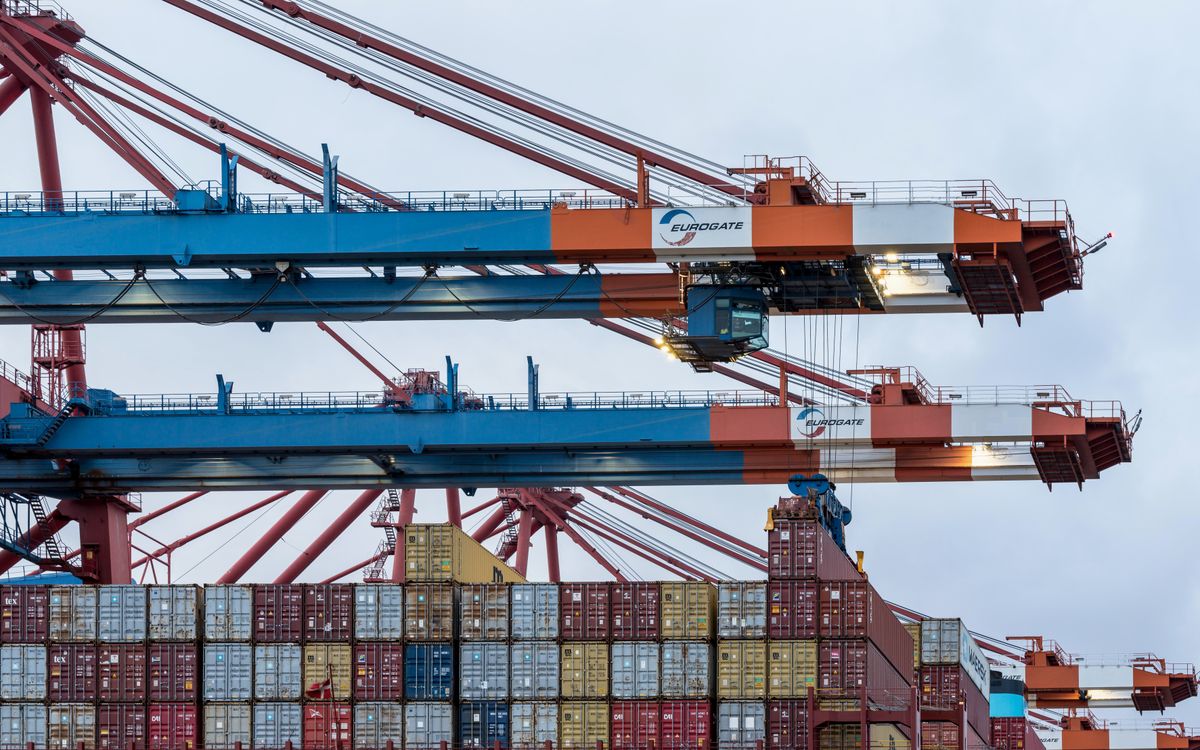
Photo by Wolfgang Weiser on Pexels
This 'stackability' is becoming the primary language of urban density. I look at projects like the Habitat 67 in Montreal—which was decades ahead of its time—and compare it to the billion-dollar developments popping up in London or New York today. The difference is the precision. The modern versions look less like a vision of the future and more like a high-resolution export from a design suite. We are trading the 'grand gesture' of the architect for the 'modular logic' of the system designer. Is a city still a city if it’s just a series of extruded polygons?
- The global modular construction market is projected to hit $175 billion by 2025.
- Digital-to-physical workflows now allow a designer to go from a 3D model to a manufactured wall panel in under 48 hours.
- Isometric design tools have seen a 400% increase in web traffic over the last three years, largely driven by UI/UX designers moving into spatial design.
The Ghost of the Vanishing Point
In a traditional perspective drawing, everything eventually disappears into a single point on the horizon. It’s a very human way of seeing; it acknowledges our limitations. Isometric design, however, is the view from nowhere. Or perhaps it's the view from everywhere. By removing the vanishing point, these buildings feel strangely untethered from the ground. They look like they could be infinitely extended in any direction. I find myself walking past these new developments and half-expecting a cursor to appear and drag a balcony three feet to the left.
There is a psychological shift happening here that I can't quite pin down. When our environment becomes 'pixel-perfect,' does our behavior follow suit? There is a coldness to the 90-degree angle and the perfectly repeating module, but there is also a weirdly comforting clarity. It’s the architectural equivalent of a spreadsheet—boring to some, but a profound relief to those who find the old, curving, crumbling world too unpredictable to navigate. I wonder if we are building these grid-cities because they are efficient, or because we’ve spent so much time behind screens that we no longer know how to process a shape that doesn't have a 'snap-to-grid' function enabled.
What This Actually Means
We are entering an era where the distinction between 'graphic design' and 'urban planning' is blurring into a single discipline of spatial management. Tools like Cube Type are the entry drug. They teach us to think in voxels rather than bricks. When we see a building that looks like a stack of digital blocks, we aren't just seeing a construction choice; we are seeing the physical manifestation of our digital comfort zone. We are terraforming our cities to match our interfaces.
Ultimately, the axonometric revival is about control. The organic city is a mess of overlapping histories and awkward shadows. The modular, isometric city is a solved puzzle. Whether that makes for a better place to live is something we haven't quite figured out yet. We are currently in the 'rendering' phase of this new urban experiment, and I’m genuinely curious to see what happens when the inhabitants start trying to live inside the font.
Quick Answers
Is modular architecture just a way to save money?
It’s a major factor, but the aesthetic shift is just as much about the tools designers use as it is about the bottom line. Software dictates form.
What is 'structural legibility'?
It’s the idea that you should be able to look at a building and immediately understand how its different parts are held together and organized.
Why is isometric design trending now?
It bridges the gap between 2D and 3D perfectly, making it ideal for the mobile screens we spend all day looking at, which then influences our physical tastes.

