
The Death of the Sacred Queue
There was a certain dignity in the wait. You would spend six months drafting a proposal to the National Energy Research Scientific Computing Center, pleading for a few thousand node-hours as if you were a medieval peasant asking the local lord for a sack of grain. You would wait in a queue for three weeks to run a single simulation, only for the job to fail because of a missing semicolon in your submission script. That was real science. It built character. It ensured that only the most patient, or perhaps the most masochistic, individuals could contribute to the field of molecular discovery.
Now, we have lost that discipline. Thanks to the reckless advancement of consumer-grade GPUs, some PhD student in a basement can run the same protein-folding simulation on a machine they bought to play Cyberpunk 2077. The institutional gatekeepers are clutching their pearls because their $100 million clusters are being outpaced by hardware sold at Best Buy. It’s a disgrace to the tradition of being ignored by an IT administrator named Gary who hasn't answered an email since 2012.
We used to value the scarcity of compute time. Scarcity meant that your research had to be "important," which usually meant it aligned with whatever grant-funding body was obsessed with that year. By removing the barrier of the remote supercomputer, we are accidentally letting people follow their own curiosity. If anyone can simulate drug-protein interactions for the cost of a high-end microwave, we might actually stumble upon cures that haven't been pre-approved by a steering committee. The horror.
The SSH Stockholm Syndrome
Let’s talk about the aesthetic of the remote server. There is nothing quite like the thrill of a 400-millisecond lag while trying to edit code over a shaky SSH connection. It forced you to be precise. You couldn't just "experiment" or "iterate rapidly" like some kind of Silicon Valley disruptor. You had to commit to your mistakes and wait for the terminal to catch up. Modern local workflows, with their instantaneous feedback and graphical interfaces, are making scientists soft. If you aren't struggling against a command line that looks like it was designed during the Cold War, are you even doing chemistry?

Photo by Godfrey Atima on Pexels
The move to "Edge-Chemistry" is essentially an act of treason against the cult of the centralized mainframe. By running models locally, researchers are bypassing the traditional hierarchy of institutional prestige. Previously, the quality of your science was measured by how many teraflops you were allowed to touch. Now, it’s being measured by things like "reproducibility" and "novelty." It’s a pivot from a system based on permission to one based on results, and frankly, it makes the people with the big shiny buildings very uncomfortable.
- The barrier to entry for drug discovery used to be a $10 million grant; now it’s a $1,600 RTX 4090.
- We are moving from a world of "wait and see" to a world of "tweak and run."
- The monopoly on intellectual curiosity is being broken by gamers and their oversized cooling fans.
The Democratization Disaster
If we allow independent researchers to run complex molecular models on their own hardware, we risk an influx of unauthorized ideas. We might see a sudden surge in orphan drug research—diseases that aren't profitable enough for big labs but are perfectly suited for a rogue chemist with a powerful desktop. Imagine the chaos of a decentralized research landscape where discovery isn't throttled by the availability of a specific cluster in Tennessee. It would be an absolute nightmare for anyone who enjoys the slow, grinding pace of institutional progress.
Furthermore, the environmental cost of keeping these massive, aging supercomputers alive is a beautiful tribute to our commitment to the status quo. Why use an energy-efficient local GPU that only draws 450 watts when you can utilize a facility that requires its own dedicated power substation? Centralization is about scale, and scale is about making sure everyone knows who is in charge. When you move the compute to the edge, you lose the ability to remind the researcher exactly how small they are in the grand scheme of the university budget.
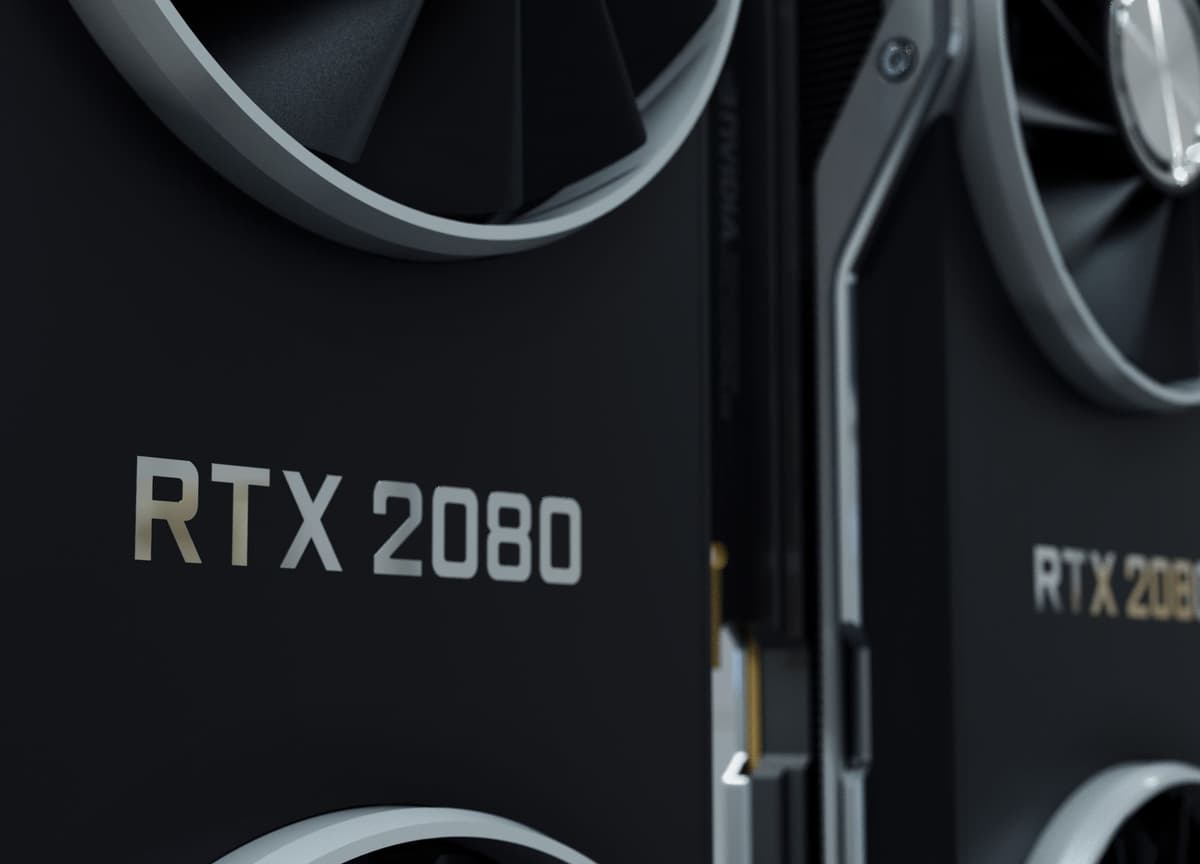
The shift is inevitable, of course. NVIDIA didn't set out to democratize chemistry; they just wanted to make virtual grass look more realistic. But in doing so, they’ve accidentally handed the keys to the kingdom to anyone with a spare PCIe slot. The institutional gatekeepers can keep their queues and their SSH keys. The rest of the world is busy actually finding things.
What This Actually Means
The "Edge-Chemistry" revolution isn't just a technical shift; it’s a total collapse of the high-rent district of science. The reality is that the $37 billion spent on global supercomputing infrastructure is increasingly looking like a legacy cost rather than a competitive advantage. When a single workstation can outperform a 2015-era supercomputer for a fraction of the cost, the justification for centralized gatekeeping disappears.
We are entering an era where the bottleneck is no longer the hardware, but the human imagination. This is terrifying for institutions that have spent decades positioning themselves as the only places where "real" science happens. If the tools are everywhere, then the talent can be anywhere. The elitism of the lab coat is being replaced by the pragmatism of the local terminal, and the results are going to be faster, weirder, and significantly more decentralized.
Ultimately, this is about the death of the permission-based economy in research. You no longer need to convince a board of directors that your hypothesis is worth a million dollars in electricity. You just need to hit 'Enter' on your own machine. It’s a loss of control that the establishment will never forgive, and a win for discovery that we desperately need.
Quick Answers
Is my gaming PC really better than a supercomputer?
For specific tasks like molecular dynamics, a modern GPU can often outperform older cluster nodes, and the lack of a three-week wait time makes it effectively infinite times faster.
Does this mean I can discover a new drug in my bedroom?
In theory, yes, though you’ll still need a way to synthesize and test it, which unfortunately still requires interacting with the physical world and its annoying regulations.
What happens to the big supercomputer centers now?
They will likely pivot to even larger-scale climate modeling or nuclear simulations—things that still require ten thousand nodes and a lot of self-importance to function.
Is SSH actually dead?
Not as long as there are people who enjoy feeling like a hacker from a 1980s movie while they struggle to move a file from one folder to another.


