The Spine-Cracker’s Manifesto
We need to stop pretending that a 1,100-page hardcover is a "book" and start calling it what it actually is: a blunt force weapon that happens to contain adjectives. I recently saw a TikToker take a hacksaw to a brand-new copy of a Brandon Sanderson novel because it wouldn't fit in her purse, and for a split second, my soul left my body. But then I looked at my own copy of Infinite Jest—a book that has caused more wrist sprains than professional tennis—and I realized that the vandals might be onto something.
Cutting a book in half is the literary equivalent of putting ketchup on a wagyu steak. It is offensive, it is vulgar, and if you’re hungry enough, it’s exactly what you’re going to do. We’ve spent centuries treating books as sacred artifacts, but let’s be honest: carrying The Priory of the Orange Tree is less like an intellectual pursuit and more like participating in a strongman competition where the prize is a mild case of carpal tunnel. If the choice is between bisecting a masterpiece or developing a permanent spinal curvature, I’m reaching for the X-Acto knife.
The Physics of Literary Gluttony
There is a specific threshold where a book ceases to be portable and becomes an anchor. That number is roughly 600 pages. Anything beyond that, and the book starts to exert its own gravitational pull, attracting dust and judgmental stares from people who read on Kindles. When a book hits the 1,000-page mark, it’s no longer a companion; it’s a roommate that doesn’t pay rent and makes your backpack smell like a library’s basement.
- The Commuter’s Dilemma: You want to read on the subway, but your book is so heavy it could literally stop a bullet, which is great for safety but terrible for your rotator cuff.
- The Bedtime Hazard: Dropping a 4-ounce phone on your face hurts. Dropping a 3-pound hardcover on your face is a medical emergency that requires an insurance claim and a public apology to your nose.
- The Aesthetics of Destruction: There is a perverse joy in seeing a book with its guts hanging out, held together by duct tape and sheer audacity.
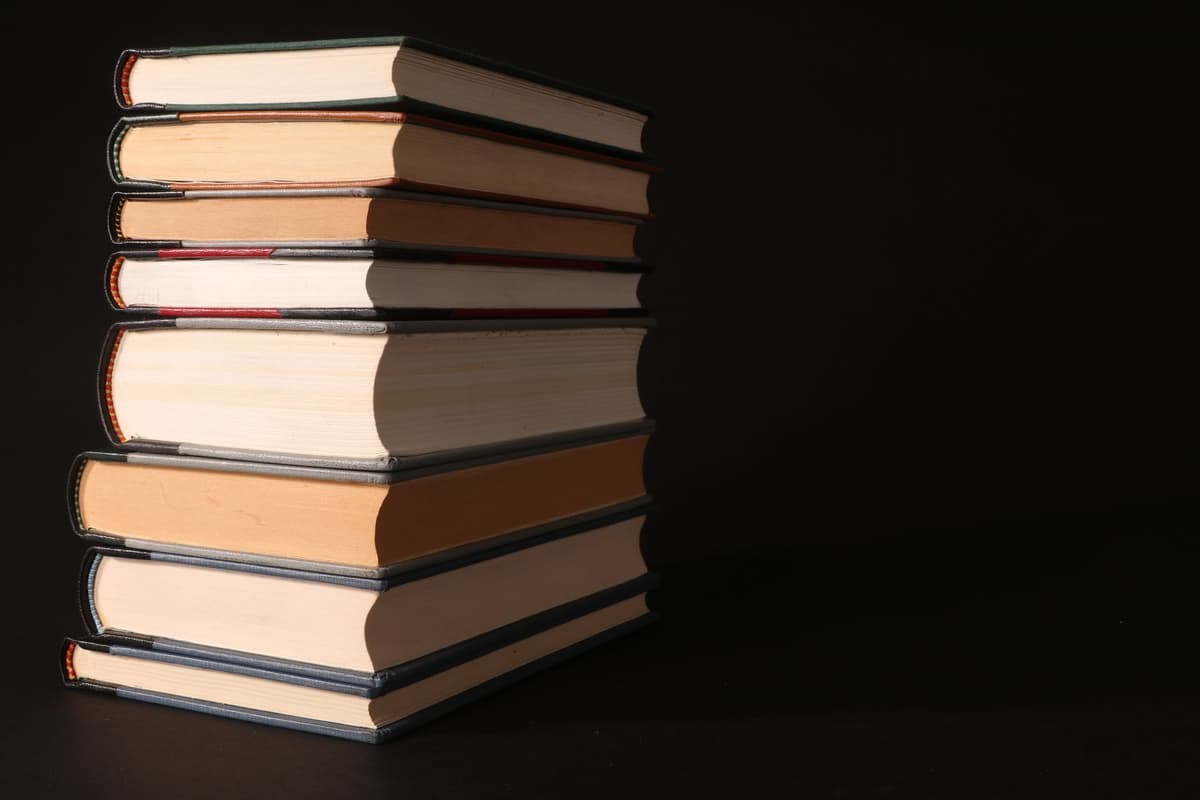
I’ve heard purists argue that "the book is a cohesive whole." To them, I say: have you ever tried to read the middle 200 pages of a doorstopper while standing on a moving bus? You need three hands, a kickstand, and the core strength of a Pilates instructor. By sawing the book into three manageable chunks, you’ve turned a monolithic burden into a series of delightful snacks. It’s like turning a cow into sliders. Is it a little gruesome? Sure. Is it easier to consume? Absolutely.
The Psychology of the Mutilator
What drives a person to commit this bibliographic heresy? It’s a shift from "Book as Trophy" to "Book as Burrito." We used to buy books to display them on shelves like the heads of conquered enemies, proving to guests that we are, in fact, very smart and definitely read things without pictures. But in the age of the 1,500-page “light” fantasy novel, the shelf is full. The shelf is screaming. The shelf is sagging like a tired hammock.
When you cut a book in half, you are declaring independence from the tyranny of the publisher’s binding. You are saying, "I own this paper, and if I want to read the first 500 pages in the bathtub and the next 500 pages in a Denny’s, I shouldn't have to carry the ghost of the entire narrative with me." It is a radical act of utility. It’s the same energy as people who cut the crusts off their sandwiches, except the crust is a $35 dust jacket and the sandwich is a dense meditation on the nature of time.
We’ve become a society of optimizers. We optimize our schedules, our diets, and now, our reading ergonomics. If I can shave 1.2 pounds off my daily carry by committing a minor felony against a Penguin Classic, why wouldn't I? The words are still there. The story doesn't leak out of the severed spine like hydraulic fluid. It’s still a book; it’s just a book that has been humbled by a pair of heavy-duty kitchen shears.
What This Actually Means
Ultimately, this trend is the final death rattle of the book-as-object. We are moving into a post-tactile world where the physical form is just an annoying container for the data inside. If the container is too big, we change the container. It’s cold, it’s logical, and it’s deeply hilarious to imagine the ghost of Johannes Gutenberg watching a teenager saw through a copy of War and Peace while drinking an iced oat milk latte.
But maybe this is how books survive. By becoming less like statues and more like tools. If mutilating a book makes it more likely that someone will actually finish it, then bring on the chainsaws. I’d rather see a book in four pieces that has been read than a pristine hardcover that has only ever served as a very expensive coaster for a succulent.
Go ahead. Cut the book. Slice the epic. Perform the surgery. Just don't come crying to me when you lose Part 2 of 3 and have to spend the rest of your life wondering if the protagonist ever made it out of that cursed forest. That is the risk you take when you play God with a box cutter.
Quick Answers
Is this actually legal?
Yes, the First Sale Doctrine generally means you can do whatever you want to your own property, including turning it into a very nerdy confetti. The FBI is not coming for your duct-taped novels.
Doesn't this ruin the resale value?
Unless you’re planning on selling your sweat-stained copy of A Little Life to a very specific kind of weirdo, the resale value was already zero. Enjoy your DIY paperback.
What if I use an e-reader instead?
That is the sensible, boring solution for people who don't want to carry a hacksaw into a Barnes & Noble. But you lose the thrill of the hunt and the smell of freshly cut glue.


