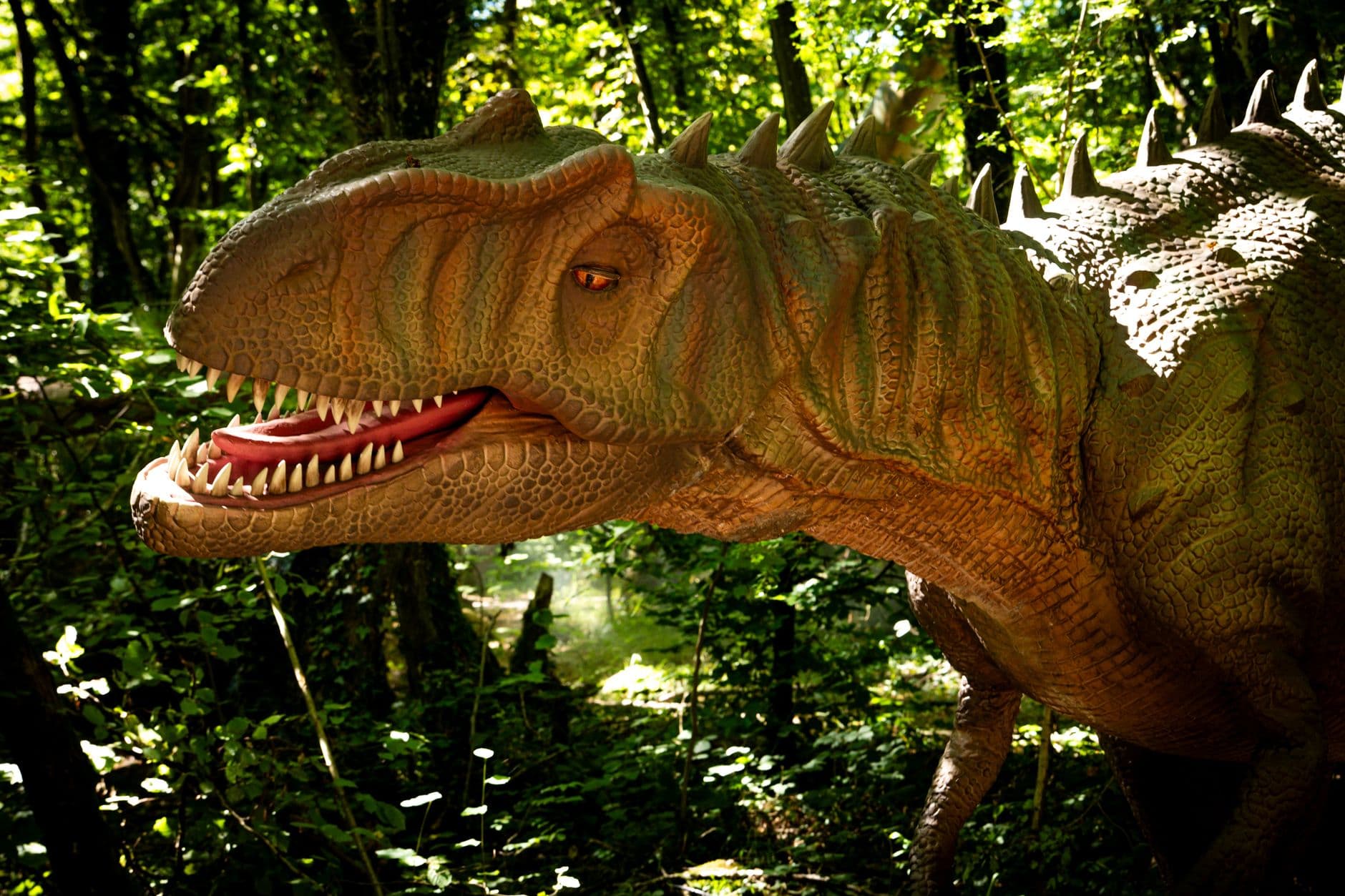
We spent forty years assuming the dinosaurs got wiped out by pure, unadulterated kinetic swagger, like Bruce Willis punching a rock with raw math. New drill cores from the crater prove the universe didn't kill them with brute force; it killed them with a chemistry accident caused by hitting the cosmic equivalent of a sulfur fart bag. If that same ten-kilometer space boulder had splashed down into the deep Pacific, a Tyrannosaurus rex would probably be filing your corporate tax returns right now.
For decades, Hollywood and astrophysics shared the exact same meathead philosophy toward planetary defense: size matters, speed kills, and bigger boom equals deader lizard. Turns out, that model is embarrassingly wrong.
The Yucatan Was the Worst Possible Landing Strip
In 2016, a team of international scientists dragged a drilling vessel called the Myrtle into the Gulf of Mexico, sank drill pipes through millions of years of gunk, and yanked up core samples from the Chicxulub peak ring. They were basically running an autopsy on the Cretaceous period. What they found wasn't just evidence of a giant smash; they found the specific smoking gun of cosmic bad luck.
The target rock under the shallow waters of the Yucatan 66 million years ago was packed with an absurd concentration of hydrocarbons and calcium sulfate, otherwise known as gypsum. When an asteroid hits granite or deep ocean water, it makes a giant splash, kicks up some dust, and rattles the china. When an asteroid strikes a continental shelf made of gypsum at twenty kilometers per second, it flash-vaporizes the terrain into roughly 325 billion metric tons of sulfur aerosols.

Photo by Mikhail Nilov on Pexels
That sulfur went straight into the upper stratosphere, built an opaque mirror around the planet, turned off the sun, and dropped global temperatures by up to 28 degrees Celsius for over a decade. It was not kinetic shockwaves that murdered the Triceratops. It was an involuntary, planet-wide winter triggered by the geologic equivalent of dropping a lit toaster into a bucket of powdered chlorine.
Planetary Defense Has Been Doing the Math All Wrong
Here is where our modern planetary defense nerds need to sit in the corner and think about what they have done. Every defensive model we built around deflecting asteroids focuses obsessively on kinetic energy. We obsess over Joules, mass, velocity, and deflection angles. We bragged about NASA's DART mission slamming into Dimorphos in September 2022 because we nudged its orbit by 32 minutes—a fantastic achievement, provided the asteroid is kind enough to promise it will only hit deep water if we miscalculate.
If your deflection attempt only shaves two minutes off an asteroid's arrival time, you haven't saved Earth; you just changed the address where the apocalypse gets delivered.
- Hit granite in northern Canada? You get a terrible local crater, some gnarly tsunamis, and bad news for moose, but civilization grinds on.
- Hit a deep-sea trench? Big waves, salty vapor, ugly harvest season, but humanity survives on canned soup.
- Hit a shallow, petroleum-soaked evaporite basin? Congratulations, you just turned the Earth's atmosphere into sulfuric acid aerosol soup, and the cockroaches inherit the WiFi passwords.
Our current defense strategy is entirely kinetic. We treat planetary defense like a game of cosmic billiards, completely forgetting that the table is covered in landmines and whoopee cushions filled with nerve gas. If our heroic deflection rocket accidentally redirects a rock away from the middle of the Atlantic and lands it squarely on an offshore oil field or a massive carbonate platform, we didn't save the world. We literally steered the car away from the ditch and straight into the dynamite shed.
The Universe Hates Punctuality
Geophysicists estimate that if the Chicxulub asteroid had arrived just thirty seconds earlier, or thirty seconds later, the rotation of the Earth would have placed the impact site out in the deep Atlantic or Pacific oceans. Thirty seconds. In cosmic terms, that isn't even an eye blink. It is a rounding error. It is the time it takes you to decide whether you want paper or plastic.
If the universe hit the snooze button for half a minute, the sulfur stay-at-home order never happens. Marine life takes a beating, the coastal zones get erased by kilometer-high walls of water, but the sunlight stays on. The ferns survive. The herbivores keep munching. Mammals remain trembling, furry nocturnal stress-balls scurrying beneath the scaly toes of giant thunder lizards.
Instead, the rock timed its arrival with the toxic precision of an annoying mother-in-law arriving exactly as the soufflé collapses. It drilled directly into a chemical weapons stockpile nature had spent millions of years laying down in the Mexican shallows.
What This Actually Means
Planetary defense can no longer be run purely by orbital dynamicists who think the Earth is a smooth, featureless billiard ball floating in the void. We have to bring the geologists into the war room, even if they smell like damp shale and insist on showing everyone their favorite quartz crystals.
Moving forward, deflection science needs a literal menu of preferred catastrophe zones. If an incoming three-kilometer rock is impossible to completely steer away from Earth, our planetary defense protocols must calculate the exact strike zone that avoids vaporizing volatile minerals into the sky. We need a target map that explicitly says: Aim for the deep basalt, avoid the limestone, and under no circumstances let it hit the gypsum.
We spent decades worrying about how hard the sky could hit us, when we should have been worrying about what the floor was made of. Turns out the dinosaurs didn't need an anti-ballistic missile shield. They just needed that stupid rock to land three hundred miles to the left.
Quick Answers
Did the Chicxulub asteroid impact alone cause the extinction?
No, the mechanical blast and firestorms were catastrophic locally, but the extinction was driven by hundreds of billions of tons of vaporized sulfur and soot blocking solar radiation for over a decade.
Why does target geology matter more than kinetic energy?
Because vaporizing volatile-rich rocks like gypsum or hydrocarbons alters the atmosphere globally, whereas slamming the same kinetic energy into deep ocean or non-volatile granite limits the catastrophic cooling effect.
Does this change how NASA plans planetary defense?
It forces mission planners to recognize that partial deflections carry enormous risk; if an intervention accidentally nudges an asteroid into a volatile-rich geological zone, the global survivability drops drastically compared to an ocean impact.