The Great Delete Key of Doom
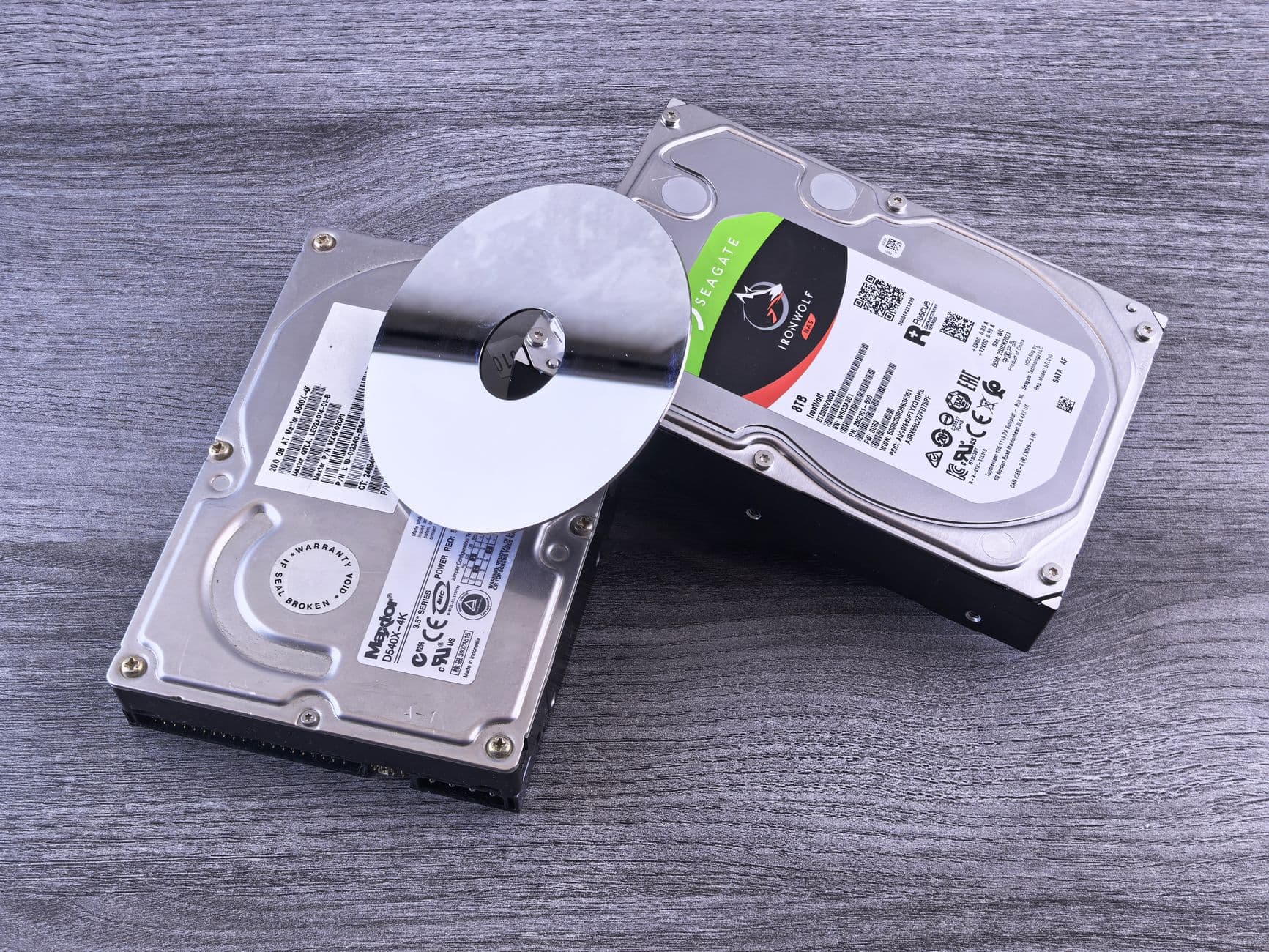
Bioacoustics researchers are currently trapped in a psychological horror movie where the monster is a monthly storage invoice from Jeff Bezos. They go out into the deep, damp parts of the world, rig up high-end microphones to trees, and record thousands of hours of jungle ambience. It is beautiful, haunting, and—from a data perspective—absolutely freaking enormous. Because server space costs actual money, these scientists are forced to delete about 90% of what they record. They are basically the world's most depressed DJs, tossing the only existing recording of a 'Neon-Bellied Screamer' into the digital trash because they can’t afford the extra $40 a month to keep it on a drive.
Imagine if we found the Library of Alexandria, but instead of reading the scrolls, we used them as kindling because we didn't have enough shelves. That is the current state of environmental science. We are effectively burning the tapes of Earth’s greatest hits before we’ve even listened to them. We’re looking for a needle in a haystack, but the haystack costs $5,000 a month to sit in a warehouse, so we just set the whole thing on fire and hope the needle wasn’t important. It’s a specialized kind of madness that only happens when high-tech research meets a low-tech budget.
Enter the Balrogg
When I heard there was a new tool called 'Balrogg' designed for 'demonically compacting' audio files, I assumed it was either a heavy metal plugin or a very niche exercise program for Orcs. Instead, it’s a lossless recompressor for Vorbis and Opus files. In civilian terms: it takes audio files that are already supposed to be small and crushes them into a tiny, dense singularity without losing a single bit of data. It is the digital equivalent of fitting a king-sized mattress into a shoebox without ruining the springs.
Photo by ManojMk Brucelee on Pexels
This isn't just about saving space; it’s about 'storage-extinction.' If you can make a file 20% or 30% smaller without losing the high-frequency chirps of a bat that might hold the cure for boredom, you’ve just saved that species from being deleted by a graduate student trying to balance a budget. Balrogg works on the principle that there is still 'slack' in how we store sound. It looks at the existing compression and says, 'You call that tight? Hold my whip.' It’s the aggressive, over-achieving personal trainer of the data world, screaming at your bits to stop taking up so much room on the couch.
The AI Will See You Now (In 2050)
We need this data because right now, we are too stupid to understand it. We have the ears, but we don't have the brains—at least not the silicon ones—to parse 50,000 hours of rain hitting leaves to find the one second where a 'Ghost Frog' lets out a mating honk. We are saving these files for the AI models of the future. We’re basically leaving a giant voicemail for our future robot overlords, hoping they’ll listen to it and go, 'Oh, that was a very rare lizard, glad you didn't delete this to make room for more TikTok cache files.'
If we don't use tools like Balrogg, the future of biology will just be a bunch of scientists looking at empty folders and wondering what that 'Unknown_Bird_04_Final_v2.wav' sounded like before it was purged in the Great Server Migration of 2026. We are in a race against the 'Delete' button. Every gigabyte saved is a chance that some kid in 2040 will run an algorithm and discover that trees actually talk to each other, and they’ve mostly been complaining about our fashion choices.
Why Lossless is the Hill to Die On
You might ask, 'Why not just use a crappy MP3 setting?' Because in science, 'good enough' is how you end up accidentally ignoring the sound of a glacier cracking because it got smoothed over by a compression algorithm designed for Nickelback songs. Lossy compression is fine for your commute, but for science, we need the raw, unadulterated chaos of nature. If you lose the high frequencies, you lose the bats. If you lose the bats, the bugs win. Do you want the bugs to win? I didn't think so.
Balrogg is the hero we deserve because it understands that data is a finite resource. It treats every byte like a precious heirloom that needs to be vacuum-sealed and stuffed under the bed. It’s the ultimate hoarder’s tool for people who actually have something worth hoarding. By the time we realize how much we've lost, it'll be too late to go back and re-record the 2020s. The jungle is changing, the ice is melting, and the only thing standing between us and total acoustic amnesia is a piece of software named after a creature that lives in a hole in Moria.
What This Actually Means
The 'Lossless Archive Paradox' is a fancy way of saying we are drowning in information we can’t afford to keep. Tools like Balrogg aren't just cool coding projects; they are the lifeboats for our planetary record. We are currently recording the symphony of the world’s end, and it would be a real shame if we missed the finale because we ran out of credits on a cloud storage platform.
We need to stop thinking about data as something that is 'free' or 'infinite.' It’s a physical reality that requires electricity, spinning disks, and cold hard cash. If we can squeeze 10% more life out of every server, that’s 10% more of the Earth’s history that survives the digital meat grinder. It turns out that the secret to saving the planet might not just be planting trees, but also being really, really efficient at filing paperwork.
Ultimately, Balrogg represents a shift in how we handle the 'Data Deluge.' Instead of throwing things overboard to keep the ship afloat, we’re just packing our suitcases better. It’s unglamorous, it’s technical, and it involves a lot of math that would make a normal person’s nose bleed, but it’s the only way to ensure that when the AI finally wakes up, it has something interesting to listen to besides our old podcasts.
Quick Answers
Is Balrogg actually a demon?
No, it’s a command-line tool, though the speed at which it compresses files might suggest some sort of dark pact with the underworld.
Why can't scientists just buy more hard drives?
Hard drives are cheap, but maintaining petabytes of data in a searchable, secure, and redundant cloud environment is expensive enough to make a university dean weep openly.
Will this save every species?
It won't stop them from going extinct, but it ensures we have their 'audio ghost' on file so we can accurately simulate how much we messed up later.


