The $8.00 An Acre Mistake
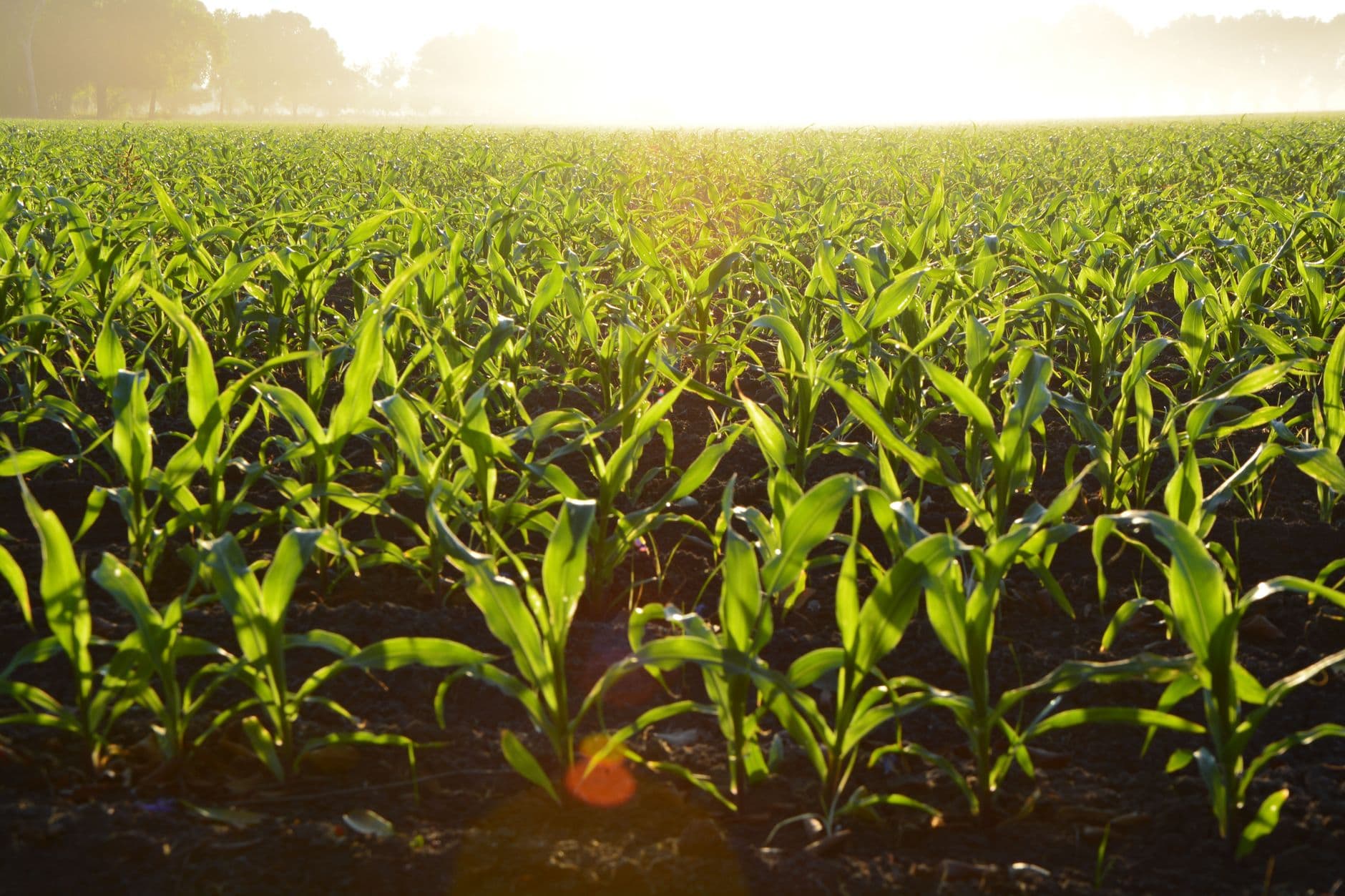
I can't stop thinking about the 1930s Soil Conservation Service and the sheer, earnest confidence they must have felt. They weren't trying to destroy the Southern landscape; they were trying to hold it together after the Dust Bowl proved how fragile our relationship with dirt actually is. To fix it, the government literally paid farmers up to $8.00 an acre to plant Pueraria montana var. lobata—better known as Kudzu. It was marketed as a miracle forage crop and a mechanical fix for erosion, a green bandage for a bleeding country.
But there is a specific kind of blindness that happens when we view nature as a series of modular parts rather than a web of friction. We imported the vine from Japan, where it had natural predators and cold winters to keep it honest. In the American South, those checks didn't exist. We stripped away the ecological friction and replaced it with a federal subsidy. By 1946, about 3 million acres were covered in a plant that can grow a foot a day. I wonder if the bureaucrats in D.C. realized they weren't planting a crop, but a debt that would never be paid off.
The Architecture of a Colonizer
When you look at Kudzu, you aren't just looking at a plant; you're looking at a structural takeover. It doesn't just grow among trees; it grows over them, blocking the sunlight until the native host literally starves to death in the shade. It’s an agronomic masterclass in resource monopolization. The vine uses the existing structural integrity of the forest to climb, saving its own energy for leaf production rather than trunk building. It’s incredibly efficient. It’s also terrifyingly heavy.
I found a study suggesting that Kudzu covers about 7.4 million acres of the South today. That’s not a garden; that’s an occupied territory. What fascinates me is the sheer biological momentum. Because it fixes nitrogen into the soil, it actually changes the chemistry of the earth to favor its own expansion. It creates its own ideal habitat as it moves, like a developer who builds the roads and the houses at the same time.
Why We Can't Just Eat Our Way Out
One of the most common refrains when we talk about invasive species is: "Why don't we just eat it?" Kudzu is technically edible. The roots are full of starch, the flowers smell like grape jelly, and the leaves are high in protein. In theory, it’s the ultimate forage crop the 1930s promised us. But in practice, the labor cost of harvesting a wild, climbing vine is astronomical compared to growing a row of corn. It turns out that ecological problems rarely have simple market-based solutions.
If we could have turned Kudzu into a global commodity in 1950, the South would look very different today. Instead, we have a botanical ghost that costs power companies and foresters an estimated $500 million a year in control efforts and lost productivity. It’s a reminder that once you remove the friction—the pests, the climate limits, the competitors—the system doesn't just balance itself out. It collapses toward the most aggressive survivor.
The Debt of Good Intentions
I wonder what we are planting today that will be the Kudzu of 2080. We still approach agriculture with this "fix-it" mentality, looking for the one miracle seed or the one chemical intervention that will solve a systemic problem. We treat the soil like a machine that just needs the right part, rather than a living community that requires balance. Kudzu is the physical manifestation of the hubris that says we can outsmart a billion years of evolution with a few million dollars in government grants.
What this actually means is that we have a permanent botanical debt. We didn't just introduce a plant; we altered the trajectory of Southern biodiversity forever. Every time a crew clears vines off a power line, they are paying interest on a loan taken out by people who thought they were doing the right thing. It makes me realize that true sustainability isn't about finding the fastest-growing solution—it's about finding the one that knows when to stop.
Quick Answers
Is Kudzu still spreading as fast as people say?
It’s still expanding, but not at the apocalyptic rate of the mid-20th century, as it has finally hit some climatic and biological boundaries.
Can't we just use goats to eat it all?
Goats are actually one of the most effective controls because they eat the leaves and stress the root system, but you would need millions of goats to make a dent in the 7 million acres currently infested.
Why was it originally brought to the U.S.?
It was introduced as an ornamental porch vine at the 1876 Centennial Exposition in Philadelphia before being repurposed for erosion control in the 1930s.


