
The $500 Million Toaster
Anthropic recently dropped a financial bombshell that sounds like a cry for help from a gambling addict: they are spending more on compute than on their actual human employees. Imagine walking into an office where the humans are eating lukewarm Cup Noodles while the H100 GPUs next door are being fed a steady diet of liquid-cooled champagne and $100 bills. We aren't just 'transitioning' to an AI economy; we are currently witnessing a hostile takeover by inanimate objects that require more electricity than a small European nation just to tell you which mushroom is poisonous.
This isn't just a quirky accounting line item. It is a fundamental shift in how we value existence. For the last few centuries, if you wanted to be a powerful country, you needed a lot of people to build things or a lot of dirt with oil under it. Now, national power is being measured by how many fans you can point at a stack of chips before the local power grid gives up and dies. If you aren't 'Compute-Rich,' you're basically the digital equivalent of a guy bringing a sharpened stick to a drone fight.
Silicon Parity or Bust
Every world leader is currently staring at Anthropic’s balance sheet and sweating through their tailored suits. They’ve realized that 'Silicon Parity' is the new nuclear arms race, except instead of bunkers, we’re building massive warehouses in the middle of nowhere that hum loud enough to vibrate your teeth out of your skull. If a private company can outspend a mid-sized government on raw processing power, the concept of a 'sovereign nation' starts to look a bit like a LARPing club.
Governments are terrified of a 'Digital Brain Drain.' In the old days, that meant your smartest doctors moved to Switzerland. Now, it means your country’s collective intelligence literally migrates to a private server in Northern Virginia because that’s the only place it can afford the rent. If a country can't subsidize domestic AI consumption, their best and brightest ideas will simply move into Jeff Bezos’s basement. It’s hard to claim you’re a global superpower when your entire national strategy is dependent on whether a corporate cloud provider decides to raise their hourly rates.
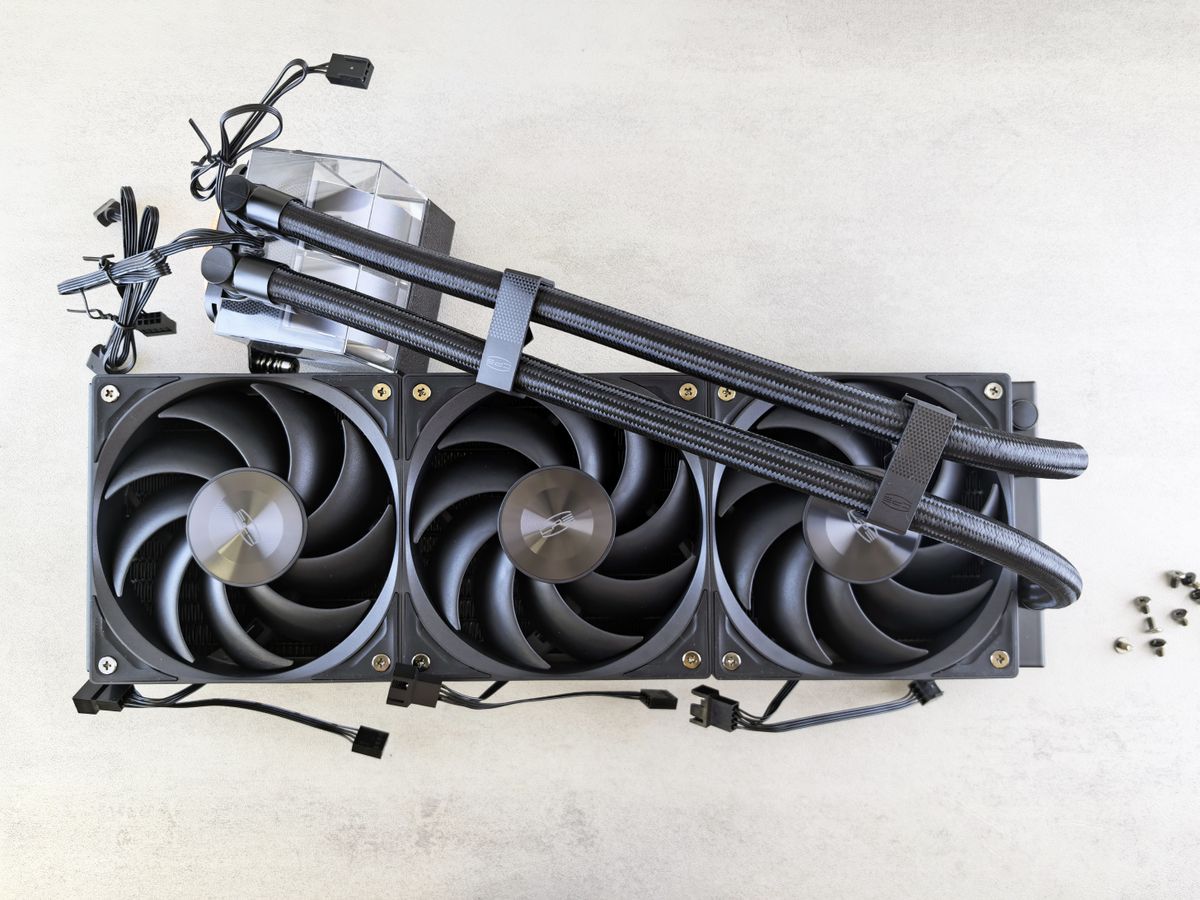
Photo by Andrey Matveev on Pexels
The Great GPU Subsidy
We are rapidly approaching a reality where the most important government department isn't Defense or Treasury; it's the Department of Making Sure the Chips Stay Cool. Nations are scrambling to build 'Sovereign AI clouds' because they realize that relying on a foreign company for compute is like relying on a neighbor for your oxygen supply. Sure, they might be nice about it now, but the second there’s a shortage, you’re going to find out exactly how much they value your friendship.
Expect to see 'Compute Stamps' in the near future. Instead of subsidizing milk and bread, the government will be handing out GPU credits to startups so they don't flee to a more 'compute-friendly' jurisdiction. We’re going to see tax breaks not for creating jobs, but for creating FLOPs. A politician will stand on a stage and unironically promise 'A H100 in every pot,' and the crowd will go wild because they know their national relevance depends on it.
What This Actually Means
The era of the 'Labor-Intensive' institution is dead. If you’re a company or a country and your biggest expense is still people, you’re basically a museum. Anthropic’s spending habits show us that the new currency isn't the Dollar or the Euro; it's the kilowatt-hour transformed into a probabilistic guess about what word comes next. It’s absurd, it’s expensive, and it’s currently the only game in town.
Ultimately, this 'Silicon Parity' madness means that the physical borders of a country matter less than the quality of its electrical transformers. We are moving toward a world where 'national identity' is just a skin on a global compute layer. If you can't afford the hardware, you’re not a player; you’re just a customer. And as anyone who has ever dealt with a telecom company knows, being a customer is the worst possible thing you can be.
Quick Answers
Is my job safe if the AI costs more than me?
Technically, yes, but only because you're a bargain. You’re the 'value menu' of intelligence right now, which is a weirdly comforting way to look at job security.
Why can't countries just build their own chips?
Because making high-end chips is harder than performing heart surgery on a hummingbird during an earthquake. It requires a supply chain so complex it makes a Swiss watch look like a Lego brick.
Will this make my electricity bill go up?
Most likely. Your toaster is now competing with a trillion-parameter model for the same juice, and the model has a much bigger credit card than you do.


