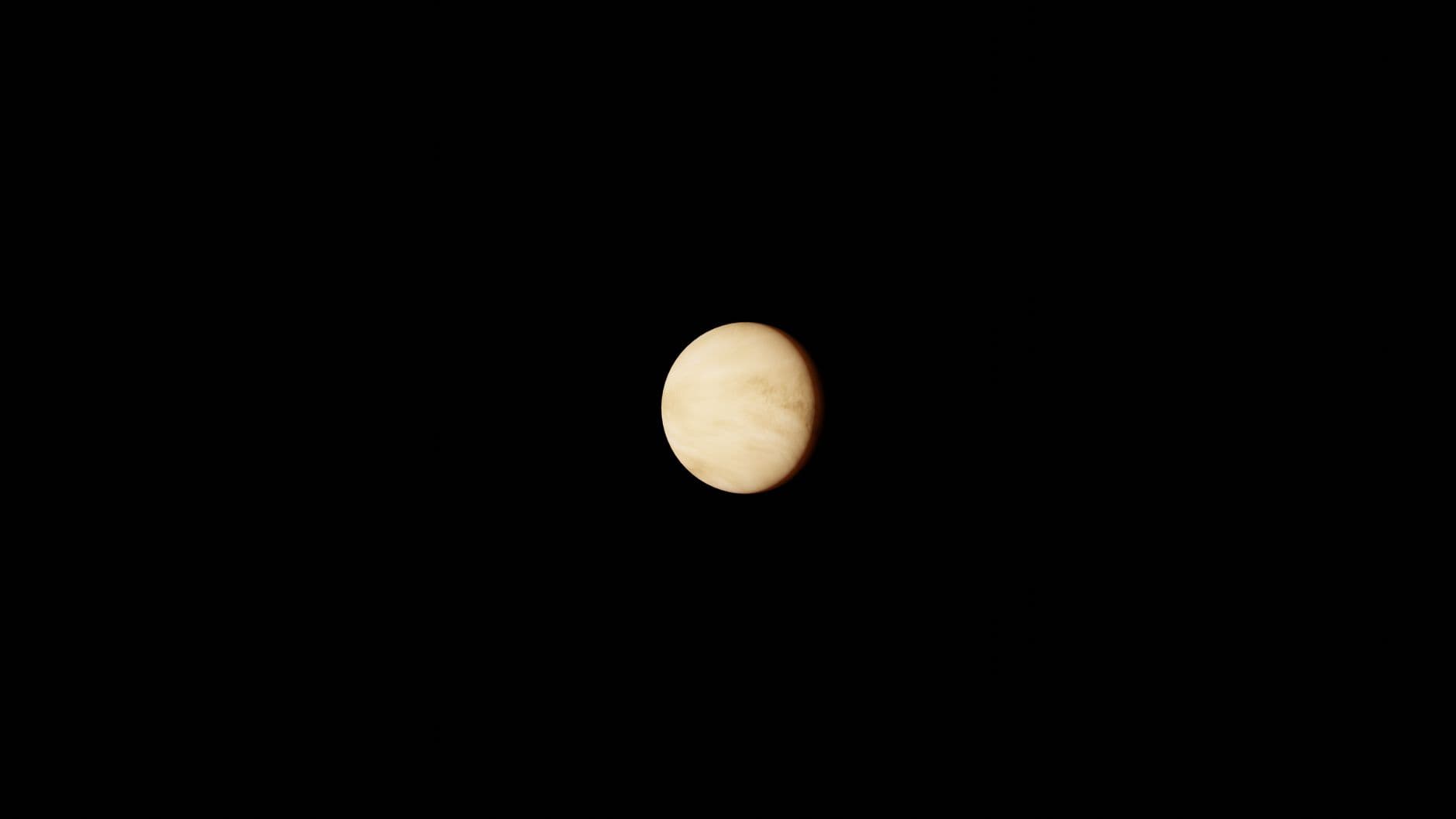
Newton gave us the clockwork universe, but he also gave us the ghost that would eventually haunt it. While he could map the dance of two celestial bodies with elegant precision, the moment a third actor entered the fray, the math dissolved into a chaotic mess that defied general solution for over 300 years. We have long treated stable, periodic orbits among three bodies as rare anomalies—mathematical curiosities like the figure-eight orbit discovered in 1993. That era of perceived scarcity is over.
A team of researchers recently utilized high-performance computing to identify 12,000 new periodic solutions to the three-body problem. This is not just a triumph of brute-force computation over classical frustration; it is a fundamental shift in our understanding of orbital mechanics. We are moving from a handful of known 'safe' configurations to an entire atlas of possibilities. This suggests that the universe is not just a collection of neat, concentric circles, but a sprawling gallery of intricate, braided, and non-linear paths that remain stable over deep time.
The Fallacy of the Circular Ideal
Our search for life beyond Earth has been historically hampered by a bias toward the familiar. We look for 'Earth-like' planets, which usually translates to a single planet orbiting a single star in a near-circular path. This 'Goldilocks' obsession assumes that stability requires simplicity. We have viewed high-eccentricity orbits or multi-star systems as chaotic graveyards where planets would inevitably be flung into the dark or incinerated by their suns.
The math now tells a different story. These 12,000 solutions represent 'orphaned' orbits—paths that look chaotic to the untrained eye but possess a rigorous, repeating logic. They prove that a planet can weave between multiple gravitational wells without being ejected. If stability can exist in such complex geometry, then the 'habitable zone' is not a simple ring; it is a shifting, three-dimensional envelope. We have likely been ignoring thousands of viable worlds simply because their orbits didn't fit our narrow definition of order.
Photo by Yan Krukau on Pexels
Rethinking Biological Adaptation
If we accept that these orbits are viable, we must rethink the nature of the life that might inhabit them. On a planet following one of these newly discovered periodic solutions, the concept of a 'season' would be unrecognizable. Instead of a gradual tilt-driven shift, a planet might experience rapid-fire successions of extreme heat and cold as it swings between two stars, followed by long periods of dim wandering in the outer reaches of the system.
Biology on such a world would not be governed by the steady 365-day rhythm we know. It would require radical evolutionary strategies—perhaps long-term hibernation cycles triggered by gravitational proximity, or photosynthetic organs capable of processing vastly different light spectra as the planet moves between stars of different classes. The complexity of the math suggests a complexity of environment that would force evolution into high gear. These are not just 'alternative' orbits; they are pressure cookers for biological innovation.
The Computational Frontier of Discovery
This breakthrough was made possible by mapping initial conditions onto a topological space and using supercomputers to sift through the noise. It is a reminder that in modern science, the bottleneck is no longer the collection of data, but the framework we use to interpret it. For centuries, we lacked the vocabulary to even describe these orbits, let alone find them. By applying modern topology to 18th-century physics, we have unlocked a hidden layer of the cosmos.
We must now apply this atlas to our telescope data. When we observe light-curves from distant stars, we often discard 'noisy' signals that don't match the dip-and-recovery pattern of a standard transit. It is highly probable that within that discarded 'noise' lie the signatures of planets following these complex, braided paths. We have been looking for the melody of a solo flute and missing the full, dissonant orchestration of the galaxy.
What This Actually Means
The discovery of 12,000 stable solutions effectively broadens the map of where life can exist by orders of magnitude. We can no longer dismiss triple-star systems or high-eccentricity environments as 'unstable.' The universe has a much higher tolerance for complexity than our early models suggested. Stability is not the absence of chaos; it is the presence of a deep, repeating pattern within it.
This shift forces a humbler perspective on our own place in the solar system. Our circular, predictable orbit is not the gold standard of planetary existence; it is merely one of many variations. As we tune our instruments to look for these non-linear signatures, we aren't just looking for new planets. We are finally learning to read the full language of gravity, a language that is far more eloquent and daring than Newton ever dared to dream.
Quick Answers
Does this mean the three-body problem is 'solved'?
No, a general closed-form solution for all cases remains impossible; however, we have found a massive library of specific, repeating solutions that prove stability is common.
Could a planet like Earth survive in one of these orbits?
Physically, yes, the orbit is stable, but the climate would be extreme. Life would need to evolve entirely different survival mechanisms to handle the non-linear seasonal changes.
How does this help find aliens?
It gives astronomers new mathematical templates to look for in telescope data, allowing us to identify planets in multi-star systems that were previously dismissed as unstable noise.


