The Great Broccoli-to-Byte Pipeline
We have officially reached the point in the simulation where Jeff Bezos and a head of organic kale are staring each other down in a dusty Western clearing at high noon. Amazon is snapping up power plants and the land around them faster than a toddler at a Chuck E. Cheese prize counter. The goal? To feed the insatiable hunger of AI data centers. The problem? That same land was supposed to be growing things humans actually eat, like corn, or those weirdly expensive tiny cucumbers that come in plastic pouches.
It turns out that training a large language model to write a sonnet about a cat in the style of a 1920s longshoreman requires roughly the same amount of energy as a medium-sized city. We are literally trading topsoil for tokens. I hope you enjoy the taste of high-speed fiber optics, because at this rate, the 'Farm-to-Table' movement is about to become the 'Server-to-Stomach' movement. Your dinner plate is now a direct competitor to a GPU cluster that is currently trying to figure out how to generate a picture of a person with the correct number of fingers.
Nuclear Neighbors and Grumpy Goats
Amazon recently dropped $650 million on a data center campus in Pennsylvania that is plugged directly into a nuclear power plant. This is the ultimate 'I don't want to share' move. It’s like bringing your own personal generator to a public park so you can run a commercial-grade soft-serve machine while everyone else is trying to charge their phones at the one working outlet. By bypassing the local grid, they are essentially telling the local agricultural community, "Good luck with your windmills and vibes, we’re busy simulating the heat death of the universe over here."

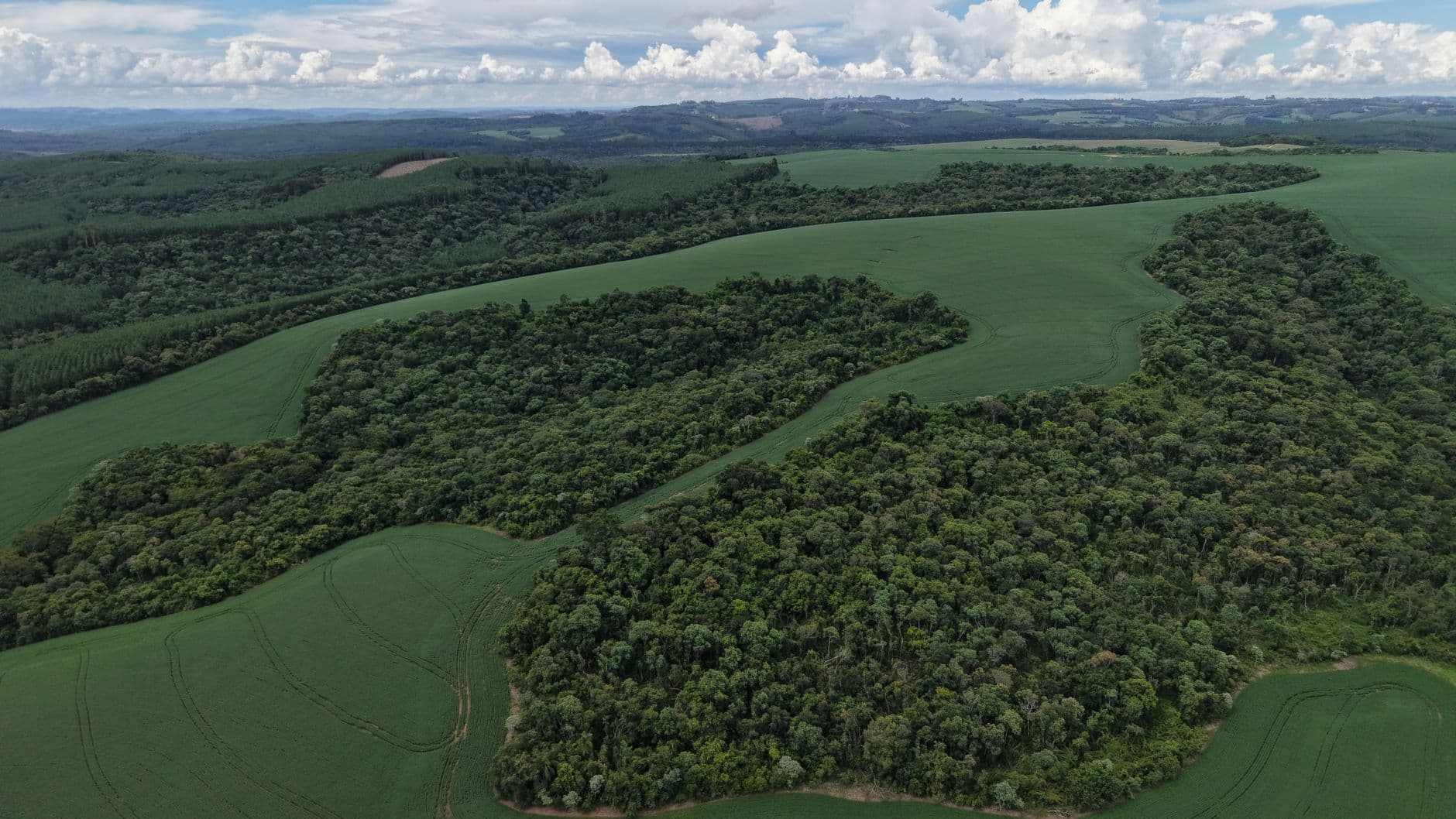
Photo by Bulat Khamitov on Pexels
Farmers are now being told they need to engage in 'regenerative agriculture'—which is a fancy way of saying 'please suck up all the carbon the tech giants are burping out.' It’s a hilarious bait-and-switch. We used to ask farmers to grow food so we wouldn't die of scurvy. Now we’re asking them to turn their fields into giant carbon sponges because ChatGPT needed to process 400 billion parameters to tell someone that, no, you shouldn't put glue on your pizza. It’s like asking your neighbor to plant a forest because you refuse to stop idling your Hummer in the driveway.
The Thirst is Real and Digital
Data centers are incredibly thirsty. They sweat. They need millions of gallons of water to keep from melting into a pile of expensive silicon slag. Meanwhile, crops also like water. It’s a bold evolutionary strategy they’ve been using for a few million years. When a data center moves into town, it’s not just competing for the electricity; it’s basically showing up to the watering hole with a giant straw and a 'Main Character' complex.
I’m looking forward to the future of food branding. We’ll have 'NVIDIA-Cooled Carrots' and 'AWS-Buffered Beef.' Maybe we can start using the waste heat from the servers to grow tropical fruit in North Dakota. Imagine a world where your pineapple is only possible because someone in London asked an AI to generate 'Steampunk SpongeBob' at 3:00 AM. It’s the kind of synergy that makes you want to live in a cave and eat moss, but unfortunately, the moss has already been earmarked as a carbon offset for Google’s next Gemini update.
What This Actually Means
We are witnessing the birth of a new feudalism where the lords own the compute and the peasants are tasked with scrubbing the atmosphere so the lords can keep computing. The 'Energy-Food Nexus' sounds like a bad sci-fi movie title, but it's just the reality of trying to run a digital utopia on a physical planet. We are prioritizing the ability to generate fake images of celebrities over the ability to grow real calories at a reasonable price.
Ultimately, the 'Power-to-Plate' competition ends with us having to decide what we value more: a world where information is instant and infinite, or a world where a salad doesn't cost $25 because the irrigation water was rerouted to cool a rack of H100s. If we don't figure out a way to make AI less of a resource-hogging monster, we’re going to end up very smart, very well-informed, and incredibly hungry.
At least when the grocery stores are empty, we can ask the AI for a very detailed, 4K description of what a sandwich used to taste like. It might even include a recipe, provided the grid stays up long enough for us to read it.
Quick Answers
Is my grocery bill going up because of AI?
Indirectly, yes, because Big Tech is outbidding everyone for the land and energy that used to make farming cheap. Your eggs are now competing with a chatbot's electricity bill.
Can't we just build more power plants?
Sure, but Amazon and Microsoft are already camping outside the permits office with sleeping bags and bags of cash. They are the 'Swifties' of the energy sector.
What is 'regenerative farming' in this context?
It’s basically turning a farm into a giant air filter for a tech company. It's less about the corn and more about the carbon credits the corn can generate.
Will AI eventually solve the food crisis?
It might, but it’ll probably require another three nuclear plants and the state of Iowa to do the math first.


