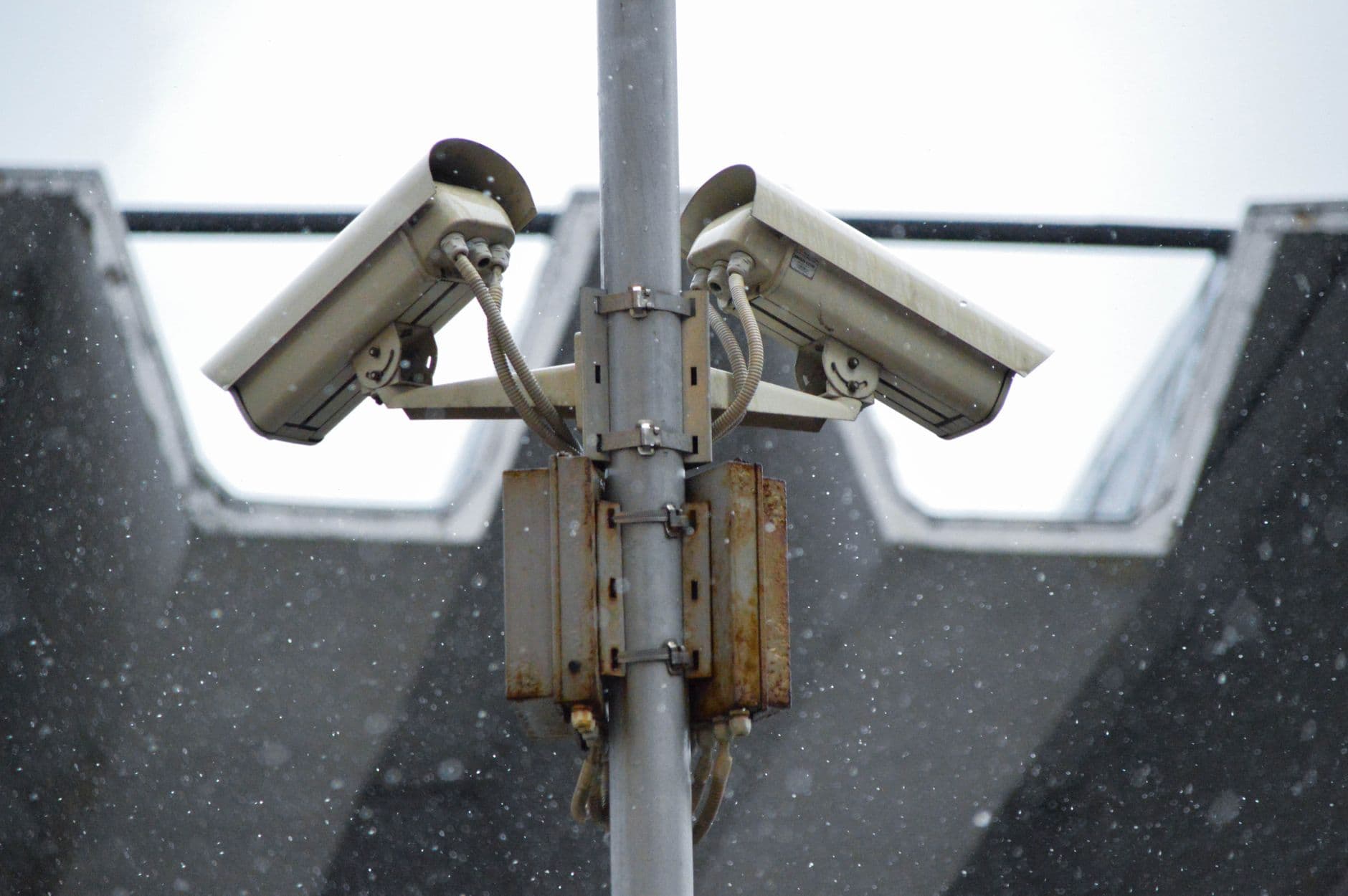
One has to wonder at the sheer audacity, the impertinence, of citizens who refuse to simply lie back and enjoy the ever-expanding embrace of the surveillance state. Here we are, on the cusp of a truly transparent society where every movement, every license plate, every casual drive to the grocery store is meticulously logged, and suddenly—poof!—the hardware disappears. It’s almost as if some people don't want to live in a world where a private company, Flock Safety, can sell their movements to law enforcement for a cool $2,500 per camera, per year, as they do in many municipalities. How utterly inconvenient for progress.
The Great Hardware Heist: A Masterclass in Misunderstanding
It’s a peculiar form of advocacy, this physical dismantling of what many see as a public good. I mean, surely these cameras were installed for our collective benefit, right? To catch the most heinous of criminals, like the guy who forgot to signal or the one who drove slightly over the speed limit for a nanosecond. But no, some misguided souls seem to believe that having their whereabouts constantly recorded, stored, and searchable by myriad agencies without a warrant is somehow… an infringement. Bless their hearts. They must not have read the fine print about how convenience always outweighs liberty.
Photo by Ulrick Trappschuh on Pexels
And let's not forget the sheer genius of it all. Instead of the laborious, intellectual work of, say, lobbying politicians or filing lawsuits – which, let's be honest, can take ages – these folks just went straight to the source. A direct-action approach that skips all the boring bits about public discourse and democratic process. Who needs a debate when you have a saw? It makes you almost admire their efficiency, if not their respect for the multi-billion dollar industry dedicated to making our lives 'smarter' by watching our every move.
The 'Smart City' Conundrum: When Tech Gets Too Smart for Its Own Good
The 'smart city' vision, as pitched by companies like Flock, always sounds so clean. So efficient. Imagine a world where traffic flows seamlessly, where every crime is instantly recorded, and where the anonymous masses are neatly categorized and analyzed. It’s a planner's dream! But then reality, in the form of a few determined individuals, comes along and reminds everyone that hardware exists in the physical world. It can be touched. It can be… removed.
This isn't just about a few cameras in Winona. This is a philosophical debate playing out with actual tools. The underlying assumption of the surveillance state is that if it's digital, it's abstract, and therefore, resistance must also be digital. But what happens when the resistance decides to operate on the 'physical layer'? It's like trying to fight a ghost with a spreadsheet, only to find the ghost is actually a very solid, well-organized team with actual hands. It throws a wrench, or perhaps a bolt cutter, into the whole elegant model.
The Future of 'Secure' Infrastructure (Spoiler: It's Less Secure)
What truly fascinating implications this has for the 'smart city' hardware industry. Here they are, investing heavily in AI-powered cameras, sophisticated sensors, and networks designed to be omnipresent, only to discover that their entire business model rests on the assumption that no one will simply… take them down. It’s a security flaw they probably didn't include in their threat models. "Risk of disgruntled citizen with ladder and tools" probably didn't make the cut.
One can only imagine the brainstorming sessions happening in boardrooms right now: "Do we make them taller?" "More robust?" "Invisible?" The thought of having to secure every single piece of street-level infrastructure against human ingenuity is, frankly, hilarious. It implies that the surveillance companies will have to start surveilling their own surveillance equipment, creating an infinite loop of watchful eyes watching watchful eyes. The job market for 'camera guardians' is about to boom.
What This Actually Means
This whole Winona incident, bless its heart, isn't just a local spat; it’s a symptom of a much larger, simmering discontent. People are tired of being treated as data points, as cogs in an algorithmic machine, especially when that machine is operated by private entities with profit motives. The physical removal of these cameras is a visceral, unmistakable message: we see you, we know what you're doing, and we are not amused.
It's a shift from abstract digital rights arguments to concrete, physical action. And while the legality of such actions is certainly questionable, the message is not. When people feel unheard or unrepresented in the digital sphere, they sometimes resort to making their voices heard in the physical one. It means the 'smart city' dream will either have to get a lot smarter about public consent, or it will continue to face the awkward reality that hardware, unlike data, can be cut down.
Quick Answers
- What happened in Winona? All of the Winona Police Department's Flock Safety license plate reader cameras were physically cut down and stolen, disabling the city's automatic surveillance system.
- What are Flock cameras? They are AI-powered license plate recognition cameras sold by a private company, Flock Safety, to law enforcement agencies for tracking vehicles and, by extension, people's movements.
- Why is this significant? It represents a shift from digital privacy advocacy to physical resistance against surveillance infrastructure, posing a direct challenge to the 'smart city' hardware industry.
- What does this mean for 'smart cities'? It highlights the vulnerability of street-level surveillance hardware and suggests that public consent and physical security will become even more critical considerations for future deployments.


