
Your Local Ecosystem as a Database
We have tried everything to save the planet except, apparently, leaving it alone. Since the strategy of 'not burning everything' has failed to gain traction in boardrooms, we are moving on to the next best thing: the Biodiversity Ledger. This $1.8 billion global commitment aims to standardize and digitize every living thing on Earth into AI-ready datasets. It is a bold, visionary plan to ensure that even if the Amazon disappears, it will live on forever as a very high-quality training set for a chatbot that can simulate the sound of a bird we forgot to protect.
There is something deeply touching about the tech industry's belief that the problem with ecological collapse is a lack of metadata. We aren't failing to stop deforestation because of greed or systemic inertia; we are failing because the frogs haven't been properly tagged in Python. Once we have a 'predictive ecosystem engineering' model, we can finally treat the biosphere like a game of SimCity, assuming the servers don't melt from the heat of the climate we're currently engineering.
The Efficiency of Digital Colonialism
Naturally, this push for 'biological sovereignty' is going over smoothly with the Global South, where most of the actual biology happens to reside. The plan is simple: scientists from wealthy nations arrive, sequence the local flora and fauna, and upload it to a centralized cloud. It is a classic 'what's mine is mine, and what's yours is a global public good' arrangement. We are effectively telling developing nations that while they may own the physical dirt, the lucrative genetic code within that dirt belongs to whichever Silicon Valley firm has the best GPU cluster.
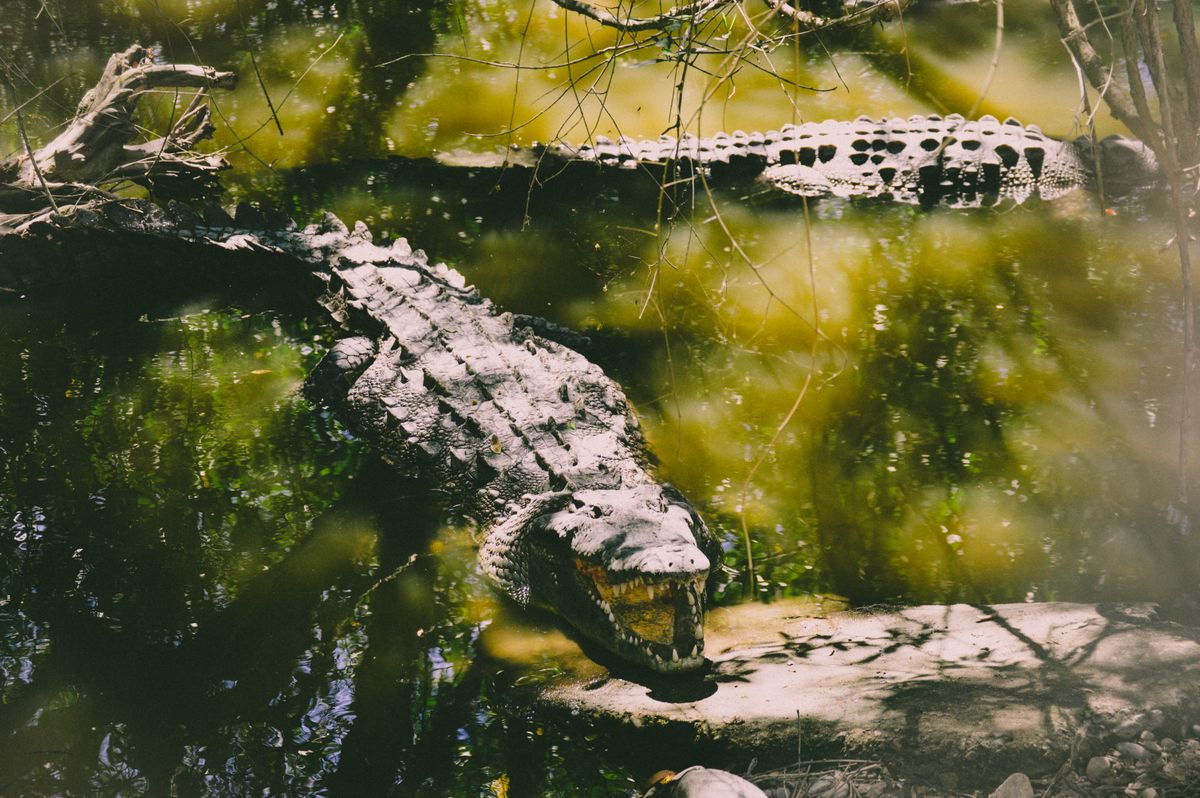
Photo by Bianca Bianey on Pexels
It is a masterclass in irony to watch the world's most carbon-intensive industries fund the digitization of the nature they are displacing. If we can just get the right AI-ready biological data, we might be able to 'optimize' nature. We could find out exactly how many trees we can cut down before the entire local water cycle fails, rather than just guessing like we do now. That is the kind of precision $1.8 billion buys you: the ability to fail with surgical accuracy.
- The project aims to sequence 1.5 million known species over the next decade.
- Proponents claim this will unlock a 'bio-economy' worth trillions, because nature is only valuable once it’s a patentable sequence.
- Critics in the Global South are wondering why the 'global commitment' includes data sharing but not, you know, money for the people actually living in the forests.
Engineering the Perfect Disaster
Predictive ecosystem engineering sounds like a dream for anyone who thinks the Earth is a machine that just needs a better software update. If the AI tells us that a specific fungus in the Congo is the key to carbon sequestration, we can just 'engineer' its growth. What could go wrong? We have a sterling historical record of introducing species to new environments to solve problems. Just ask the Australians about the cane toads. They were a great biological solution until they weren't.
But this time is different because we have Large Language Models. We can now hallucinate ecological solutions at scale. By the year 2030, we won't need to worry about the decline of pollinators because we'll have a digital twin of every bee. We can watch the virtual bees thrive on our screens while the real ones struggle with the 45-degree Celsius summers. It’s not a tragedy; it’s a data visualization opportunity.
What This Actually Means
This $1.8 billion isn't being spent to save the trees; it’s being spent to map the exit strategy. We are building a high-tech Noah’s Ark where the animals are replaced by their genomic sequences because hard drives are easier to store than actual tigers. It is the ultimate expression of our current era: we can't stop the house from burning down, but we are going to be really, really thorough about inventorying the furniture while we wait for the roof to collapse.
In the end, the Biodiversity Ledger will be a triumph of bureaucracy and computer science. We will have the most organized extinction in the history of the universe. When the last coral reef bleaches white and dies, we can take solace in the fact that its calcium carbonate levels were recorded in real-time and uploaded to a decentralized blockchain ledger for posterity.
We are finally transforming conservation from 'damage control' into 'data management.' And as any IT professional will tell you, as long as the backup exists, it doesn't really matter if the hardware is destroyed. The planet is just hardware, after all.
Quick Answers
Is this actually going to save any endangered species?
It will provide them with a very beautiful digital headstone consisting of their entire genetic code. Whether it helps them survive a bulldozer is a different, much less profitable question.
Why are people in the Global South upset about it?
They have this strange, old-fashioned idea that if someone profits from the genetic data of their local plants, they should perhaps get a cut of the money. It's very disruptive to the 'open source' spirit of billionaire-funded projects.
What is 'predictive ecosystem engineering'?
It is the scientific term for 'playing God with a spreadsheet.' It assumes that if we have enough data, we can tweak the environment like a thermostat without accidentally breaking the whole room.

