
The pharmaceutical industry has finally realized that human biologists are far too slow, far too expensive, and annoyingly prone to needing sleep. Enter the age of AI-driven drug discovery, where we trade the tedious scientific method for the digital equivalent of throwing spaghetti at a wall—except the spaghetti is a trillion virtual proteins and the wall is an algorithm we don't fully understand. We are now optimizing the very essence of survival at the speed of a fiber-optic connection, because if there's one thing medical history teaches us, it's that rushing the process always ends perfectly.
Everything is being accelerated, disrupted, and streamlined into a slick, investor-friendly slide deck. We used to spend ten years and $2.6 billion to bring a drug to market, but apparently, that was just us being dramatic. Now, we have platforms like AlphaFold predicting protein structures in seconds, saving us from the unbearable burden of actually looking through a microscope. It’s a miracle of efficiency that surely won't have any unintended consequences when these digital pipe dreams meet actual human biology.
The Silicon Valley School of Pharmacology
There is something deeply comforting about trusting a system that can’t distinguish a human hand from a cluster of five sausages to redesign our internal chemistry. The logic is flawless: if an AI can generate a passable deepfake of a celebrity, surely it can navigate the infinite complexity of the human endocrine system without breaking anything. We’ve moved from "First, do no harm" to "Move fast and break things," which is a much more exciting motto when the things being broken are liver enzymes.
Companies are bragging about shaving years off the discovery phase, which is great news for shareholders who find the slow pace of cellular mitosis deeply inconvenient. We are now generating "candidate molecules" at a rate that would make a printer jam, confident that the sheer volume of data will somehow compensate for the fact that a computer has never actually felt a side effect. It’s a bold new world where the lab coat is being replaced by a Patagonia vest and a subscription to a cloud computing cluster.
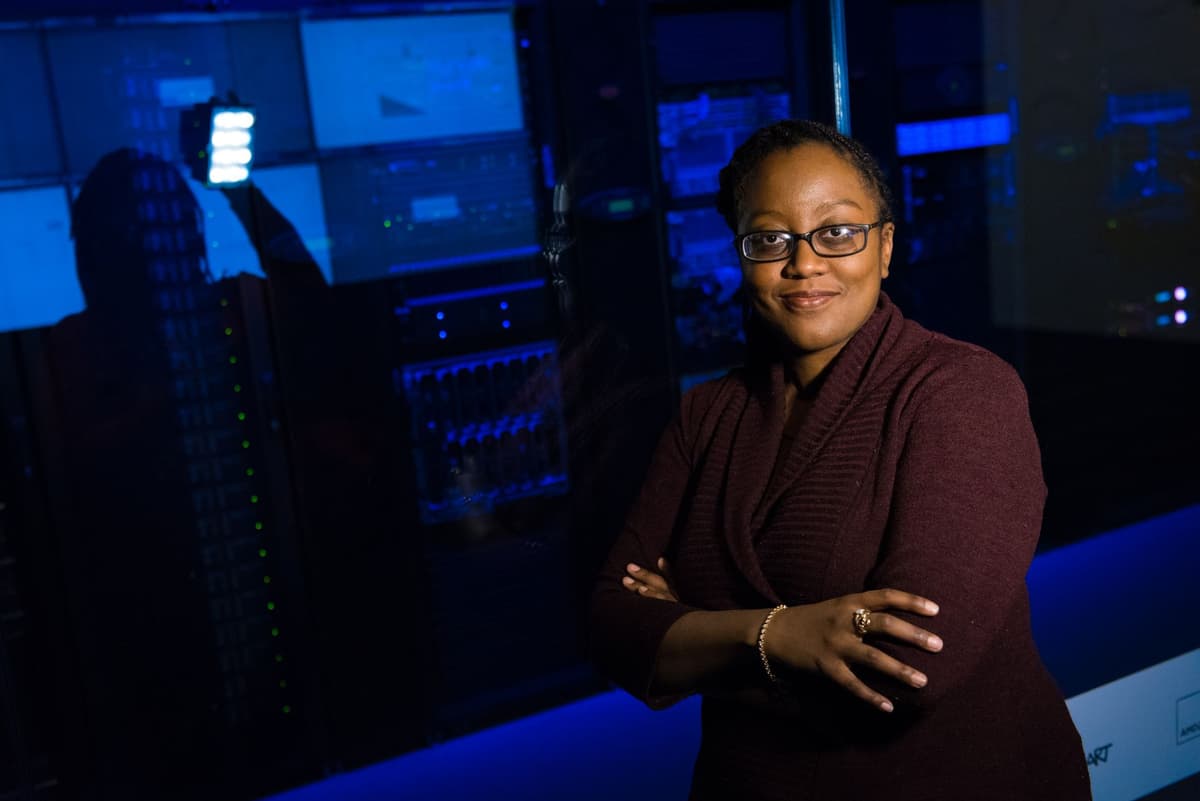
Photo by Christina Morillo on Pexels
Ethical Guardrails Are So Last Century
Naturally, the ethics of this situation are being handled with the same rigor we apply to social media Terms of Service agreements. We are told that faster development cycles are a moral imperative—that every day we spend testing is a day someone doesn't get a cure. It’s a convenient narrative that neatly sidesteps the reality that the "testing" part was usually there to make sure the cure wasn't worse than the disease. But why let a few long-term toxicity studies get in the way of a quarterly earnings beat?
If the AI identifies a potential breakthrough for a rare disease, the pressure to skip the "boring" parts of the clinical trial becomes immense. We are effectively betting that the algorithm is smarter than three billion years of evolution. If it turns out the AI missed a specific protein interaction because it wasn't in the training data, we can always just release a Patch 1.1 for the human body. Surely, the FDA will be perfectly equipped to regulate software that updates itself faster than a bureaucrat can finish a cup of coffee.
Data Bias: The Secret Ingredient
Then there is the charming reality of the data itself. AI is only as good as the information we feed it, and our medical data is famously unbiased and representative of all humanity—if you happen to be a 170-pound white male from the 1990s. We are building the future of global medicine on a foundation of historical gaps, ensuring that our shiny new AI-designed drugs will work perfectly for the people who already have the most access to healthcare.
- The AI learns from existing patents, which are driven by profit, not public health.
- Training sets often ignore genetic diversity because that data is "noisy" and "hard to collect."
- We are essentially automating the status quo and calling it a revolution.
It’s a masterclass in efficiency: we can now marginalize entire populations at ten times the speed of traditional medicine. By the time we realize the "miracle drug" only works for a specific demographic, the AI will have already moved on to designing a more expensive version of hair loss medication for billionaires.
What This Actually Means
What we are witnessing is the ultimate triumph of the "Black Box" over the "White Lab Coat." We are outsourcing the most fundamental questions of our survival to systems that prioritize patterns over principles. While the promise of curing the incurable is a lovely carrot to dingle in front of the public, the reality is that we are prioritizing the speed of discovery over the depth of understanding. We are becoming very good at finding answers without actually knowing what the questions were.
In the end, AI in drug discovery isn't just about medicine; it's about our collective impatience. We have decided that the risks of being wrong are less frightening than the boredom of being careful. As long as the line on the chart goes up and the "Candidate Pipeline" looks full, we’re happy to ignore the fact that we’re turning the human population into the world’s largest beta-testing group. Hopefully, the terms and conditions aren't too long.
Quick Answers
Is AI actually finding cures?
It’s finding "leads," which is scientific shorthand for "this looked good on a screen and we hope it doesn't cause heart failure in six months."
Will this make drugs cheaper for patients?
Of course not; the billions saved in R&D will be redirected toward marketing and executive bonuses, as per industry tradition.
Can we trust AI to be ethical?
AI has no ethics, only optimization goals, and currently, the goal is to find the shortest path between a data set and a patent filing.
What happens if the AI is wrong?
We call that a "learning opportunity" and quietly update the algorithm while the legal department prepares the settlement fund.


