
Low Earth Orbit (LEO) is no longer a passive vacuum. It has become an active, buzzing industrial zone where thousands of metallic objects now move with the calculated precision of a choreographed dance. While we have spent years worrying about the kinetic dangers of space junk and the Kessler Syndrome, we have overlooked a far more subtle and pervasive threat: the electromagnetic and gravitational resonance of synchronized satellite swarms.
When ten thousand satellites operate on independent schedules, their signals and physical movements exist as white noise. But the industry is moving toward total synchronization to maximize data throughput and collision avoidance. This transition from noise to rhythm is where the danger lies. We are essentially turning the sky into a massive, pulsing resonator that interacts with the Earth's ionosphere in ways our current climate and physics models were never designed to handle.
The ghost in the terrestrial machine
The link between orbital behavior and ground-based infrastructure is becoming impossible to deny. Recent data shows periodic one-minute frequency disturbances appearing in terrestrial power systems, a rhythmic pulse that mirrors the coordination cycles of large-scale satellite maneuvers. This isn't a coincidence of timing; it is a symptom of electromagnetic coupling. When thousands of satellites pulse their high-frequency transmitters in unison, they generate a collective field that can induce currents in the long-range conductors of our power grids.
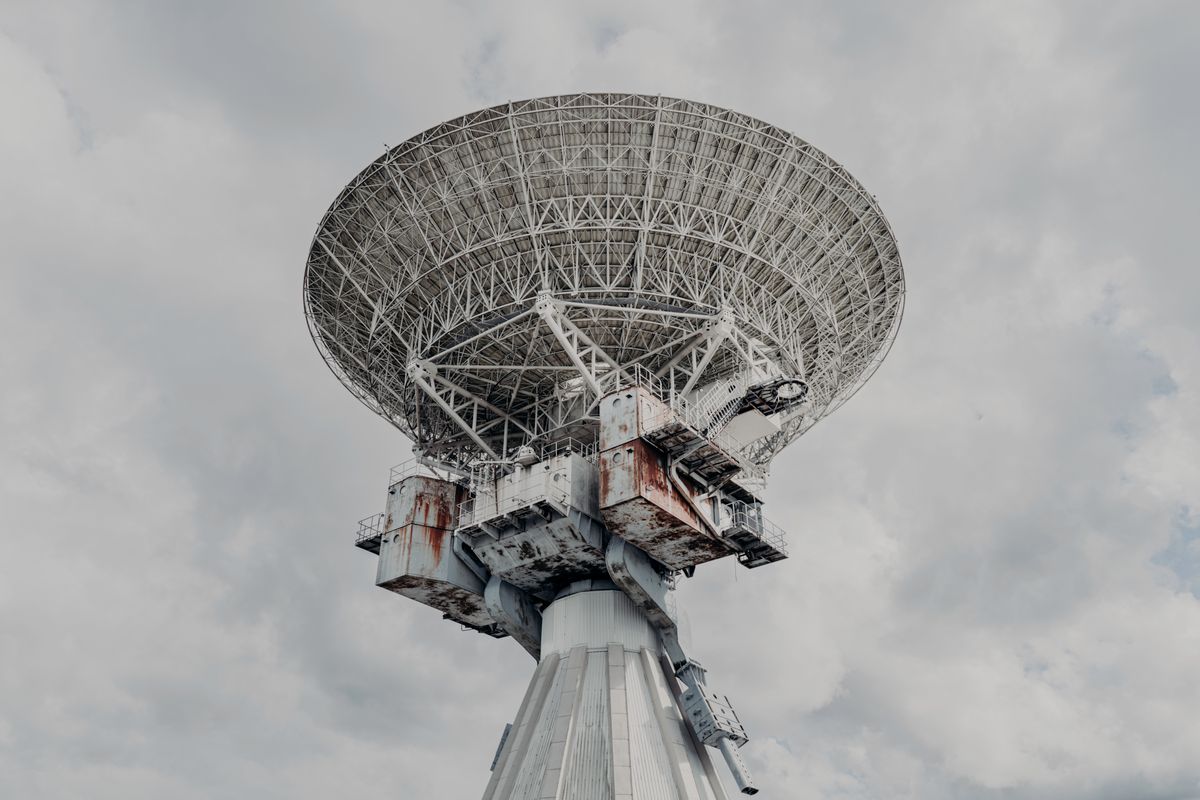
This phenomenon isn't limited to the wires in our walls. Ground-based astronomy is facing an existential crisis that goes beyond simple light pollution. The synchronization of data transmissions creates a periodic 'shutter effect' in the radio spectrum, effectively blinding our most sensitive telescopes during specific, recurring intervals. We are effectively building a cage of frequency interference that separates our planet from the rest of the observable universe.
Atmospheric friction and gravitational resonance
Beyond the radio waves, the physical movement of these swarms presents a mechanical challenge. As of early 2024, there are over 5,500 Starlink satellites in orbit, with plans to expand that number to 42,000. When a fleet of this magnitude performs synchronized station-keeping maneuvers, they don't just move through the atmosphere; they push against it. These maneuvers can create low-frequency acoustic waves in the thin air of the thermosphere.
These waves, if timed correctly, can lead to constructive interference. This resonance has the potential to alter the density of the upper atmosphere, creating unpredictable 'bulges' that increase drag on other vital infrastructure, such as the International Space Station or weather monitoring satellites. We are treating the ionosphere as an infinite heat sink and a static medium, but it is a delicate fluid that reacts to the rhythmic displacement of mass and energy.
The high cost of efficiency
The drive for synchronization is fueled by the economic necessity of the 'Orbital Grid.' For a satellite internet provider, every millisecond of latency matters. Coordinating the entire fleet to hand off signals at the exact same microsecond is a triumph of engineering, but it is also a recipe for systemic failure. By forcing the entire system into a single rhythm, we remove the diversity that usually keeps complex systems stable.
If a solar flare or a geomagnetic storm hits a synchronized fleet, the impact is not distributed; it is amplified. A resonant system absorbs energy far more efficiently than a chaotic one. This means a moderate solar event that would have nudged a few satellites out of place a decade ago could now potentially induce a cascading electrical failure across an entire coordinated swarm, turning an expensive telecommunications asset into a dead, orbiting cloud of silicon and aluminum.
What This Actually Means
We must stop viewing satellites as individual actors and start treating mega-constellations as a single, planetary-scale machine. The regulatory framework for space has always focused on 'where' things are, but we now need to focus on 'when' they act. If we do not mandate 'de-synchronization' protocols—forced randomness in transmission and maneuver timing—we risk creating a permanent electromagnetic disturbance that will haunt our electrical engineering for a century.
The convenience of global high-speed internet is a significant achievement, but it cannot come at the cost of the ground-level stability of our power systems or our ability to peer into deep space. We are currently conducting a high-stakes physics experiment on the only atmosphere we have. It is time to demand that the companies occupying our sky account for the invisible footprints they leave behind.
Quick Answers
How can satellites in space affect power grids on the ground?
Through a process called electromagnetic coupling, where synchronized high-frequency pulses from thousands of satellites create a collective field that induces small but measurable currents in long-distance power lines.
Is this the same as the 'Space Junk' problem?
No. While space junk is about physical collisions, this is about the 'rhythm' of active satellites creating electromagnetic and atmospheric resonance that interferes with technology even without a crash.
Why can't astronomers just filter out the interference?
Filters work for steady noise, but synchronized pulsing creates 'dead zones' in the spectrum that are timed so precisely they can mimic or mask the very cosmic signals astronomers are trying to detect.
What is the solution to this orbital resonance?
Regulators must require satellite operators to use 'dithered' or randomized transmission and maneuver schedules to ensure that the fleet never acts as a single, resonant unit.


