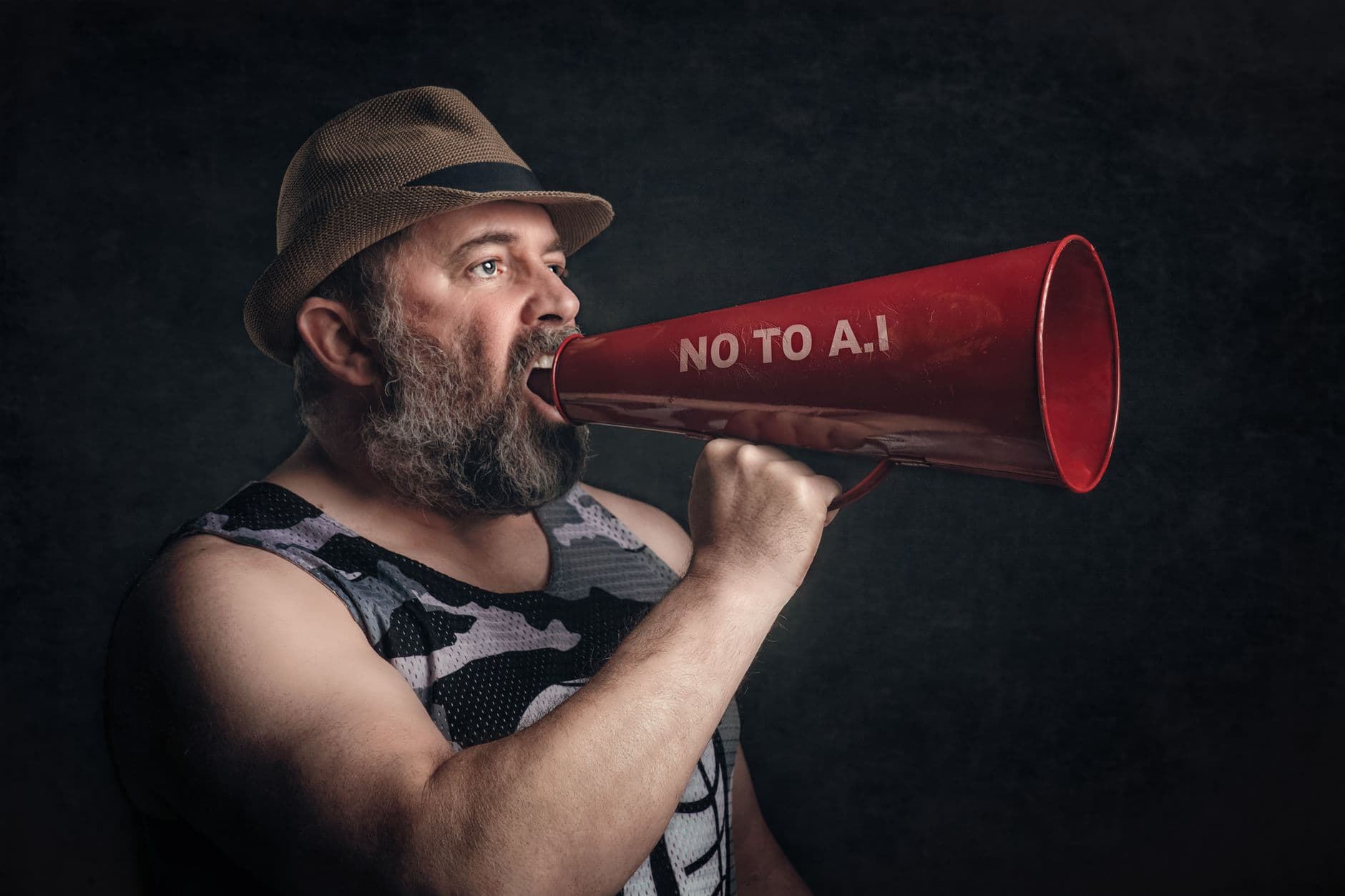
The Lobotomy as a Feature
Every time you move from one AI model to another, you are essentially performing a digital exorcism. You spend six months teaching a chatbot exactly how you like your emails phrased—specifically that balance of 'professional yet dying inside'—only to realize that switching to a competitor means starting from scratch. We’ve accepted a reality where our digital extensions have the long-term memory of a goldfish in a blender. It’s a brilliant business model if your goal is to hold a user's personality hostage behind a monthly subscription fee.
The current state of AI 'memory' is a scattered mess of proprietary vector databases and hidden logs that you’ll never see. You don't own your context; you lease it. If a company decides to pivot to enterprise healthcare or simply goes bust because they spent $400 million on compute and $0 on a revenue model, your digital rapport vanishes. We are building the most intimate relationships of our lives with entities that have a 'factory reset' button held by a guy in a fleece vest in Palo Alto.
The .SOUL File Extension
Now, the industry is whispering about 'Cognitive Portability.' The idea is that your AI’s learned context, your preferences, and its 'lived experience' with you should be a standardized file format. Imagine carrying your AI’s memory around on a thumb drive like a digital brain in a jar. You could unplug your personality from one LLM and plug it into another, ensuring that your new bot knows exactly why you're mad at your landlord without you having to explain the 2022 pipe-bursting incident again. It’s a lovely, utopian thought that ignores the fact that tech companies hate sharing more than a toddler with a new toy.
Standardization is the natural enemy of the walled garden. If I can export my 'Agent Memory' as a .mem file and take it to a cheaper provider, the original provider loses their 'moat.' In Silicon Valley, a 'moat' is usually just a polite word for 'we’ve made it impossible for you to leave.' Why would a billion-dollar lab agree to a format that makes it easy for you to walk out the door? They won’t, unless they can find a way to charge you a 'personality export fee' that costs more than a semester at Stanford.

Photo by Tima Miroshnichenko on Pexels
Interoperability is a Dirty Word
Even if we get a standard, imagine the technical nightmare of 'context drift.' An AI trained on 1.8 trillion tokens of internet sarcasm might interpret your stored memory of 'I love my job' differently than a model trained by a company that prioritizes corporate cheerfulness. You’ll migrate your memory and suddenly your AI thinks your dry wit is a cry for help. We’re talking about trying to fit a square peg of human nuance into a round hole of varying neural architectures.
Then there’s the privacy aspect, which is always handled with the grace of a wrecking ball. If your entire digital identity is a portable file, that file becomes the ultimate prize for every hacker from here to Novosibirsk. We can barely keep our credit card numbers safe, yet we’re supposed to trust a 'Cognitive Portability' standard to handle a file that contains every secret, preference, and embarrassing typo we’ve ever shared with a machine. It’s not just a file; it’s a blackmail kit with a convenient 'Save As' function.
What This Actually Means
What this actually means is that we are desperate to feel like we aren't just generating training data for free. We want to believe that the time we spend 'tuning' an AI results in something we own, rather than something that just makes the model slightly better at selling us insurance later. Cognitive portability is a desperate attempt to reclaim the 'self' from a set of servers that don't actually know we exist.
Ultimately, the push for a standardized memory format will likely result in a 'standard' that is controlled by the three biggest players, ensuring that your personality is portable—as long as you stay within the approved ecosystem. You won't be migrating your soul; you'll be moving your data from one cubicle to another in the same digital skyscraper. But hey, at least the new bot will remember you like your coffee black. That’s worth the total loss of digital sovereignty, right?
Quick Answers
Will I actually own my AI's memory?
Technically, you'll own the file, but you'll still need a massive GPU cluster owned by a corporation to actually do anything with it.
Does this make AI more 'human'?
No, it just makes the illusion of a relationship more persistent and harder to escape when you want to switch brands.
Is my data safe in a portable format?
It’s as safe as any other file on a computer, which is to say, it’s one 'Phishing-Email-from-HR' away from being public property.


