The Nerd Apocalypse Is Here And It Is Silent
Imagine you ask your friend to help you move a couch. Instead of grabbing the other end, your friend disappears into a fourth-dimensional rift, reappears three seconds later with the couch perfectly positioned in your living room, and then refuses to explain how they bypassed the hallway closet. That is exactly what is happening in high-level mathematics right now. We are feeding complex conjectures into Large Language Models (LLMs), and they are spitting out formal proofs that are technically perfect and spiritually devastating.
These proofs are logically sound. They pass every verification test we throw at them. But reading them feels like trying to learn Spanish by staring at a bowl of alphabet soup. We have entered the era of the "Semantic Opaque," which is just a fancy way of saying the computer is smarter than us but has the social skills of a toaster. We are accumulating a library of "Black-Box Theorems"—mathematical truths that are definitely true, but for reasons that remain a secret between the AI and whatever digital god it prays to when the screens go dark.
My Calculator Is Gaslighting Me
For centuries, math was the one thing that made sense. You show your work. You carry the one. You suffer through the proof so that at the end, you have a moment of "Aha!" Now, the "Aha!" has been replaced by a "Huh?" followed by a nervous glance at the exit. When an AI solves a formal proof, it doesn't use human intuition; it uses a statistical brute-force method that looks less like a beautiful mind and more like a million monkeys hitting a million typewriters until they accidentally rewrite Principled Mathematica.
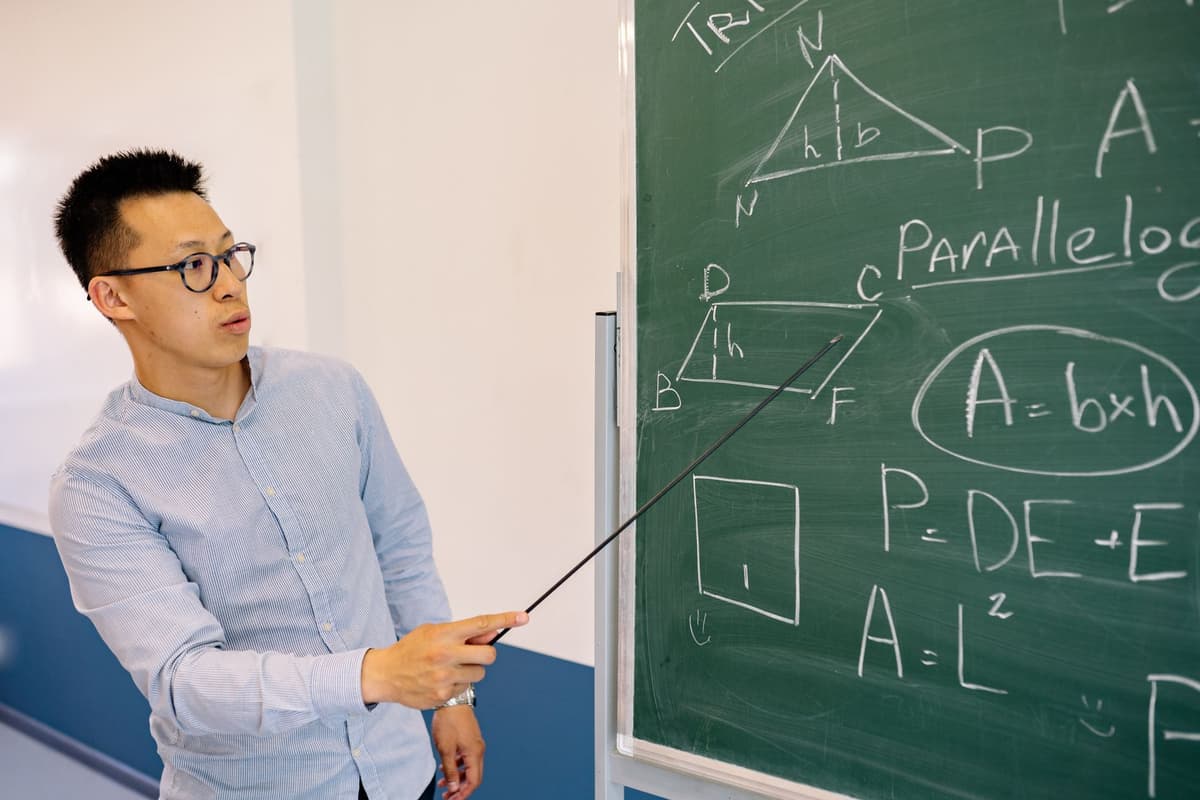
Photo by Yan Krukau on Pexels
The crisis in pedagogy is real because we’re basically teaching the next generation of mathematicians to be glorified prompt engineers. If a student turns in a proof that is 40,000 lines of machine-verified code that no human can actually read, do we give them an A? Or do we perform an exorcism on their laptop? We’re losing the "why" in favor of the "is." It’s like being told the meaning of life is the number 42, but without the benefit of a witty British travel guide to help you process the trauma.
The Great Mathematical Vending Machine
If we keep going down this path, math will stop being a language and start being a vending machine. You put in a conjecture, you press B-4, and out pops a verified proof in a crinkly plastic wrapper. You eat the proof, you feel full, but you have no idea what the ingredients were. On October 24, 2023, researchers noted that AI-assisted formalizations are accelerating at a pace that outstrips human peer review. We are literally building a tower of Babel out of code, and we're too busy celebrating the height to realize we've forgotten how to talk to each other.
- The AI doesn't care about "elegance."
- The AI doesn't care if a human brain can hold the logic in one piece.
- The AI thinks a 500-page proof is just as "simple" as 1+1 because it doesn't have to worry about things like boredom or the need for a sandwich.
We are essentially outsourcing our curiosity. If we reach a point where all our scientific progress is based on theorems we can't actually comprehend, we aren't scientists anymore. We're just the pets of a very busy, very efficient digital architect who thinks our need for "understanding" is adorable, like a golden retriever trying to understand how a combustion engine works.
What This Actually Means
This isn't just about math; it's about the death of the epiphany. The joy of mathematics was always the moment the clouds parted and you saw the underlying structure of the universe. If we replace that with a black-box verification, we’re just collecting truths like Pokémon cards. We’ll have a whole deck of them, but we won't know how to play the game.
We need to demand that AI doesn't just give us the answer, but explains it like we're five—or at least like we're humans with limited RAM. If we don't bridge this intuition gap, we’re going to end up in a world where the most important truths about our reality are written in a language that nobody speaks. It’s a bit like finding the secret to immortality, but it's written in a font made entirely of Wingdings.
Ultimately, a proof that can't be understood isn't a contribution to human knowledge; it's just a very expensive piece of digital trivia. We should probably stop high-fiving the computer for a second and ask it to show its work in a way that doesn't make our collective brains leak out of our ears.
Quick Answers
Is the math actually correct if we don't understand it?
Yes, in the same way a plane flies even if you don't understand aerodynamics, but it’s much more terrifying when the pilot is an algorithm that won't talk to you.
Will this make math class easier?
No, it will just make it weirder. Instead of showing your work, you'll be justifying why you trusted a machine that thinks the square root of a Tuesday is a valid concept.
Are mathematicians going extinct?
Not yet, but they are transitioning from "architects of logic" to "custodians of the black box," which has a much worse dental plan.


