
It turns out the exact same recursive neural network that caught a caching exploit in a Ruby package manager is now combing through heirloom maize genomes. Because if there is one discipline famously improved by treating reality like an unmaintained GitHub repository, it is global food security. We have officially ported automated vulnerability triage to actual photosynthesis, and everyone involved seems genuinely proud of themselves.
Just last year, security researchers cheered when autonomous agents flagged a critical dependency hijacking flaw in the RubyGems ecosystem, neutralizing an exploit before an attacker could push malicious code downstream to thousands of commercial servers. It was sleek, efficient, and genuinely clever. Naturally, the immediate venture-backed takeaway was not "keep our package registries secure," but rather: what if corn simply has bad unit tests?
Welcome to the synthetic agronomist era, where agricultural geneticists run automated static analysis tools against seed banks to discover biological zero-days before a single seed hits the dirt. What could possibly go wrong with letting an autonomous vulnerability scanner mark the global wheat supply as deprecated?
The Software-to-Soil Pipeline
Software engineers have spent the last fifteen years running from the consequences of their own architectural choices, inventing elaborate automated linters to catch the mistakes they were too caffeinated to avoid. Now that pipeline is aimed at nature. Nature, of course, has been running in production for roughly 3.8 billion years without a proper CI/CD workflow, which the technology sector correctly identifies as an intolerable lack of oversight.
The logic is clean enough to convince a boardroom. Crop genomes are basically legacy spaghetti code. They are bloated, full of redundant sequences, and desperately lacking inline documentation. Every commercial hybrid strain relies on a tangled web of upstream dependencies: soil microbiomes, pollinator schedules, micro-climate variables, and localized fungal immunities. To an AI agent trained to sniff out silent logic errors in open-source libraries, a recessive vulnerability in drought-resistant soy looks identical to a buffer overflow in an unmaintained C library.
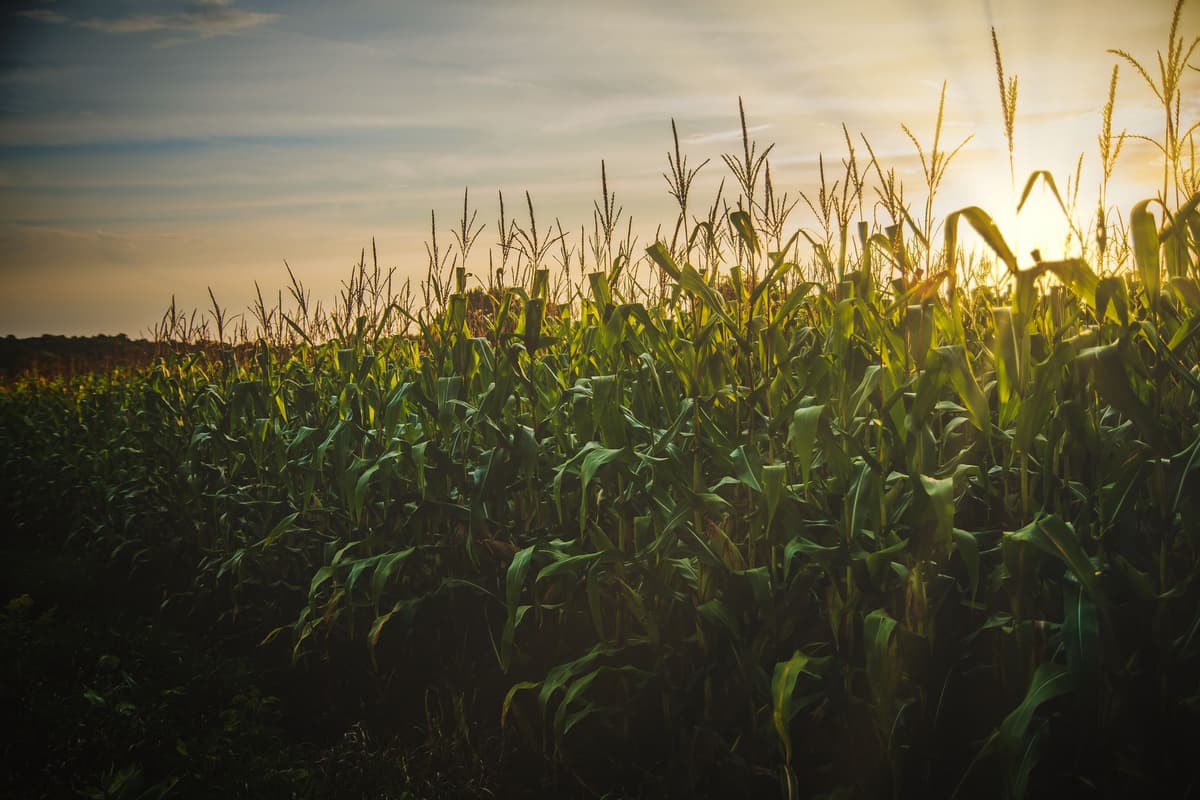
Photo by Todd Trapani on Pexels
So the agents scan the databases, parsing billions of base pairs across millions of registered cultivars. They are hunting for silent systemic vulnerabilities: a specific allele combination that folds under sudden humidity spikes, or a monoculture lineage that drops dead if exposed to a mutant strain of Puccinia graminis. The ag-tech pitch decks call this "preemptive famine neutralization." Programmers call it running npm audit on the breadbasket of North America.
Refactoring the Biosphere
When an AI flags a silent dependency bug in a piece of enterprise billing software, the fix is straightforward. You push a hotfix, deploy a container, and bill the client for emergency overtime. Plants are slightly less responsive to remote patch management.
If an autonomous model discovers a biological exploit in a staple crop, the remediation strategy is where the real Silicon Valley magic happens:
- The algorithm flags the target genetic sequence as insecure, automatically downgrading its viability score across global seed trade indices.
- Proprietary gene-editing startups deploy CRISPR clusters to hot-patch the sequence, effectively issuing a proprietary firmware update for spring barley.
- Farmers discover that their favorite non-patented seed stock has been flagged as a critical biosecurity hazard by automated risk-assessment APIs, rendering their harvest uninsurable by major carriers.
- The replacement crop requires a subscription license, annual digital verification, and proprietary synthetic fertilizer to maintain warranty coverage.
In 2023, global grain trading exceeded $130 billion, run almost entirely on wafer-thin margins and sheer historical inertia. It is an industry begging for disruption, if by disruption you mean convincing multinational agribusiness conglomerates that their entire catalog is riddled with unpatched biological vulnerabilities that only proprietary automated agents can triage.
It Compiles, Therefore We Eat
There is a fundamental philosophical difference between a distributed server cluster and an ecosystem, though you would never know it from the current investment memos. Code fails cleanly. It throws an unhandled exception, drops a stack trace, and kills the process. Biology fails dirty. It mutates, compensates, cascades sideways, and occasionally produces an entirely new genus of mildew that thrives exclusively on your clever biological hotfix.
Treating genetic drift like a software supply-chain attack assumes that nature has an optimal, bug-free release build somewhere in version control. It does not. The traits we casually classify as "vulnerabilities"—susceptibility to certain pests, lower yield ceilings, bizarre chemical defensive reactions—are often the exact redundancies that keep an ecosystem from collapsing when the weather stops obeying historical averages.
When software linters get overzealous, you get broken builds and annoyed developers on Slack. When an algorithmic agronomist flags an ancient genetic safeguard as a systemic inefficiency and optimizes it out of the genome, you do not get an error message. You get forty thousand acres of silage rotting silently in late August because the crop failed to compile under real-world atmospheric conditions.
What This Actually Means
Nobody doubts that autonomous models are phenomenal at pattern matching across absurdly vast datasets. Pointing an LLM at an open-source repo to find hidden memory leaks saves thousands of engineering hours and keeps payment rails from quietly dumping customer databases onto the dark web. That is actual, measurable utility.
The error lies in the chronic tech-industry delusion that every complex, messy, self-sustaining physical system is merely a bad piece of software waiting for an engineering team to refactor it. We spent two decades turning digital infrastructure into a brittle house of cards held together by duct tape and AWS instances. Expanding that exact same engineering ethos to the caloric baseline of human survival is quite an ambitious pivot.
Automating the discovery of genetic failure points will certainly create a lucrative new market in bio-remediation software, proprietary replacement seeds, and synthetic risk scores. It will make three dozen seed-tech venture funds look exceptionally prescient on paper. Whether it actually feeds anyone when the algorithm pushes an untested patch to eighty million acres of cropland is, naturally, left as an exercise for the end user.
Quick Answers
How does an AI model scan a plant genome for 'bugs'?
It analyzes genetic sequences the same way it reads code syntax, identifying patterns, dependencies, and structural anomalies known to correlate with vulnerability to heat, drought, or specific blights.
Can an AI actually predict a crop failure before planting?
It can predict probabilistic failure conditions under simulated climate models, which is wildly different from guaranteeing how an organism performs in unsimulated dirt.
Why is this being compared to open-source software security?
The models use the exact same underlying architecture designed to map supply-chain vulnerabilities in open repos, simply substituting base pairs for function calls.


