Your Brain Is Tired of Your Crap
For decades, we’ve sold space travel as the ultimate test of human grit, a shimmering frontier where square-jawed explorers stare into the abyss with unwavering resolve. It turns out the abyss wasn't staring back; it was just waiting for the explorers' brains to reboot into a permanent state of 'not my problem.' This is the Third-Person Pivot, a fancy neuroscientific way of saying that after a few months of floating in microgravity, your cerebellum realizes that keeping track of your physical body is a logistical nightmare it no longer wishes to manage.
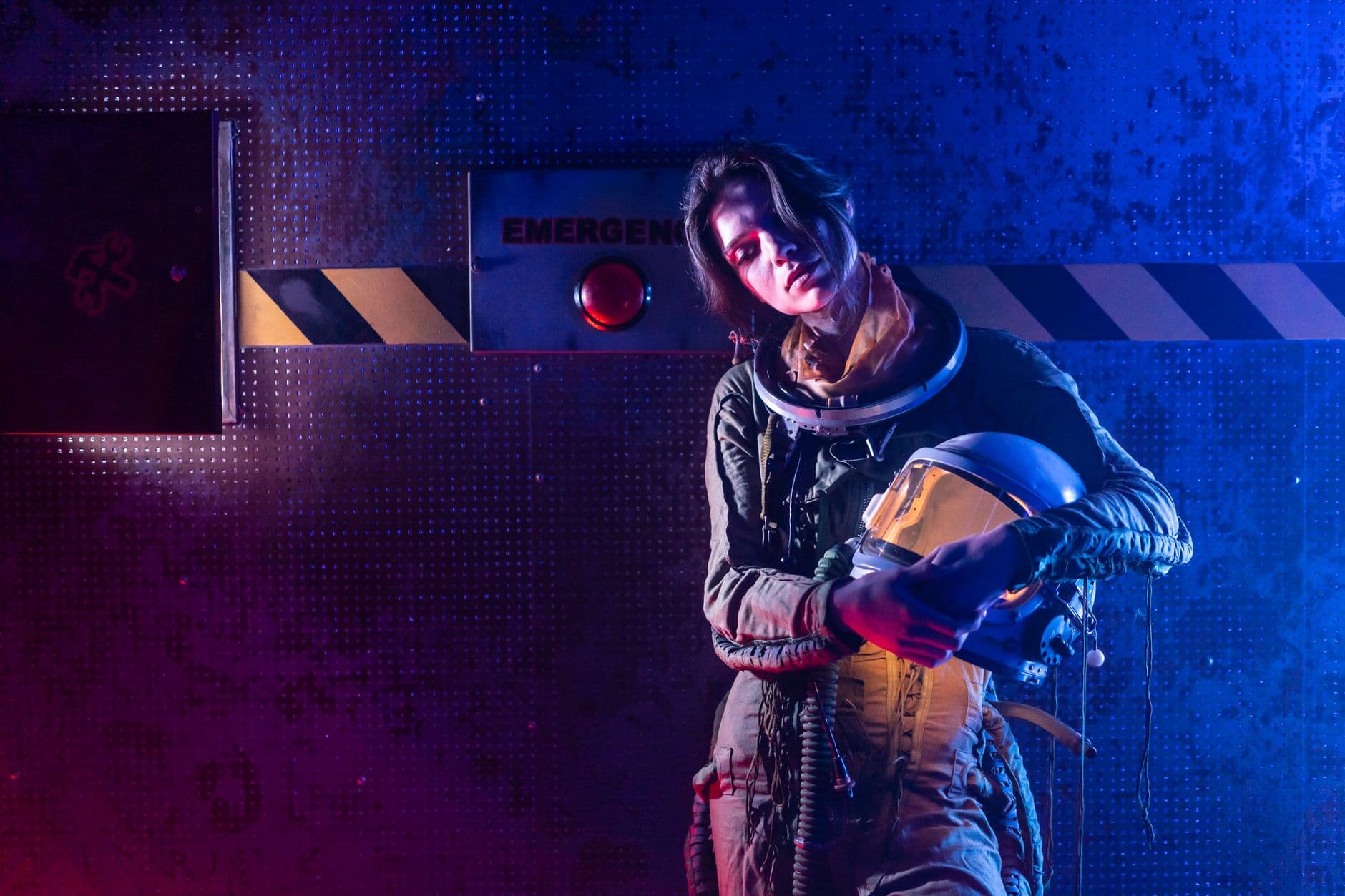
Instead of doing the hard work of processing a constant sensory mismatch, the brain simply checks out. It moves the camera angle of your consciousness three feet behind your left shoulder and lets you watch yourself eat rehydrated shrimp cocktail like you’re playing a very boring third-person RPG. Researchers are framing this as a triumph of neuroplasticity, which is a bit like calling a structural collapse 'spontaneous architectural reimagining.' If you can’t handle the existential dread of being a meat sack in a vacuum, your brain just stops identifying as a meat sack.
The Gravity of No Gravity
On Earth, gravity is the glue that keeps your 'self' stuck to your 'cells.' Your inner ear and your eyes agree on where the floor is, which allows you to maintain the delusion that you are a singular, cohesive entity. In deep space, that contract is null and void. Without a stable 'down,' the vestibular system enters a state of permanent protest, and the brain—bless its lazy heart—decides that the easiest way to resolve the conflict is to stop caring entirely. This results in a persistent dissociative state where astronauts feel like they are observing their own actions from a distance.
We are told this is a feature, not a bug. If you’re going to spend 900 days in a pressurized hallway on the way to Mars, being 'present' is actually the worst thing you can be. Being present means realizing you are trapped in a high-tech coffin with two people who chew too loudly and a recycling system that turns yesterday’s urine into today’s coffee. Dissociation is the only thing standing between a successful mission and a Lord of the Flies scenario involving a laser cutter and the oxygen scrubber.

Evolutionary Upgrades for the Soul-Dead
Evolution is usually a slow, grinding process involving thousands of years and a lot of dying, but apparently, we can fast-track it by just removing the floor. This 'observer' sensation is being hailed as the psychological armor required for multi-year transit. The theory suggests that humans who can effectively ghost themselves will be the ones who don't have a nervous breakdown when they realize they haven't seen a tree in eighteen months. We aren't sending explorers; we're sending ghosts who haven't realized they're dead yet.
Imagine the recruiting brochures. Join NASA: Lose Your Sense of Self to Save the Species. We are essentially betting the future of the Martian colony on the hope that if people feel like they are watching a movie of their lives rather than living them, they won't mind the radiation-induced cataracts or the fact that their bones are turning into chalk. It’s a brilliant strategy. You can’t have a mid-life crisis if you aren't entirely sure you’re the one having it.
What This Actually Means
This research effectively confirms that the human psyche is not a sturdy vessel built for the stars; it’s a fragile piece of software that crashes the moment you change the operating environment. We are biological creatures designed to walk on dirt and look at horizons. When you take those away, the software doesn't 'evolve'—it enters safe mode. We are calling this 'adaptation' because 'mandatory depersonalization' doesn't look good on a budget proposal to Congress.
If the price of reaching Mars is the permanent loss of our subjective reality, we have to ask what exactly is landing on the Red Planet. It won't be a person in the sense that we understand it. It will be a biological drone, a consciousness that has been pruned of its pesky attachments to physical reality. We wanted to colonize the stars, but it looks like we’ll have to settle for haunting them.
Ultimately, the 'Third-Person Pivot' is nature’s way of saying we weren't invited to this party. We are forcing our way in by lobotomizing our own sense of presence. It’s effective, sure. But it’s also a pretty grim commentary on our place in the universe that the only way to survive it is to pretend we aren't actually there.
Quick Answers
Is this the same as a 'flow state' or meditation?
No, meditation is a choice to be mindful; this is your brain forcibly ejecting you from the pilot's seat because the flight is too stressful. It's less 'Zen' and more 'neurological witness protection.'
Will astronauts ever feel 'real' again after returning to Earth?
Data suggests the 'observer' effect can linger, meaning returning heroes might look at their families and feel like they’re watching a high-definition documentary about a stranger’s homecoming. Gravity returns, but the ego might stay in orbit.
Why can't we just use artificial gravity to fix this?
Because building a spinning ship is expensive, and it's much cheaper to just let the astronauts' brains break in a way that happens to be convenient for the mission timeline.


