The Spotted Surprise in the Underbrush
I can't stop thinking about the fact that we missed a whole cat. For over a hundred years, biologists assumed we had the feline family tree pretty well mapped out, but the recent identification of a distinct, cryptic species surviving in the fragmented landscapes of the Americas has me questioning everything I thought I knew about 'wild' spaces. This isn't a creature that was found in some untouched, prehistoric jungle thousands of miles from civilization; it’s a creature that has been thriving in the 'feral borderlands'—those messy, productive spaces where forests bleed into farms.
It makes me wonder if our obsession with pristine wilderness has blinded us to the life teeming right under our noses. We have this mental model that nature only happens 'over there,' safely tucked away in a national park. But this little apex micro-carnivore didn't get the memo. It chose to live in the gaps, the hedgerows, and the low-intensity agroforestry plots where coffee and cacao grow under a canopy of native trees. It turns out that a well-managed farm might be a better neighbor for a rare cat than a fenced-off island of forest surrounded by a sea of industrial monoculture.
The Failure of the Ecological Fortress
For decades, the gold standard of conservation has been the 'fortress' model. You take a piece of land, remove the humans, and hope for the best. While that protects some things, it creates a terrifying binary: you’re either in the park or you’re in a biological desert. This new feline discovery suggests that the 'in-between' spaces are far more vital than we gave them credit for. If a unique species can stay hidden for a century while living alongside humans, it means the quality of our agricultural borders is a life-or-death variable for global biodiversity.
Consider the math of a typical ecological reserve. Even a large park is often too small to maintain a healthy genetic pool for predators. When those animals try to leave the park to find a mate or new territory, they hit a wall of industrial soy or corn. They die. But in a decentralized, low-intensity agroecosystem—the kind where a farmer leaves the thickets intact and mixes crops with timber—the entire landscape becomes a corridor. The farm isn't the obstacle; it's the habitat.
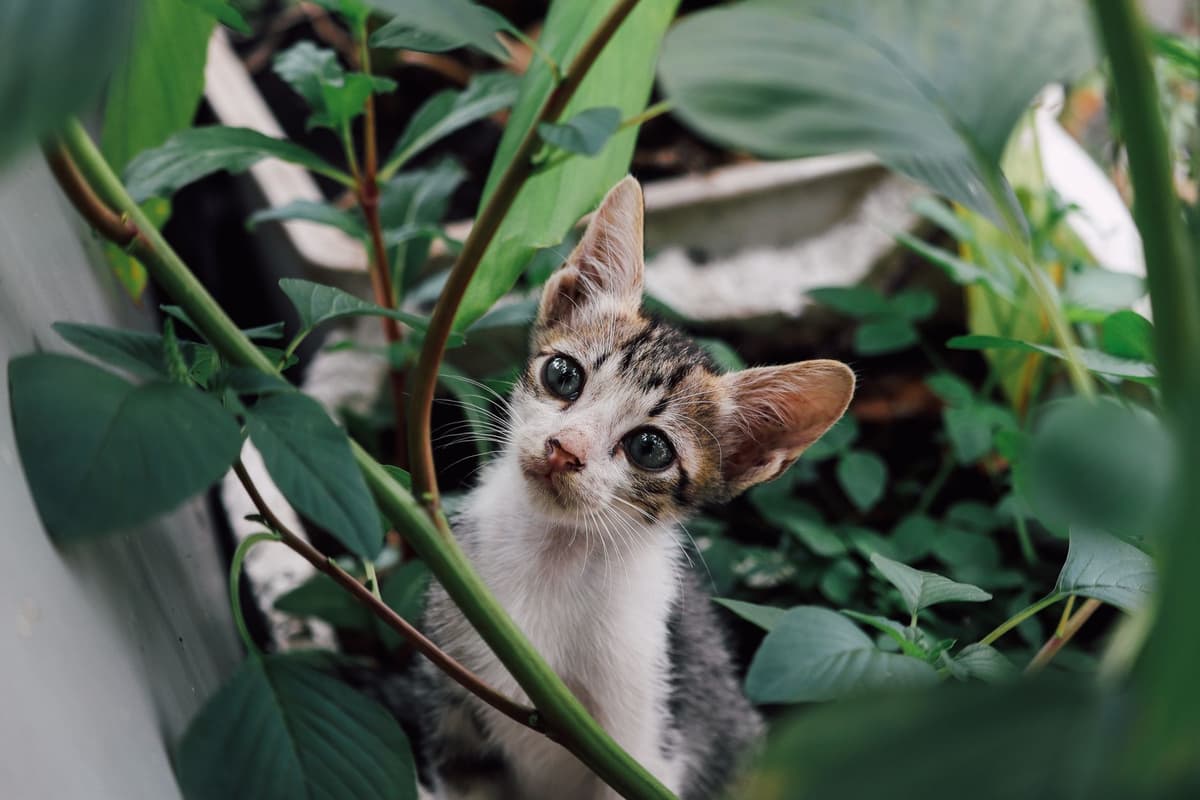
Photo by Tường Chopper on Pexels
This 'Feral Borderlands' paradox is fascinating because it suggests that human activity isn't inherently the enemy of variety. The problem isn't that we are farming; it's how we are farming. When we move toward regenerative models that mimic the layering of a forest, we aren't just growing food. We are accidentally, or perhaps intentionally, building a home for the things we didn't even know existed.
Why the Fringes are the Future
I’ve been looking into the data on these mosaic landscapes, and the numbers are staggering. In parts of Central and South America, traditional shaded coffee plantations can support up to 90% of the bird biodiversity found in primary forests. Now, we're finding that they support rare mammals too. It’s a messy, beautiful overlap that defies the neat lines on a map. Why do we insist on separating 'production land' from 'nature' when the most resilient systems seem to be the ones that do both?
- Connectivity: Small farms with wild borders act as bridges between larger forest fragments.
- Pest Control: These micro-carnivores aren't just tourists; they eat the rodents that would otherwise destroy a farmer's harvest.
- Climate Buffers: The deep root systems and shade canopy of agroforestry protect the soil while providing a stable microclimate for sensitive species.
It’s a symbiotic relationship that feels almost ancient. The farmer provides the structure, and the ecosystem provides the services. When we flatten the landscape for industrial efficiency, we lose that hidden labor force of cats, owls, and insects. We trade a self-sustaining system for one that requires constant chemical life support. Is the extra 10% yield really worth the cost of a silent, empty horizon?
What This Actually Means
This discovery is a massive wake-up call for how we fund and prioritize conservation. We spend billions on 'protecting the wild,' but we often ignore the farmers who are actually living on the front lines of these borderlands. If we want to save the next undiscovered species, we probably shouldn't just be buying up land for parks; we should be supporting the economic viability of small-scale, regenerative agriculture. We need to make it more profitable for a farmer to keep a thicket than to clear-cut it for a few more rows of monocrop.
I'm left wondering how many other 'ghosts' are out there, watching us from the edges of our fields. The fact that a new cat can emerge in 2024 is a testament to nature's resilience, but it's also a warning. Our food system is the primary driver of extinction, but this discovery proves it could also be our greatest tool for restoration. We don't have to choose between feeding ourselves and sharing the planet. We just have to get comfortable with a little more wildness in our backyard.
Ultimately, the 'Feral Borderlands' aren't just a physical place. They are a mindset. They represent a shift from seeing ourselves as masters of a sterile environment to seeing ourselves as participants in a living one. The cat was there all along. It was just waiting for us to notice that the fence we built was actually a bridge.
Quick Answers
Is this cat actually a new species?
Yes, genomic testing and morphological analysis have confirmed it is a distinct evolutionary lineage, not just a subspecies of known cats like the ocelot or margay.
Do these cats live on big industrial farms?
Rarely. They require 'structural complexity'—think bushes, old trees, and varied terrain—which is usually stripped away in large-scale industrial operations.
Can regenerative farming really replace national parks?
No, we still need large, untouched wilderness areas for many species, but those parks will fail if they aren't connected by bird- and cat-friendly agricultural landscapes.