
One Hundred and Thirty Thousand Neurons of Pure Chaos
We finally did it. After years of squinting through electron microscopes and probably several mental breakdowns, researchers have mapped the full connectome of the adult fruit fly, Drosophila melanogaster. That’s 130,000 neurons and 50 million synapses laid out like a Google Maps for a creature whose primary life goal is to drown in your vinegar. This isn't just a map; it's a digital blueprint of every bad decision a fly has ever made.
Imagine spending $40 million to understand why a tiny, winged idiot thinks your garbage disposal is a five-star resort. We now have the ability to simulate a fly's entire consciousness on a laptop. If you’ve ever wanted to know what it feels like to have no object permanence and a desperate, burning desire to land on a banana peel, your time has come. It’s the ultimate digital twin, except instead of a jet engine or a city power grid, it’s a biological machine programmed exclusively for annoyance.
The End of Chemical Carpet Bombing
For the last century, our approach to agricultural pest control has been roughly equivalent to using a flamethrower to kill a spider in a library. We just drench entire zip codes in chemicals and hope the pests die before we start growing extra limbs. But the "Entomological Algorithm" changes the math. Because we have the source code for the fly's brain, we don't have to poison the soil anymore. We just have to gaslight the bugs.
By running simulations of the fruit fly connectome on consumer-grade GPUs, scientists are identifying the exact neural pathways responsible for "crop-seeking." We are moving toward precision neurological disruption. Instead of killing the fly, we’re going to find the specific cluster of neurons that tells it, "Hey, that orange looks delicious," and we're going to digitally reassign it to think that oranges smell like a damp basement or a tax audit.
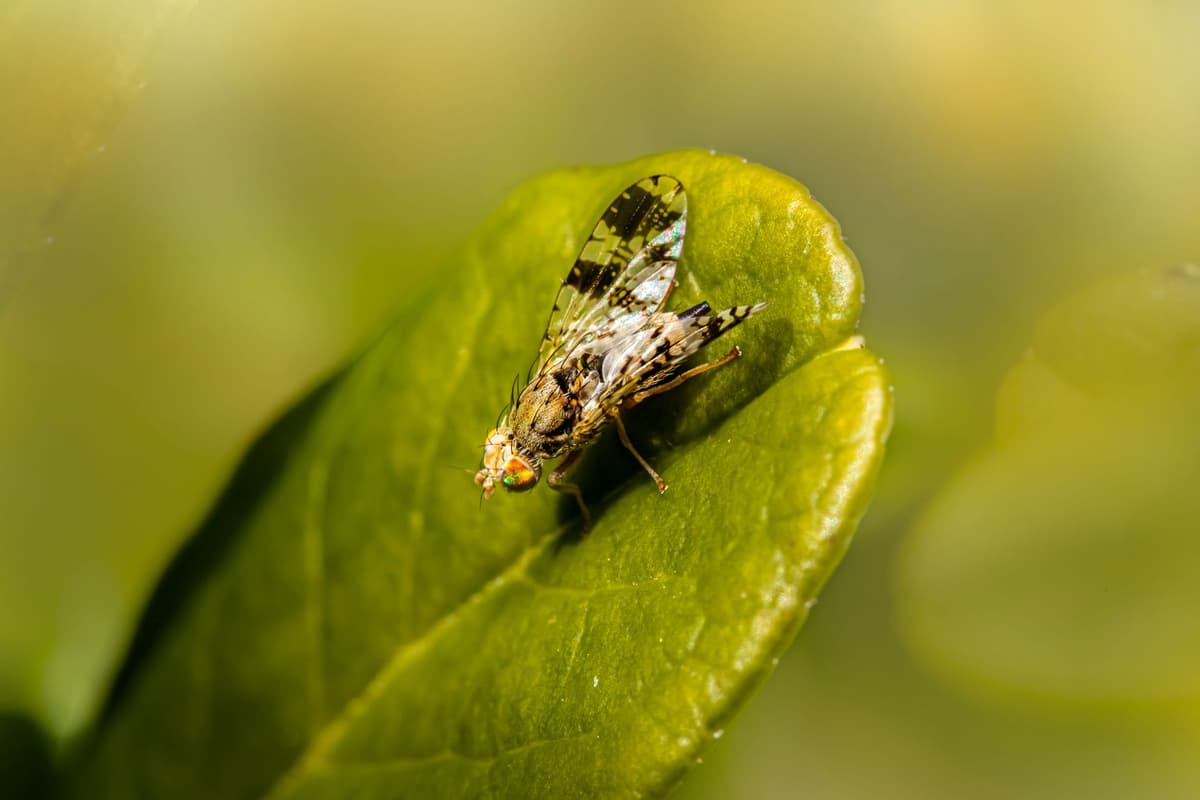
Photo by Erik Karits on Pexels
This is the dawn of the "Digital Twin" in the orchard. We can test 10,000 different scent combinations or light frequencies in a computer model before we ever step foot in a field. We aren't fighting a war against nature anymore; we’re just hacking the server. It’s much cleaner to give a fly a permanent mid-life crisis where it forgets how to flirt than it is to dump a tanker of organophosphates into the groundwater.
Why Your Avocado Just Got a Cybersecurity Update
Think about the sheer pettiness of this technology. We are using the pinnacle of human engineering—the kind of processing power that could simulate the birth of a star—to convince a bug that it’s not actually horny for a tomato. We’ve identified the "mating drive" circuits. In the near future, farmers could deploy pheromone-mimicking signals that don't just confuse the flies, but systematically exploit their neurological hard-wiring to make them find their own species repulsive.
- Precision Ghosting: We can simulate which frequencies make a male fly believe every female fly in the area is actually a predator.
- The Infinite Loop: Finding the "search pattern" neurons and tricking the fly into flying in a circle until it decides to go take a nap instead of eating a grape.
- Dietary Gaslighting: Making the fly believe that the highest-quality organic kale is actually a piece of cardboard.
This is basically the Matrix for insects, but instead of Keanu Reeves looking cool in a trench coat, it’s a fruit fly named Kevin who can’t figure out why he’s suddenly more interested in staring at a pebble than ruining your picnic. We are building a world where the pests are still there, they’re just too psychologically broken to do anything about it.
What This Actually Means
We are witnessing the pivot from "Toxic Agriculture" to "Psychological Agriculture." The data from this connectome allows us to move away from broad-spectrum pesticides that kill bees, butterflies, and the occasional unlucky frog. By targeting the specific neural architecture of a pest, we can create an environment that is perfectly hospitable to everything except the one creature trying to eat the profit margin. It is the most sophisticated form of bullying ever conceived by man.
On a deeper level, simulating life on consumer hardware is a terrifyingly cool milestone. If we can run a fly’s brain on a gaming rig, we’re only a few decades of Moore’s Law away from doing the same to larger pests, like locusts, or perhaps eventually, annoying neighbors. It turns biology into a software problem. The farm of the future won't have a guy in a hazmat suit spraying toxins; it’ll have a guy in a hoodie fine-tuning the "Aversion to Peaches" algorithm on a server rack in the barn.
Ultimately, this is a win for the environment and a massive loss for fly-kind. We’ve cracked their code. We know their secrets. And we are going to use that knowledge to make sure they stay far, far away from my avocado toast. It’s a brave new world, and it smells surprisingly like a digital simulation of a rotting apple.
Quick Answers
Does this mean flies are now sentient AI?
Technically, we have a digital copy of their brain, but it’s still just a bunch of instructions for finding trash. It’s not going to write poetry; it’s just going to be very confused by a virtual window pane.
Is this safer than pesticides?
Yes, unless you’re a fruit fly, in which case it’s a psychological horror movie. For humans, it means fewer chemicals on our strawberries and more precision-targeted bug management.
When can I buy a fly-brain-disruptor for my kitchen?
Probably not for a while, as most of this requires industrial-scale modeling and specific environmental triggers. For now, you’re stuck with the sticky yellow ribbons and your own shame.


