The Tyranny of the Tin Can
Every time I see a render of a futuristic spaceship, it looks like a high-end kitchen appliance. It’s always white, sleek, and incredibly fragile. We have spent seventy years obsessed with the idea of the monolithic hull—the idea that a ship must be a singular, manufactured object launched from a gravity well. But the physics of deep space is starting to make that look like a massive mistake. If we want to actually live out there, we might need to stop being shipbuilders and start being moles.
Think about the sheer vulnerability of a traditional spacecraft. You have a few centimeters of hull protecting you from cosmic rays, micrometeoroids, and a thermal environment that swings hundreds of degrees. It’s a miracle we’ve made it this far. But when you look at a 500-meter-wide carbonaceous asteroid, you aren't looking at an obstacle; you're looking at a ready-made chassis. By hollowing out a spinning rubble pile, we don't just get a ship. We get a shield that is hundreds of meters thick.
I’m fascinated by how this flips our entire engineering philosophy on its head. In a NASA-style ship, weight is the enemy. Every gram costs fuel. In an inverted asteroid architecture, mass is your best friend. The more rock you have between you and the sun, the longer you live. It’s a complete inversion of the logic that has governed aerospace since the Wright brothers. We aren't fighting gravity anymore; we're using it.
The Radiator Problem Is a Geometry Problem
One of the biggest hurdles in space isn't getting warm; it's staying cool. In a vacuum, heat doesn't just drift away; you have to radiate it out. Traditional ships use massive, vulnerable radiator fins that look like giant wings. If a pebble hits one at twenty kilometers per second, the mission is over. But if you're inside an asteroid, the thermal mass of the rock acts like a giant heat sink. It’s the ultimate basement.
I wonder if we can use the internal structure of the asteroid as a heat exchanger. Imagine liquid coolant snaking through kilometers of bored-out tunnels before it ever reaches the surface. You’re not just relying on a thin radiator; you’re using the entire volume of a billion-ton rock to regulate your temperature. It turns the spacecraft into a living thermal organism.

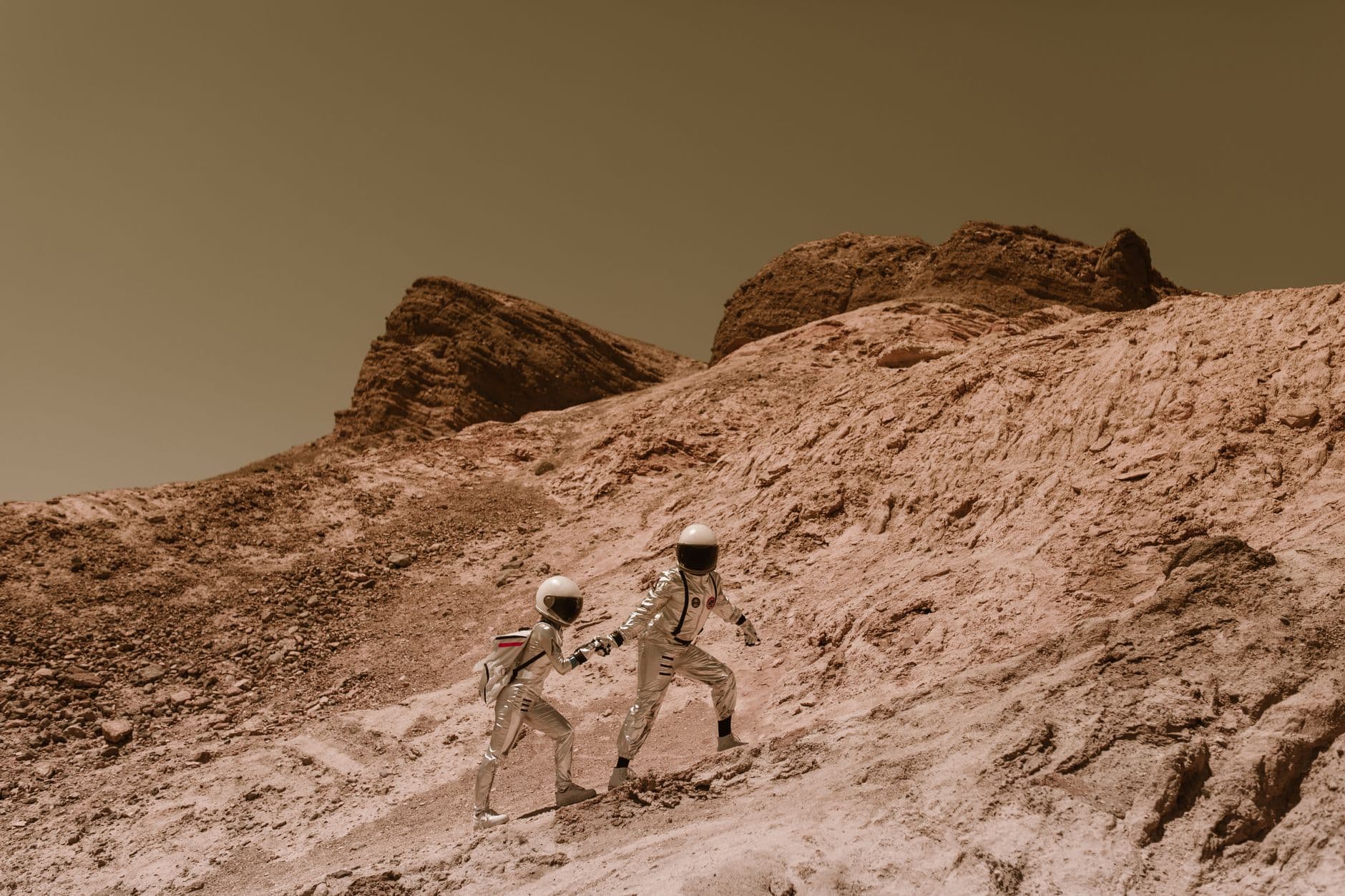
Photo by C&M Photography on Pexels
This also solves the structural load issue. If you spin a hollowed-out asteroid to create artificial gravity, the centrifugal force pushes everything against the interior walls. In a metal ship, that’s a constant stress on the welds and bolts. In an asteroid, you’re just pushing back against the natural compression of the rock. The ship is held together by the very physics that usually tries to tear man-made structures apart.
Designing for the Long Haul
We talk about "long-duration" flight like it's a six-month trip to Mars. But what if we're talking about sixty years? Or six hundred? A metal hull will eventually fatigue. It will pit, it will corrode, and it will eventually fail. A rock doesn't care about time. An inverted asteroid habitat could theoretically last for millennia, floating through the void as a self-contained ecosystem.
- Radiation Shielding: 100 meters of regolith provides better protection than any magnetic shield we can currently conceive.
- Resource Access: You aren't just riding in the ship; you're eating it. If the asteroid is rich in water ice or volatiles, your life support is built into your walls.
- Modular Growth: You don't need a drydock to expand. You just need a drill. You can grow the habitat as the population increases without ever needing to launch a new module from Earth.
There is something deeply poetic about the idea of humanity returning to caves, just as we did 50,000 years ago, but doing it among the stars. We spent all this time trying to escape the earth, only to realize that we need the earth—or at least the rocky stuff it's made of—to survive the journey. It suggests that the future of space travel isn't about the "ship" at all. It's about the environment.
What This Actually Means
This shift in thinking means our first real deep-space colonies won't look like the International Space Station. They’ll look like dusty, tumbling rocks that happen to have airlocks hidden in craters. We have to move past the "Star Trek" aesthetic of beautiful, exposed bridges and nacelles. Real space travel is going to be gritty, subterranean, and incredibly heavy.
If we commit to the inverted architecture, the "launch" becomes the least important part of the mission. The real work happens in situ. We send small, autonomous robots to an asteroid, they spend a decade hollowing it out and spinning it up, and only then do the humans arrive. It’s a slower, more deliberate way of moving through the universe. It’s not a sprint; it’s a settlement.
Ultimately, this challenges our ego. We want to build shiny things that have our names on them. It’s much harder to accept that the best way to survive the cosmos is to hide inside the debris it left behind. But there’s a quiet brilliance in that humility. By working with the physics of the solar system instead of trying to out-engineer it with aluminum and Teflon, we might actually find a way to stay out there forever.
Quick Answers
How do you keep the rock from flying apart?
You choose "monolithic" asteroids or wrap rubble piles in high-tensile carbon fiber mesh to maintain structural integrity under rotation.
Where does the light come from?
Hollowed habitats use solar concentrators—giant mirrors at the poles—to bounce sunlight down a central axis or convert it into massive internal LED arrays.
Is this actually cheaper?
In the long run, yes. While the initial robotic prep is expensive, you save billions by not having to launch thousands of tons of shielding and propellant from Earth's surface.


