
The Earth Is Snitching on Your Dinner
For decades, the Earth has been quietly recording the exact orientation of its magnetic field in every piece of cooling clay like a cosmic, geological hall monitor. While we were busy inventing the Shake Weight and arguing about whether a hot dog is a sandwich, the planet was taking meticulous notes on exactly where and when every terracotta pot was fired. Now, researchers are using 'archaeomagnetic dating' to bust the guys selling you 'ancient-method' wine that was actually cooked in a kiln three weeks ago by a guy named Gary.
Imagine spending half a month's rent on a bottle of wine because the label claims it was aged in a traditional Georgian qvevri buried in the sacred soil of the Caucasus. You take a sip, adjust your monocle, and remark on the 'terroir.' Then a scientist walks in with a magnetometer and informs you that the clay pot this wine lived in actually aligns with the magnetic north of a factory in suburban Shenzhen circa 2022. You aren't tasting history; you're tasting a lie wrapped in iron oxide.
Magnetic Fingerprints and Expensive Dirt
When you fire clay above a certain temperature—usually around 600°C—the magnetic minerals inside it act like tiny, drunk compass needles. Once the pot cools, those needles freeze in place, pointing exactly toward wherever the magnetic pole was at that specific moment in that specific geography. Since the Earth’s magnetic field wobbles more than a toddler on a cruise ship, every location on the planet has a unique magnetic signature that changes over time.
This means that a 'traditional' Italian oil amphora fired in Tuscany in 1950 has a completely different magnetic 'vibe' than one fired in 2024. Fraudsters are great at faking the aesthetics—they can add fake chips, artificial dust, and even 'authentic' dirt stains—but they can't reach into the subatomic structure of the clay and tell the magnetite particles to lie to the scientists. It’s the ultimate forensic audit, performed by the planet itself.
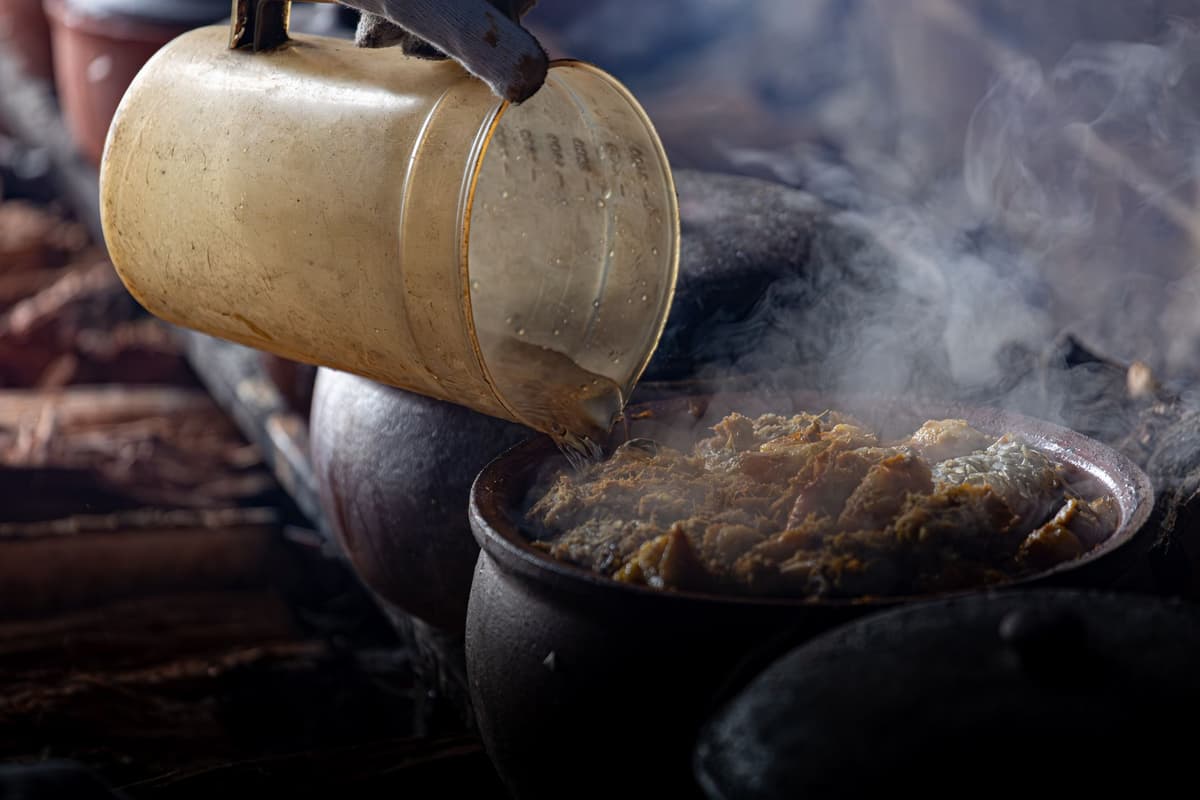
Photo by Hồng Quang Official on Pexels
The Great Terracotta Shakedown
We are currently living through a golden age of food fraud where anything with a 'heritage' label is essentially a target for a heist. We’ve seen sawdust in Parmesan and corn syrup in Manuka honey, but the terracotta-aged wine market is a special kind of pretentious playground. People pay a 400% markup for the privilege of drinking grape juice that sat in a dirt jar, and until now, the only way to verify it was to trust a guy in a linen shirt who says 'trust me, my grandfather built this kiln.'
This technology is effectively a polygraph test for inanimate objects. Researchers are building databases of 'geomagnetic curves' that map out exactly what the magnetic field looked like in specific regions over the last few centuries. If a producer claims their oil was aged in a vessel from a specific 18th-century Spanish village, but the magnetic alignment suggests the pot was born in a high-voltage electric kiln in 2019, the jig is up. It’s like finding a digital watch in a movie about Vikings; the physics simply don't allow for it.
Why We Can't Have Nice Things
I find it deeply comforting that the universe is so annoyed by our pretension that it literally encoded a truth-telling mechanism into the crust of the Earth. We spent centuries trying to trick each other into buying 'magic' relics and 'ancient' potions, and the whole time, the ground we were standing on was rolling its eyes and taking notes. It’s the ultimate cosmic 'Actually...'
What’s next? Are we going to use cosmic ray muons to prove that your 'truffle-infused' salt is actually just regular salt that sat near a mushroom once? Probably. We are entering an era where the molecules of your dinner are going to have to show their passports at the border. If you’re a fraudster, this is a nightmare. If you’re a fan of watching rich people find out their 'Roman-style' wine vessel is as authentic as a three-dollar bill, it’s the best news of the year.
What This Actually Means
This isn't just about catching people selling fake jars; it’s about the total collapse of the 'vibes-based' economy. For a long time, 'premium' food has relied on a handshake and a colorful story about a hillside in Provence. Geomagnetic provenance turns that story into a data point. It forces transparency on an industry that has spent decades hiding behind the fog of 'tradition' to justify absurd price points.
Ultimately, this technology will likely trickle down to the point where you can scan a bottle in the grocery store with your phone to see if it’s lying to you. We are weaponizing the very physics of the solar system to ensure that our salad dressing is legit. It's an absurdly high-tech solution to the very human problem of being a liar, and I for one welcome our new magnetic overlords.
If the Earth has to act as a cosmic snitch to make sure I’m not overpaying for vinegar, so be it. Science has finally found its highest calling: protecting our salads from the scourge of mid-tier deception.
Quick Answers
Can I use a fridge magnet to check my wine?
No, unless your fridge magnet is a $50,000 laboratory-grade magnetometer and you have a PhD in geophysics. Your 'World's Best Dad' magnet is powerless here.
Does this make the wine taste better?
Absolutely not. It just makes the wine taste like 'the truth,' which often has notes of 'I spent too much money' and 'regret.'
Is my 'authentic' Greek yogurt next?
Unless they start selling yogurt in clay pots fired in 400 BC, you’re safe for now. Most yogurt fraud is just regular lying, no magnets required.


