From Mushroom Clouds to Mammograms
North Korea spent the better part of a decade trying to perfect the art of the subterranean fireball, and in the process, they managed to turn Mount Mantap into a geological equivalent of a Jenga tower played by a toddler. Researchers noticed that the resulting seismic ripples didn't just fade away; they bounced around the fractured granite like a pinball in a machine built by a madman. Now, medical scientists have looked at this data and decided that the exact same acoustic physics used to measure a crumbling mountain can be used to see if your heart valve is getting a bit crunchy.
Imagine going to the doctor because you have a weird clicking in your knee, and instead of an X-ray, they pull out a 'low-frequency diagnostic tool' based on the 2017 Punggye-ri test. You’re lying on the table, and the technician is adjusting a geophone usually reserved for detecting tectonic shifts, whispering, "Hold still, we're trying to see if your tibia has the same vibrational signature as a 120-kiloton blast." It is the ultimate flex in recycling. It’s like finding out that the secret to a perfect sourdough starter is actually radioactive runoff from a decommissioned submarine.
This isn't just a quirky coincidence. The way a shockwave travels through a mountain full of jagged cracks and hollowed-out tunnels is mathematically identical to how sound moves through a human body full of brittle bones and slightly-too-stiff arteries. We are, apparently, just fleshy mountains with better outfits and more anxiety. If a nuclear blast can reveal a hidden fault line five miles underground, it can definitely tell if you’ve been skipping leg day or if your aortic valve is starting to sound like a rusty screen door.
The Tectonic Plate in Your Ribcage
The technology relies on ultra-sensitive geophones—devices so twitchy they can hear a worm have a mid-life crisis three states away. When you apply this to the human body, you aren't just listening to the heart; you're listening to the 'echo' of the blood hitting the valve. If that valve is elastic and healthy, the sound wave behaves like a basketball hitting a gym floor. If it’s calcified, it behaves like a brick hitting a pile of wet gravel. This is the 'Seismic Forensics' of your torso, and it is every bit as dramatic as it sounds.
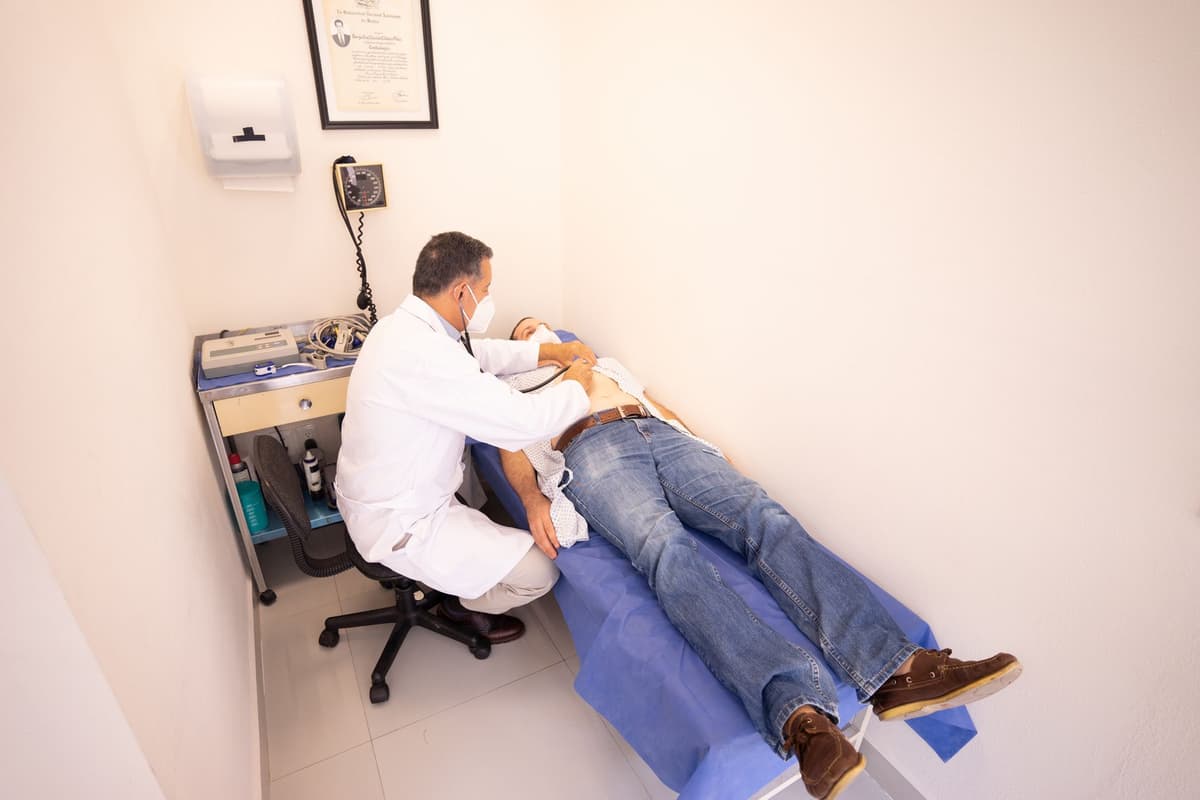
Photo by Los Muertos Crew on Pexels
Researchers are calling this 'low-frequency diagnostics,' which is a fancy medical term for 'listening to the vibrations that make your teeth rattle.' By using the unique acoustic signatures of the North Korean tests as a baseline for how waves move through 'unstable structures,' they’ve created a map of human decay. Your osteoporosis isn't just a medical condition anymore; it’s a 'subterranean geological destabilization event.' Tell that to your insurance provider and see how fast they hang up on you.
I personally love the idea that my future health screenings will involve a guy in a lab coat looking at a seismograph and shouting, "We've got a 4.2 on the Richter scale in the left ventricle! Get the grout!" It brings a certain level of high-stakes drama to a routine physical. You’re not just getting a check-up; you’re surviving a simulated catastrophe. It’s the kind of medical innovation that only happens when someone spends too much time looking at disaster data and thinks, "Hey, that looks like my Uncle Steve's hip."
Why We Can't Have Normal Breakthroughs
Why does it always have to be like this? Why couldn't we get medical breakthroughs from something pleasant, like the vibrational frequency of a cat's purr or the sound of a perfectly popped cork? No, we have to wait for someone to repeatedly detonate high-yield explosives under a mountain until the very ground starts crying for help. Only then do we go, "Aha! This is exactly what we need to detect early-stage brittle bone disease."
- The 2017 North Korean test was so big it actually moved the mountain.
- Geophones can detect movements smaller than the width of a single DNA strand.
- Scientists are literally 'listening' to your bones like they're searching for oil.
This is the peak of human ingenuity: taking the most terrifying thing on the planet and using it to make sure 70-year-olds don't break a hip while power-walking at the mall. It’s absurd. It’s ridiculous. It’s probably going to save thousands of lives. We are basically scavengers in the dumpster of history, picking through the wreckage of geopolitical tension to find better ways to monitor our cholesterol. If that doesn't sum up the human race, I don't know what does.
What This Actually Means
At the end of the day, we’re looking at a future where medical diagnostics are cheaper, faster, and significantly weirder. Instead of a $2,000 MRI that requires you to lie perfectly still in a tube that sounds like a dubstep concert, you might just have a tiny sensor clipped to your chest that listens to the tectonic shifts of your internal organs. It’s non-invasive, it’s incredibly accurate, and it comes with the added bonus of being born from the darkest timeline of the Cold War.
It proves that data is just data. Physics doesn't care if a wave was started by a heart attack or a hydrogen bomb; it’s just a vibration looking for a place to go. If we can turn the literal tools of destruction into a way to keep Grandma's heart ticking for another decade, then maybe we aren't as doomed as the nightly news makes us feel. We’re just a very confused species that is exceptionally good at turning lemons into lemonade, and then turning nuclear fallout into a very precise stethoscope.
So, the next time you hear about a rogue nation rattling the crust of the earth, don't just worry about the end of the world. Think about your bone density. Somewhere in a lab, a scientist is getting a really great reading on a bicep tear because of it. It’s the circle of life, just with more Geiger counters and significantly more paperwork.
Quick Answers
Does this mean my doctor is going to blow me up?
No, the technology just uses the math and the sensors derived from studying those blasts, not the actual explosives. Your co-pay remains the most painful part of the visit.
Is my body really like a fractured mountain?
In terms of wave propagation, yes. In terms of being a majestic landmark that people want to hike on, that depends entirely on your gym routine and your charisma.
Will this make my check-ups cheaper?
Ideally, yes, because geophones are significantly less expensive than building a giant superconducting magnet for an MRI. But let’s be real: the hospital will probably find a way to charge you a 'Seismic Calibration Fee.'
Can I hear my own bones vibrating?
Not with your ears, but with this tech, you can finally prove to your spouse that your knees really do sound like a magnitude 6.0 earthquake when you stand up.