The Town That Forgot to Stay Dead
Imagine you’re a town in 1968. The Army Corps of Engineers shows up, tells you that you’re in the way of a very important reservoir, and politely asks you to drown. Most towns would take the hint, pack up their General Stores, and settle into a dignified afterlife as a haunt for depressed catfish. Not Neatsville. Neatsville has the survival instincts of a cockroach in a Tupperware container, and thanks to climate change, it’s currently enjoying a very soggy, very muddy renaissance.
Because of the massive swings in Kentucky's weather, Green River Lake is behaving like a faulty bathtub drain. One minute it's a scenic water feature; the next, the water level drops 15 feet and suddenly there’s a 19th-century foundation staring at you like a judgmental grandparent. We’ve reached a point where 'managed retreat'—the fancy urban planning term for 'running away from the water'—has been replaced by 'accidental reappearance,' which is the urban planning equivalent of a jack-in-the-box.
Scientists are Studying This Rubble Like it’s the Moon
Urban planners and architects are currently flocking to these mud-caked ruins to study 'long-term material durability.' That is a professional way of saying they want to know why a brick wall built by a guy named Jebidiah in 1890 is still standing after fifty years underwater, while the drywall in my modern apartment melts if I breathe on it too hard during a humid Tuesday. They’re looking at Neatsville and thinking, "Wow, look at how that limestone resisted the silt!" whereas I’m looking at it and thinking, "That looks like a great place to get a very specific type of tetanus."
There is something inherently hilarious about a high-ranking architect with a $200 haircut standing in six inches of Kentucky sludge, taking notes on a rotted fence post. They call it 'Ephemeral Urbanism.' I call it 'The Basement That Won't Quit.' We are literally studying a drowned town to figure out how to build the cities of the future. Our grand strategy for the climate apocalypse is apparently: "Let's see what the drowned people did."
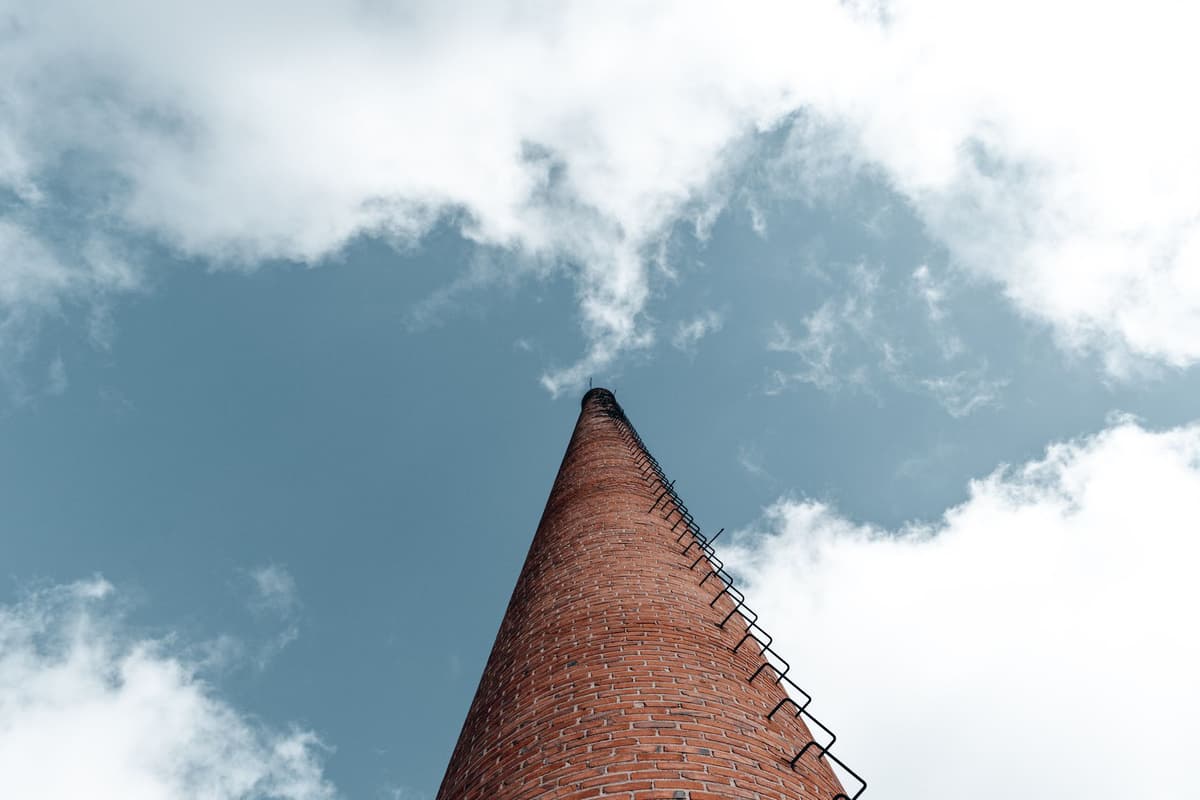
Photo by Vadym Alyekseyenko on Pexels
The Realities of Underwater Real Estate
If you think the housing market is bad now, wait until you’re competing with Neatsville’s ghosts for a fixer-upper that’s only available four months out of the year. We are watching the birth of the 'Part-Time City.' It’s like a seasonal pop-up shop, but instead of selling overpriced Halloween costumes, it sells existential dread and wet silt.
- Amenities: Waterfront views (internal and external).
- Commute: Boat, submarine, or a very sturdy pair of galoshes.
- HOA Fees: Paid in sacrifices to the Army Corps of Engineers.
Planners are legitimately trying to use these ruins to model how modern concrete will handle the rising tides of the 21st century. It’s a bit like checking the expiration date on a carton of milk by seeing how long it takes for the milk to gain sentience and start its own podcast. If the 'durable urban materials' of 1920 are the gold standard, we are in significant trouble, because modern architecture is mostly made of glass, hope, and tax write-offs.
What This Actually Means
Neatsville’s constant resurfacing is a slap in the face to the idea that we can just 'engineer' our way out of nature. We built a dam, we made a lake, we said 'Goodbye, Neatsville,' and Nature said, 'Actually, hold my beer, I’m going to show you this chimney again in fifty years just to mess with your property values.' It’s the ultimate proof that 'out of sight, out of mind' doesn't work when the 'out of sight' part involves ten million tons of water that can just... leave.
We are entering an era where our maps are going to need a 'refresh' button. We can’t just assume that once a place is gone, it stays gone. Neatsville is the pioneer of the 'Zombie City' movement. It’s teaching us that the future of architecture isn't about building things that last forever; it's about building things that don't look too embarrassing when they inevitably resurface in a puddle in the year 2075.
If we’re going to learn anything from these ruins, it should be a sense of humility. And maybe that we should start building everything out of whatever that 1890s Jebidiah guy used, because that man’s mortar skills are the only thing standing between us and total architectural embarrassment.
Quick Answers
Can I move to Neatsville?
Only if you are comfortable with a floorplan that is technically 'underwater' for the majority of the fiscal year.
Why is it re-emerging now?
Extreme weather is causing reservoir levels to fluctuate wildly, turning the lake into a very slow, very dirty strobe light.
What are planners actually learning?
They’re studying how old-school masonry survives prolonged submersion to help design flood-proof infrastructure for coastal cities that are currently sweating.