
The Ghost in the Machine is Moving In
For years, we’ve been conditioned to think of intelligence as something we rent. You send a prompt into the void, a massive GPU cluster in a desert somewhere chews on it, and a response trickles back to you. But the news that Mozilla is integrating Mistral’s 7B and 8x7B models directly into the Firefox architecture suggests we are moving toward a world where the "knowledge layer" is as local as your bookmarks. It makes me wonder if we’ve been looking at the cloud the wrong way entirely—not as a destination, but as a temporary scaffolding for a technology that was always meant to be sovereign.
There is something fundamentally different about a model that doesn’t need an internet connection to think. When you cut the cord, the power dynamic shifts. You aren't a user providing training data in exchange for a service; you are an owner of a tool. I find myself staring at my browser icon and wondering: what happens to the internet when the most valuable part of it—the ability to synthesize and understand information—doesn't actually require the internet to function?
Sovereignty in the Address Bar
When Mozilla talks about "local-first" AI, they aren't just talking about speed. They are talking about a total collapse of the telemetry economy. If the LLM lives in the browser's local architecture, the data never leaves the silicon on your desk. I’m trying to wrap my head around the implications of a $0 API bill for a personal analyst that knows your entire browsing history but can't tell a single soul about it. It’s the ultimate vault.
Consider the sheer scale of the data we currently leak. Every search, every highlighted sentence, every "Help me summarize this" click is a signal sent to a centralized hub. By moving Mistral—a model that punches way above its weight class in multilingual tasks—into the client-side, Mozilla is essentially building a Faraday cage for your thoughts. Is this the end of the "if it's free, you're the product" era, or just a new way to keep the product on-site?
- No latency: Thinking happens at the speed of your local RAM.
- Total Privacy: Zero data telemetry back to a mothership.
- Offline Utility: Intelligence that works in an airplane or a bunker.
- Cost: Once you download the weights, the marginal cost of a query is just the electricity to spin your fans.
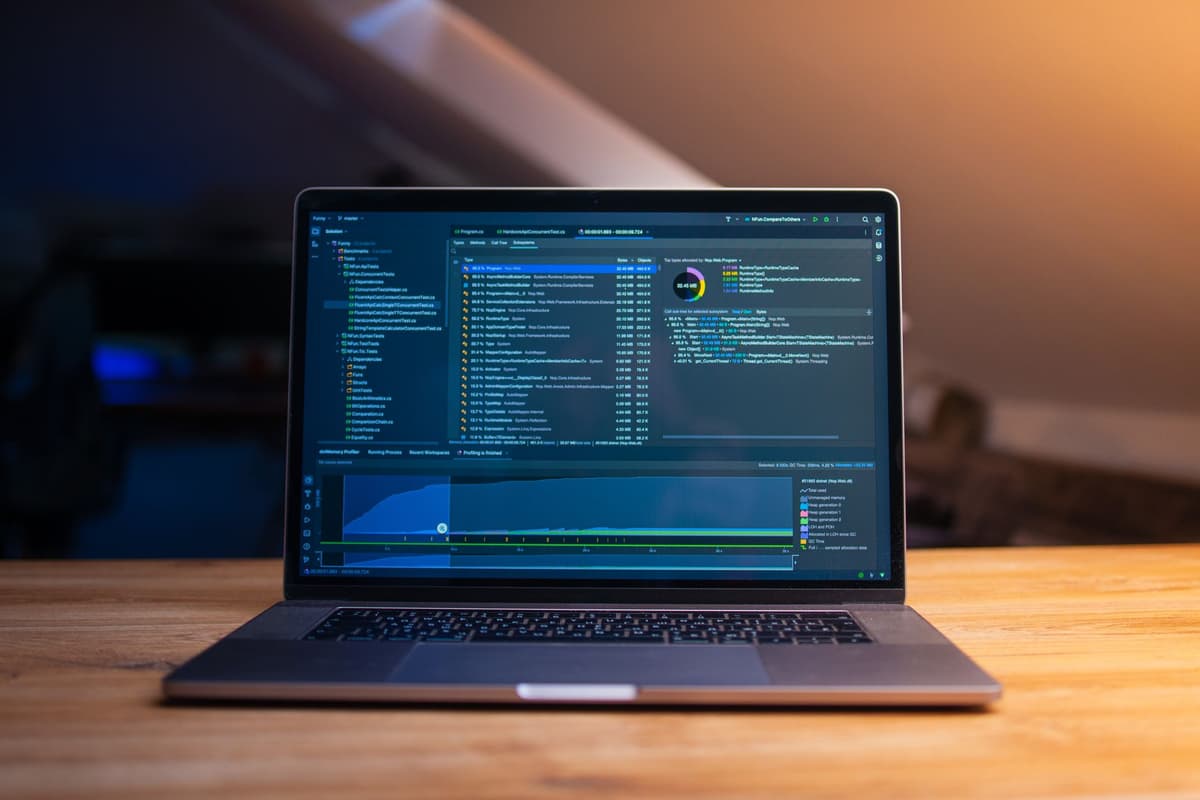
Photo by Daniil Komov on Pexels
The Multilingual Translation of Reality
What strikes me most is the multilingual angle. Mistral isn't just good at English; it’s designed to be a global polyglot. By embedding this into the browser, we are looking at a future where the language barrier on the web doesn't just get thinner—it vanishes at the source. Imagine landing on a Japanese technical forum or a French philosophy blog and having a local, private agent translate and synthesize the nuances without ever pinging a translation server.
I wonder if this will lead to a more fragmented or a more unified web. If everyone has their own private lens through which they view the world's information, do we lose a shared reality, or do we finally gain the tools to understand each other's realities without a corporate middleman taking a cut? It feels like we’re giving everyone a personal librarian who speaks every language and doesn't report to the government.
What This Actually Means
This isn't just a feature update; it’s a philosophical pivot. We are witnessing the decentralization of the most powerful technology of the 21st century. If you can run a high-performance model on a consumer-grade laptop, the moat that Big Tech has spent billions building starts to look like a puddle. The "Knowledge Layer" is being democratized and distributed, moving from a centralized utility like electricity to a localized asset like a solar panel on your roof.
I’m curious to see if users will actually care. We’ve been trained to sacrifice privacy for convenience for so long that the idea of "local AI" might feel like extra work to the average person. But for anyone who has ever felt a twinge of anxiety while typing a sensitive thought into a chatbot, this is the escape hatch. It turns the browser from a window you look through into a brain you think with.
Ultimately, this move by Mozilla and Mistral suggests that the future of AI isn't a giant brain in the sky. It’s a million little brains, tucked away in our pockets and our taskbars, working only for us. That is a much more interesting world to inhabit.
Quick Answers
Do I need a supercomputer to run this?
No, Mistral’s smaller models are specifically optimized to run on modern consumer hardware, like M-series Macs or laptops with decent dedicated GPUs.
Will this make my browser slow?
Initially, yes, it might hog some RAM, but the trade-off is that you won't have to wait for server responses or deal with "network error" messages during high traffic.
Is my data really safe?
If the model is running locally, the data stays on your machine. Unless you have malware or a compromised OS, your prompts never touch the cloud.