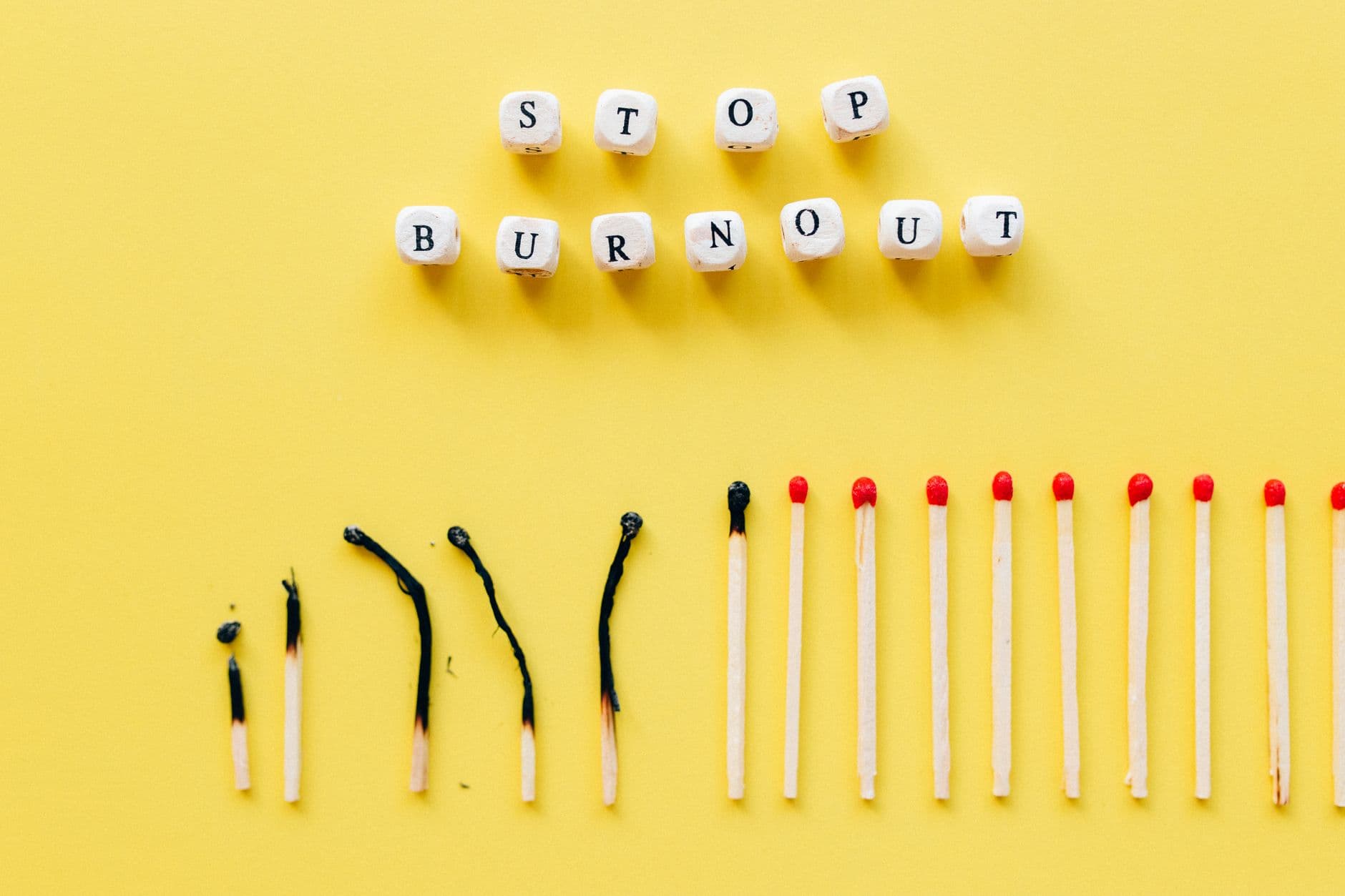
We are currently living through the Great Polishing, a period of human history where we take a finished, functional product and rub it with the sandpaper of our own anxiety until there is nothing left but dust and a very expensive therapist bill. In the world of algorithms, we call this the 'Stopping Threshold'—the point where the math decides that adding more data is just rearranging deck chairs on the Titanic. In the world of humans, we call it 'making it pop,' and it is a mental illness that suggests we can somehow reach a state of objective perfection if we just skip one more night of sleep.
There is a specific kind of madness that takes over when you’re 98% done with a project. That final 2% isn't actually work; it’s a psychological haunting. You aren't fixing the spreadsheet anymore; you are negotiating with the ghost of your third-grade teacher who once told you that your handwriting looked like a spider had a seizure on a piece of parchment. We have reached a point where 'good enough' feels like a moral failure, rather than a mathematical necessity.
The Tragedy of the 4:00 AM Kerning
Imagine you are building a birdhouse. It is a solid birdhouse. The birds are already moving in; they’ve brought their tiny bird luggage and are arguing about where the nesting material goes. But then you see it—a slight splinter on the roof. You decide to sand it. Then you decide the roof needs a slight bevel. Four hours later, you are in the garage with a microscope and a dental pick, the birds have moved to a neighbor's gutter, and you have accidentally sanded the entire structure into a very expensive pile of cedar-scented glitter.
This is the convergence trap. In mathematics, an algorithm stops when the change between iteration A and iteration B is so small it doesn't matter. Humans lack this internal sensor. We see that tiny, infinitesimal difference and think, "That’s the gap between me and God." We don't realize that the gap between us and God is actually a vast chasm of biological limitations and the fact that we need to eat a sandwich occasionally.

Photo by cottonbro studio on Pexels
Modern productivity tools are the enablers in this toxic relationship. In 1985, if you wanted to change the layout of a document, you had to physically cut paper with scissors and use glue like a kindergartner. You stopped because your hands were sticky. Now, we have infinite undos and sixteen million colors. You can spend an entire afternoon deciding if your PowerPoint slide should be 'Eggshell White' or 'Late-Stage Capitalism Beige.' It’s not productivity; it’s just a very sophisticated way of vibrating in place.
The Diminishing Returns of Being a Psycho
There is a hard mathematical reality to the 'Art of Enough' that nobody wants to hear: after a certain point, more effort actually makes the result worse. It’s like adding salt to a soup. A little makes it great. A lot makes it better. But eventually, you’re just eating a bowl of warm ocean that hurts your feelings.
- The First 80%: This is where the magic happens. You go from nothing to something. You are a god. You are Prometheus bringing fire to the mortals.
- The Next 15%: This is the professional polish. It looks slick. People will think you went to college.
- The Final 5%: This is the Danger Zone. This is where you start 'tweaking' things that worked perfectly well. You change the font to something unreadable. You add a transition effect that makes everyone in the meeting motion sick. You delete the most important paragraph because it 'felt crowded.'
We struggle to converge because we’ve been told that 'striving' is a linear path to success. It’s not. It’s a bell curve. On the far right side of that curve, past the peak of 'Actually Good,' lies a dark valley called 'Over-Optimized Garbage.' If you spend ten hours fixing a three-minute email, you haven't written a better email; you’ve just committed a very boring crime against your own lifespan.
Why Your Brain Wants to Keep Clicking
Biologically, we are wired to seek closure, but we are also wired to seek novelty. When these two instincts fight, the result is a person who spends three days color-coding a calendar they won't look at. Your brain gets a tiny hit of dopamine every time you make a 'correction,' even if that correction is objectively useless. It’s the same reason people keep pulling the lever on a slot machine; maybe this next tiny tweak will be the one that fixes my internal sense of inadequacy!

Photo by Tara Winstead on Pexels
We have replaced the 'Satisficing' mindset—the ability to be satisfied with a sufficient result—with a 'Maximizing' mindset. Maximizers are miserable. They have the best of everything, but they spent so much time choosing it that they no longer have the capacity to enjoy it. If you spend your whole life looking for the perfect 'convergence,' you’ll die in the middle of a calculation, probably while trying to decide which casket liner looks best with your skin tone.
What This Actually Means
You need to set a 'Stupid Threshold.' This is a pre-determined point where you agree to stop being a lunatic. Before you start a task, decide what 'done' looks like in cold, hard terms. If you don't, your anxiety will keep the goalposts moving until they are in a different zip code. When you hit that point, you must physically remove yourself from the vicinity of the work. Close the laptop. Walk into a bush. Do anything that prevents you from 'just checking one more thing.'
True mastery isn't the ability to make something perfect; it's the ability to know when it’s finished enough to be useful. The world doesn't need your 100% perfect, gold-plated, diamond-encrusted version of a project that was due on Tuesday. It needs the 90% version that actually exists in the physical realm.
Stop trying to converge on infinity. Infinity is a very long way away, and they don't have snacks there. Just hit send, walk away, and accept that a slightly crooked line is better than a straight line drawn by a person who has forgotten what their family looks like. Your work is a tool, not a monument to your ego. Treat it like a hammer: if it drives the nail, stop hitting it, or you’re just going to break the wall.
Quick Answers
How do I know if I'm over-polishing or just being thorough?
If you have changed the same sentence three times and ended up back where you started, you are officially in the 'Polishing a Ham' phase. Stop immediately.
Is perfectionism actually a secret strength?
No, it’s just procrastination wearing a tuxedo. It’s a way to avoid the vulnerability of being finished and judged by staying in the 'safe' zone of constant editing.
What if the result really isn't good enough yet?
Ask a neutral third party who doesn't care about your feelings. If they say "it's fine," and you feel a sudden urge to scream about 'nuance,' it’s definitely good enough.