Your Brain But Useful
It is truly a testament to human progress that we have reached a point where we need a sophisticated software suite just to remember what we read on a Tuesday afternoon. We have built a digital civilization where the average person’s knowledge is scattered across forty-two browser tabs, six cloud storage providers, and a dozen forgotten Slack channels. We’ve outsourced our memories to giant corporations who are more than happy to hold onto them, provided they can use those memories to sell us better dish soap.
Enter the "Personal Web" paradigm, spearheaded by tools like Hister. The pitch is almost hilariously retro: what if your computer actually knew what was on it? Instead of sending a search query to a data center three states away to find a PDF you downloaded twenty minutes ago, Hister creates a local index. It treats your digital footprint like a private library rather than a data mine. It’s an incredibly complex solution to the problem of us being fundamentally incapable of organizing a folder structure.
We are currently obsessed with the idea of a "Second Brain," mostly because our first ones are currently occupied with memorizing the exact cadence of a 15-second viral video. Hister wants to be that second brain, but without the part where a third party gets to watch you think. It is a high-speed, offline-first index that turns your history into a searchable database. Finally, you can find that one specific article about artisanal sourdough without accidentally telling three different advertising networks that you are in a baking phase.
The Cloud Is Just Someone Else’s Problem
For years, the tech industry convinced us that the cloud was a magical, ethereal place where data goes to live forever in blissful harmony. In reality, the cloud is just a massive, energy-hungry warehouse owned by a guy who wants to automate your job. We were told that local storage was dead, that everything should be synced, and that privacy was a small price to pay for the convenience of accessing a grocery list from three different devices.
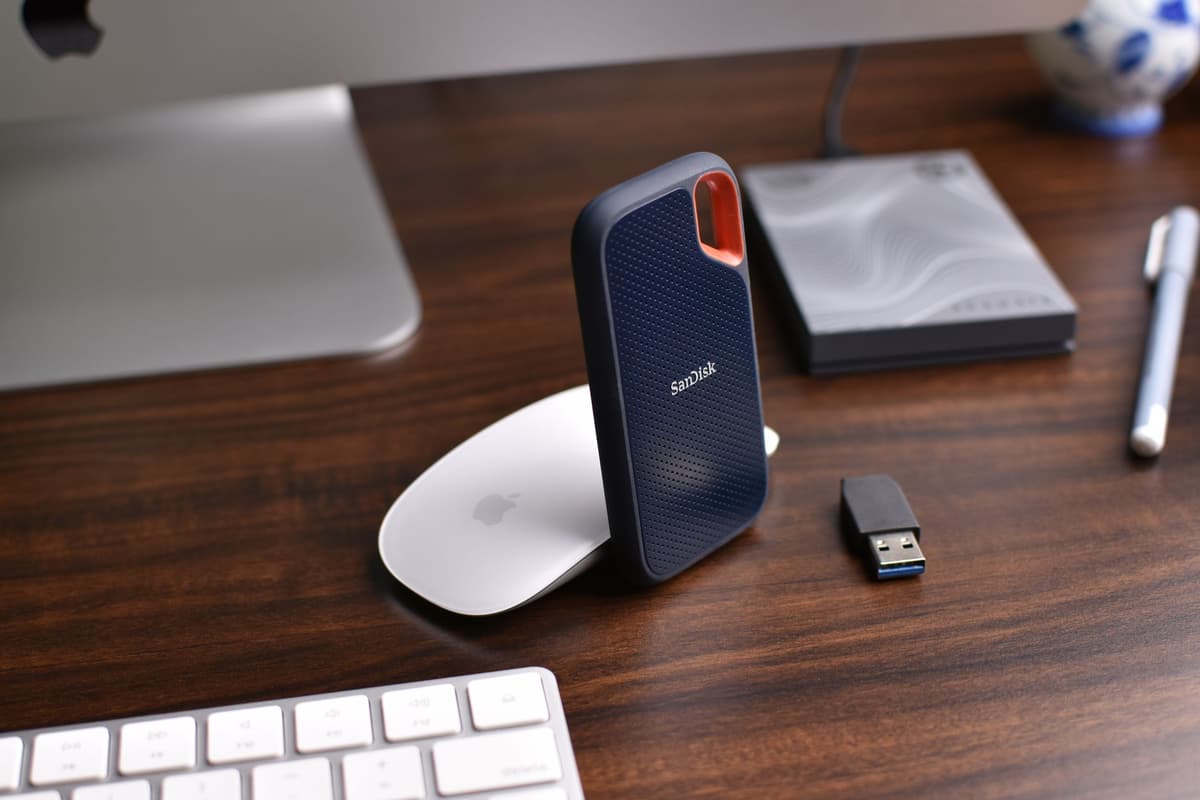
Photo by Avinash Kumar on Pexels
Now, the pendulum is swinging back with the force of a million leaked passwords. Local-first search engines are the digital equivalent of building a bunker, but for your browser history. Hister doesn't want to chat with you about your feelings or predict your next purchase; it just wants to help you find the file named "Final_v2_ACTUALLY_FINAL.pdf" before your meeting starts. It is a tool for people who have realized that "convenience" is often just a synonym for "surveillance."
- No more waiting for a spinning wheel while a server in Oregon decides if you’re allowed to see your own notes.
- Zero chance of your private research being used to train a chatbot that will eventually replace you.
- The ability to search through your files even when the Wi-Fi dies, which is usually when you actually need them.
This shift toward localized indexing is an admission of failure. We failed to keep the internet private, so now we’re just trying to keep our own mirrors of it private. It’s a bit like building a high-tech fence around your backyard because the rest of the neighborhood is currently on fire.
The Irony of the High-Speed Index
There is a certain dry humor in the fact that we need a "high-speed index" to navigate the digital hoard we’ve accumulated. Hister isn't just searching titles; it’s indexing content. It’s essentially a professional librarian for the hoarders of the 21st century. It allows you to search your entire digital existence with the kind of speed that used to be reserved for government agencies.
We’ve spent twenty years generating data at a rate that would make a Victorian diarist faint, and only now are we realizing we have no way to use any of it. Hister is the flashlight we’re using to look through the mountain of digital junk we’ve piled up in the garage. It’s efficient, it’s private, and it’s local. It’s also a sobering reminder that we have reached peak information saturation.
If you use a tool like this, you are effectively opting out of the centralized AI dream. You aren't asking an agent to "summarize the vibe" of your last six months of work. You are looking for the work itself. It’s a remarkably grounded approach in an era where everyone else is trying to sell us a generative hallucination of reality. Hister assumes that what you actually did and what you actually read is more important than what an LLM thinks you might want to see.
What This Actually Means
The rise of local-first tools like Hister signals the end of the honeymoon phase with centralized cloud AI. People are starting to realize that if an AI can help you find your files, it can also read them. By moving the index back to the user’s hardware, we are reclaiming the "Personal" in Personal Computing—a concept that has been missing since roughly 2008.
This isn't just about privacy; it's about agency. When you rely on a centralized search engine, you are seeing the world through their filters and their priorities. When you search your own local index, you are seeing your own world, unvarnished and unmonetized. It turns out that the most revolutionary thing you can do with your data in 2024 is simply keep it to yourself.
Ultimately, Hister and its ilk are tools for the disillusioned. We’ve been burned by the promise of the open web, and we’re tired of our digital lives being treated as a commodity. If the only way to have a functional memory is to build a private, localized brain on a piece of silicon I actually own, then so be it. At least I’ll be the only one who knows how many hours I spent looking at mechanical keyboard switches yesterday.
Quick Answers
Is this just a desktop search bar with extra steps?
Technically yes, but it actually works, which differentiates it from the search function built into your operating system that usually just suggests a Bing search for a file sitting on your desktop.
Does this mean I have to manage my own backups again?
Yes, welcome back to the terrifying reality of being responsible for your own data, where "oops, I dropped it" means your digital soul is gone forever.
Will this make me more productive?
It will make you faster at finding things, but it cannot stop you from spending four hours reading Wikipedia entries about 14th-century siege engines instead of working.