
The GitHub of the Frontlines
There is something fundamentally strange about the phrase "open-source weapon protocol." Usually, when we talk about open source, we’re talking about hobbyists building better weather apps or developers sharing a more efficient way to sort a database. But Rheinmetall—a German defense giant that has been around since 1889—is taking that collaborative philosophy and applying it to the way tanks, drones, and sensors talk to each other. It’s an invitation to a party where everyone brings their own hardware, but they all speak the same language.
I find myself wondering if this is the moment defense tech finally catches up to the way the rest of the world works. For decades, the military-industrial complex has been built on proprietary silos. If you bought a Boeing jet, you bought Boeing software, Boeing parts, and Boeing sensors. It was a closed loop. Now, Rheinmetall is suggesting a world where a startup in Estonia can write an algorithm for a drone that plugs directly into a German Leopard tank’s targeting system without needing a five-year integration contract.
It feels like the transition from the era of the mainframe to the era of the internet. We are moving away from the "black box" model of warfare and toward something much more fluid and, frankly, unpredictable. If the protocol is open, the speed of innovation doesn't depend on the prime contractor anymore; it depends on anyone with a keyboard and a clever idea for sensor fusion.
Breaking the Golden Handcuffs
Legacy vendor lock-in has been the bedrock of defense procurement for sixty years. It’s the reason the F-35 program costs $1.7 trillion over its lifetime—once you’re in, you can’t leave because the software belongs to the company, not the government. By open-sourcing the Battlesuite protocol, Rheinmetall is effectively saying they don't want to own the ecosystem; they want to be the platform everyone else builds on.
- It lowers the barrier to entry for non-traditional tech companies to enter the defense space.
- It allows for rapid battlefield repairs through software patches rather than hardware overhauls.
- It shifts the value from the physical "hulk" of a vehicle to the intelligence of the mesh network it lives in.
I’m curious if this is a genuine move toward transparency or a brilliant strategic play to become the industry standard. If every drone manufacturer starts using Rheinmetall’s protocol because it’s free and easy, then Rheinmetall becomes the gatekeeper of the global battlefield's data layer. It’s the Amazon Web Services model applied to kinetic conflict. You don't need to win every contract if you own the pipes the contracts flow through.
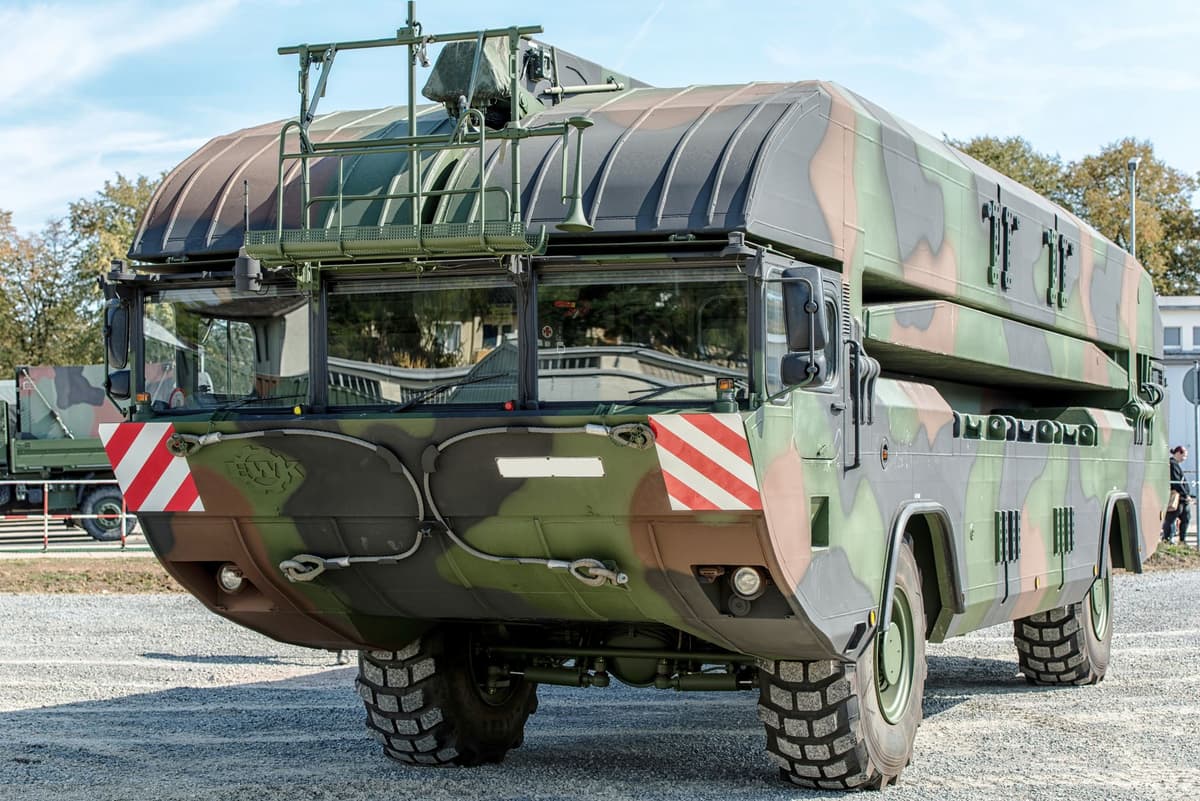
Photo by Wolfgang Weiser on Pexels
The Algorithmic Accountability Gap
This is where my curiosity turns into a bit of a cold sweat. If the protocol is open, and the ecosystem is decentralized, who is actually responsible when an autonomous system makes a mistake? In the old world, you could point to a specific company and a specific contract. In a decentralized, open-source mesh, a targeting decision might be the result of three different algorithms from three different companies running on a fourth company’s hardware.
I keep thinking about the concept of "code sprawl" in civilian software. We see it all the time: a minor library in a piece of software breaks, and suddenly half the internet goes down because everyone was using the same open-source component. Now imagine that happening in a high-intensity conflict. If there’s a bug in the open-source communication protocol, does the entire front line lose the ability to distinguish friend from foe?
We are essentially crowdsourcing the evolution of lethality. On one hand, that leads to incredible resilience—if one node is destroyed, the rest of the mesh adapts. On the other hand, it creates a transparency paradox. The code is open for everyone to see, but the emergent behavior of thousands of interconnected systems becomes impossible to predict or audit. We’re building a hive mind, and I'm not sure anyone has checked if it has a conscience.
What This Actually Means
We are witnessing the "civilianization" of military software. The walls between Silicon Valley and the Department of Defense (or the Bundeswehr) aren't just thinning; they are being replaced by common APIs. This shift toward decentralized, open protocols means that the next great leap in military power won't come from a bigger engine or a thicker plate of armor, but from the ability to iterate on code faster than the opponent.
It also means that the very nature of national security is changing. When the tools of war are built on open standards, the advantage lies with the side that has the most vibrant developer ecosystem, not just the biggest factory. It turns warfare into a giant, high-stakes hackathon.
Ultimately, Rheinmetall's move tells us that the future of the battlefield isn't a collection of independent machines, but a single, giant, distributed computer. We are just beginning to figure out what happens when that computer is given the permission to pull the trigger.
Quick Answers
Is this like Linux for tanks?
In a way, yes—it provides a common language (protocol) so that different pieces of hardware and software can work together without needing special permission from the manufacturer.
Does this make war more dangerous?
It makes it faster and more efficient, which usually translates to more dangerous, especially since it allows for much larger swarms of autonomous machines to coordinate.
Who is responsible if an open-source weapon fails?
That is the billion-dollar question; the legal framework for "decentralized responsibility" in warfare currently doesn't exist, and this technology is moving much faster than the law.


