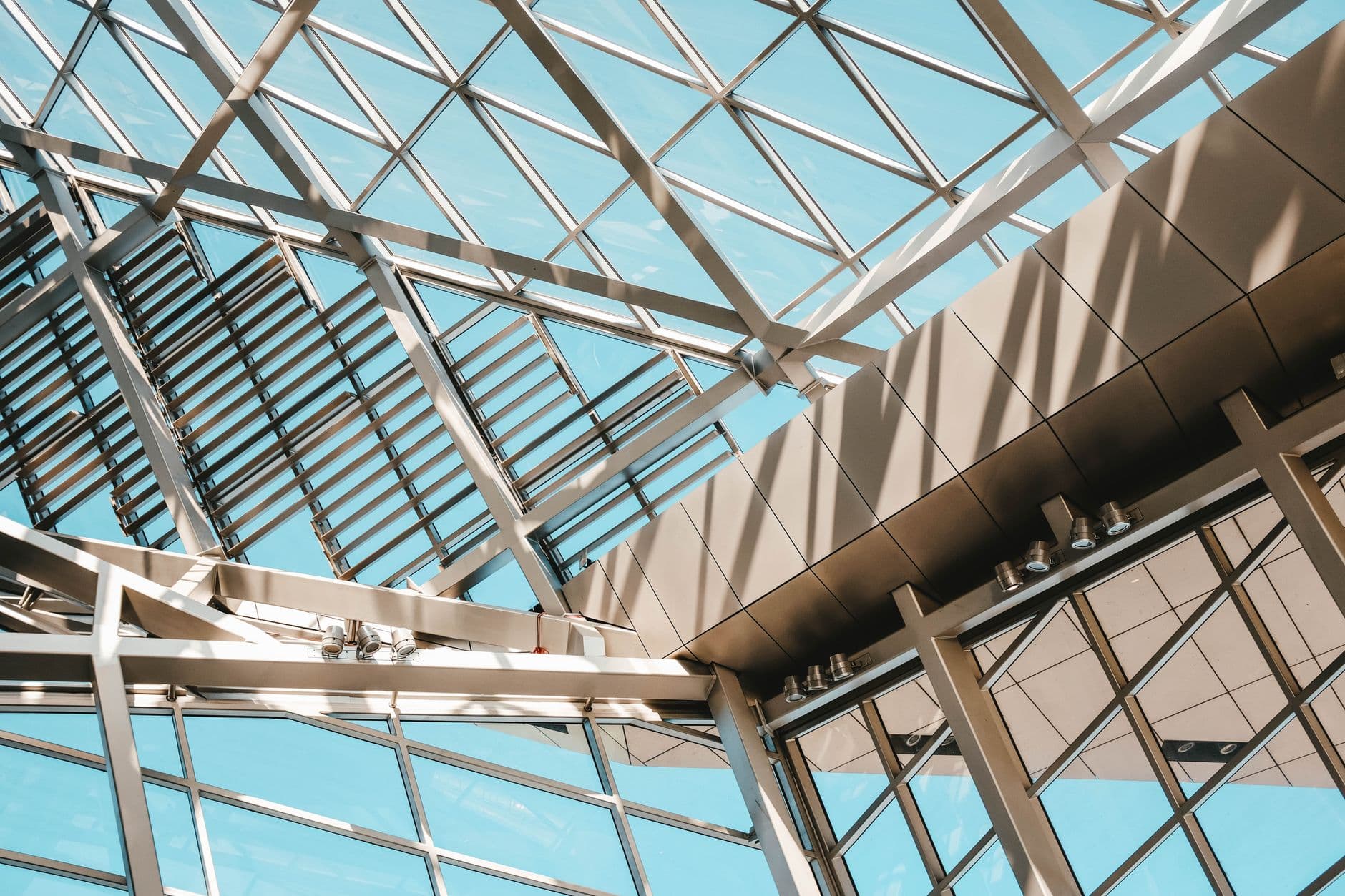
Architects spent centuries cultivating a very specific, highly lucrative romance. You wore bespoke tortoiseshell spectacles, made sweeping gestures over linen paper, and mumbled about how light negotiates space with concrete. That entire velvet-scarf performance is dead. The drafting board didn't just digitize into a viewport; it vanished into a command-line terminal.
Now an autonomous agent is writing parameterized scripts to generate entire city blocks. We have successfully taken the centuries-old, tactile art of structural composition and transformed it into a software deployment pipeline that fails with a stack trace because a stair riser violated local municipal egress requirements by three millimeters.
Goodbye, Drafting Pens. Hello, Traceback Errors.
If you want to observe modern architectural theory in its natural habitat, do not look at the Venice Biennale. Look at headless agents trying to decide between OpenSCAD and CadQuery to spit out a multi-family residential complex.
OpenSCAD is the grumpy, austere grandfather of code-first geometry. It uses a bespoke, declarative domain-specific language designed around constructive solid geometry. You union a cube, difference out a cylinder, and pray your boolean tree doesn't choke on non-manifold geometry. It is mathematically pure, violently deterministic, and entirely indifferent to whether a human ever enjoys inhabiting the space. When you hand an LLM an OpenSCAD prompt, it behaves like an overly obedient civil servant. It cuts clean holes, aligns rigid bounding boxes, and constructs a civic center that looks suspiciously like a discarded heat sink from an industrial router.
CadQuery, on the other hand, wraps the Open CASCADE boundary representation kernel in fluent, object-oriented Python. This is the sophisticated, corporate choice for the modern automation pipeline. Instead of clunky CSG subtractions, CadQuery lets an agent select a face, sketch a polygon, loft it across a spine, and apply fillets until the resulting structural column looks aerodynamic enough to fly to the moon.
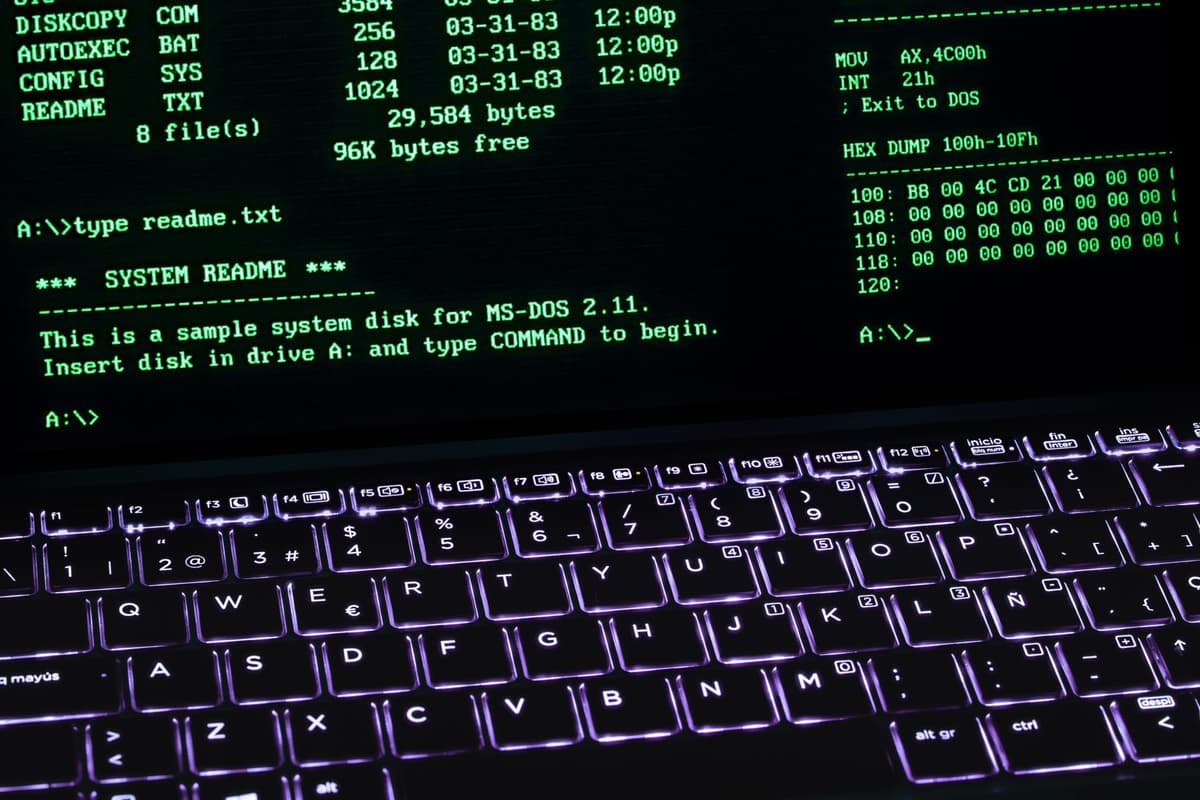
Photo by Rafael Minguet Delgado on Pexels
CadQuery gives your AI agent the exact vocabulary of mechanical engineering: workplanes, wires, solids, and parametric selectors. An autonomous model can query a facade by its normal vector, inject fifty structural mullions along a parameterized spline, and push the commit directly to a Git repository before a senior associate at a legacy firm has even opened their second copy of Revit. It turns a hospital wing into an object with methods and inheritance. You do not design a corridor anymore; you instantiate an instance of CirculationCorridor() and pass local fire egress codes as keyword arguments.
The Efficiency Trap of Programmatic Urbanism
Naturally, the property developers are salivating. Global urban architecture is an asset class worth over $250 trillion, and historically, human draftsmen have been an infuriatingly slow bottleneck in converting capital into rentable drywall. Humans want to deliberate over contextual brickwork and the subtle poetry of an entrance pavilion. They waste weeks on shadow studies that could easily be calculated in three hundred milliseconds by an API call.
In the new programmatic paradigm, urban design is treated exactly like an optimization problem in logistics:
- The site perimeter is parsed as a geoJSON polygon fetched from city records.
- The client defines their objective function: maximize leasable square footage while keeping structural steel requirements below a fixed budget ceiling.
- An agent executes a genetic algorithm across an OpenSCAD or CadQuery pipeline, generating 10,000 viable floor plans in the time it takes an intern to brew an espresso.
- The optimizer selects Variant #7,419 because it manages to pack an additional three studio apartments directly adjacent to the elevator shaft without technically violating acoustic regulations.
It is ruthlessly, terrifyingly efficient. We have removed the human hand, which means we have eliminated human doubt, human hesitation, and the occasional spark of human genius that makes a building something other than a high-density vertical filing cabinet for workers.
The High Cost of Compiling the Built Environment
There is a slight hitch that our code-first evangelists politely ignore: software paradigms make terrible metaphors for physical masonry. When code has an edge case, you push a hotfix on Tuesday. When an agent-driven parametric script makes an unhandled geometric assumption on a foundation pour, a $40 million slab of cured concrete has to be jackhammered out of the earth by people in hi-vis vests.
OpenSCAD fails reliably when models scale in complexity, grinding to a halt on complex boundary evaluations because it renders everything via polygon meshes. CadQuery handles boundary curves beautifully right up until the underlying geometric kernel experiences a topology naming issue—the classic CAD catastrophe where an upstream parameter change silently swaps Edge 4 with Edge 17, turning an elegant roof overhang into an inward-facing spike that impales the mechanical penthouse.
Watching an automated pipeline compile an apartment block is like watching an automated trading desk handle your life savings. It is undeniably fast, shockingly comprehensive, and entirely detached from the lived reality of what happens when the trade executes. When buildings are compiled rather than drawn, the built environment ceases to reflect culture. It reflects compiler optimization flags.
What This Actually Means
The drafting board is not coming back. No firm is going to pay a team of six junior designers $85,000 a year to manually model stairwells in a GUI when a Python daemon running headless CadQuery can compile a fully compliant core in forty-five seconds.
What this actually means is that our cities are about to undergo their third great aesthetic flattening. The first flattening was industrial steel, which made everything an orthogonal box. The second was visual CAD software, which gave us the glass-curtain monotony of the late 1990s. The third, currently underway, will be the algorithmic aesthetic: cities shaped entirely by the quirks, limits, and topological compromises of geometric libraries.
You will walk down the street in 2035 and you will not see the vision of an architect. You will see the default parametric tolerances of an open-source geometry engine executing the shortest path to an occupancy permit.
Quick Answers
Why not just use traditional visual CAD tools like Revit or Rhino?
Because visual tools require human eyeballs and mouse clicks, which are slow, expensive, and introduce unpredictable payroll expenses. Programmatic tools allow autonomous models to spin up thousands of structural variants simultaneously via headless batch processes.
Which tool actually wins the agentic CAD benchmark?
CadQuery wins on engineering capability because its boundary representation kernel understands real architectural topology like fillets, faces, and solids. OpenSCAD wins on brute-force reliability because simple constructive solid geometry rarely suffers from corrupted topological graphs, even if the resulting buildings look like Soviet industrial barracks.
Does this mean human architects are entirely obsolete?
Not entirely. Someone still needs to wear the black turtleneck, take the real estate developer to an expensive dinner, and click the approve button on the pull request.


