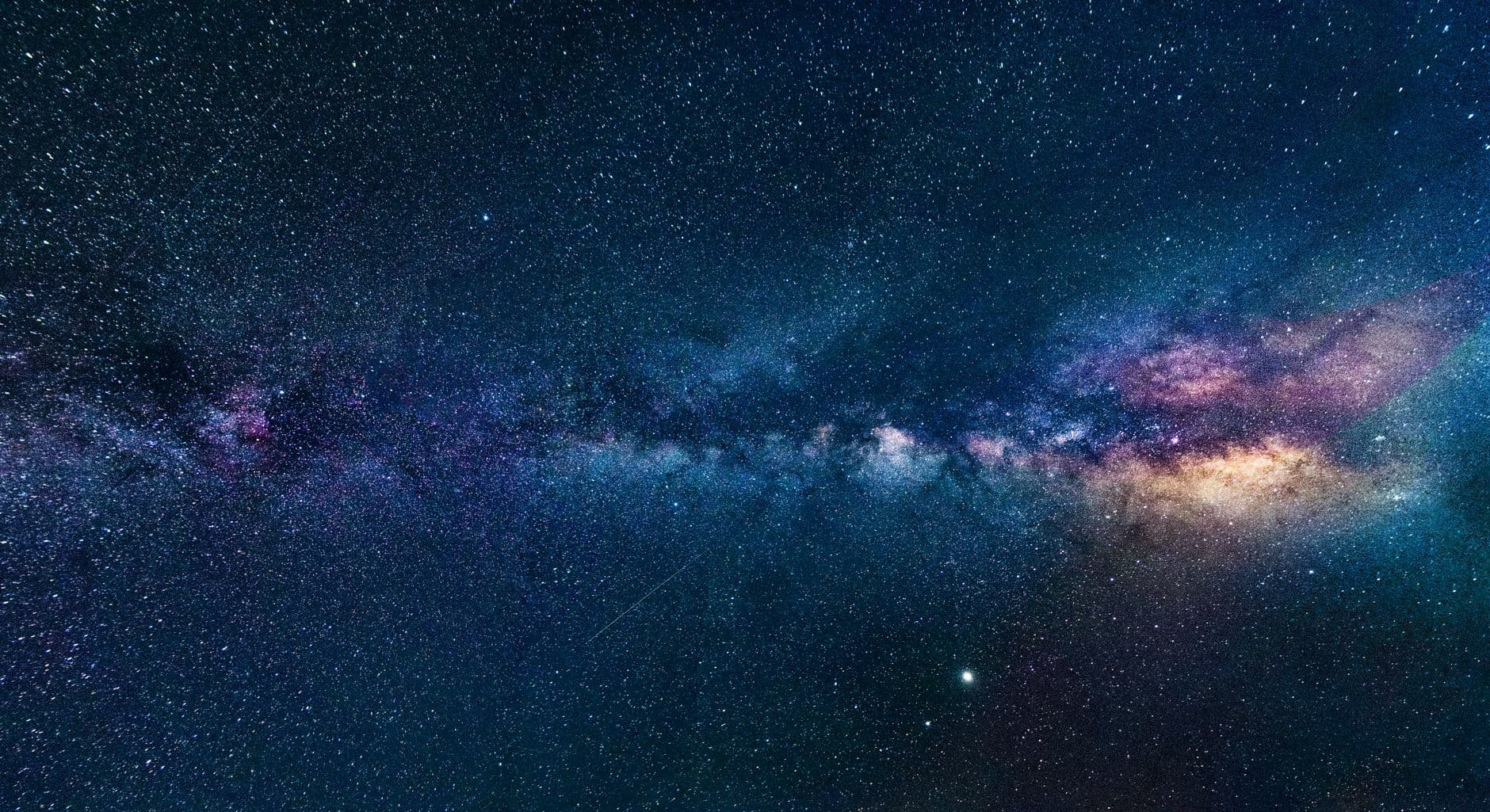
A Blink in the Dark
There is a specific kind of humility that comes with realizing the universe is operating on a clock we can't even read yet. Astronomers just pinpointed ultra-fast radio bursts originating from deep within stellar nurseries—those violent, beautiful clouds of gas where stars are born—and the timing is staggering. These pulses last for a fraction of a millisecond. To put that in perspective, a human blink takes about 100 to 400 milliseconds. We are trying to catch a whisper that finishes before we’ve even realized the silence was broken.
What haunts me about this discovery isn't just the sheer speed; it's the location. Stellar nurseries are messy, dense, and loud. Finding a millisecond-scale signal in that structural chaos is like trying to hear a specific needle drop in the middle of a hurricane. It suggests that the most formative moments of stellar birth might be governed by physics that happens in the gaps between our frames of data. We aren't just looking for needles in haystacks anymore; we're looking for ghosts in the static.
The Latency of Being Human
The real crisis here isn't astronomical—it's architectural. When a telescope in the middle of the desert picks up one of these transients, the data has to travel through fiber optics, hit a server, undergo processing, and eventually ping a researcher’s phone. By the time that scientist reaches for their coffee, the event is millions of miles 'past.' We are living in a laggy simulation of reality. The latency of our global data pipelines is currently so high that we are essentially historians of the immediate past rather than observers of the present.
To solve this, observatories are now deploying autonomous on-edge AI models. These aren't just filters; they are digital scouts with the authority to hijack a multi-million dollar telescope. If the AI detects the start of a burst, it triggers follow-up observations in real-time, pivoting the lens before a human even gets the Slack notification. We have reached a point where the universe is so fast we have to let the machines do the 'wondering' for us because our biology is too slow to keep up with the shutter speed of the cosmos.
Photo by panumas nikhomkhai on Pexels
Outsourcing the First Look
I find myself wondering what we lose when we aren't the first ones to see. For centuries, astronomy was about the eye to the glass—a direct, albeit distant, connection to the infinite. Now, the 'first look' belongs to a localized neural network running on a GPU at the base of a satellite dish. The machine decides what is interesting enough to save and what is just noise to be discarded. It’s a necessary trade-off, but it changes the nature of discovery from a moment of visual awe to a process of data retrieval.
There’s a strange beauty in these stellar nurseries being the source. We used to think of them as slow, majestic cradles. Now we see they are frantic, high-energy environments popping off signals like cosmic strobe lights. If these bursts are linked to the birth of magnetars or the collapse of young stars, we are watching the most violent transitions in nature happen at speeds that defy our traditional methods of recording. We are essentially building a nervous system for the planet that reacts faster than its brain.
The Ghost in the Pipeline
If we keep shortening the loop between detection and action, where does it end? Eventually, we’ll have a global network of telescopes that talk to each other in a closed loop, pivoting and zooming across the sky in a frantic dance of automated curiosity. We will wake up in the morning to a curated list of 'The Most Interesting Things That Happened While You Were Too Slow To Care.' It’s efficient, yes, but it feels like we’re becoming spectators to a conversation the universe is having with our hardware.
I’m curious about the things the AI might be programmed to ignore. In our rush to catch the millisecond bursts, are we tuning our algorithms so tightly that we miss the signals that don't fit the 'fast' or 'slow' categories? We are training our digital eyes to look for specific patterns, but the most profound discoveries in history usually came from someone looking at a smudge and saying, "That shouldn't be there." A machine might just call that smudge a processing error and delete it to save bandwidth.
What This Actually Means
This shift toward autonomous, on-edge observation is the end of 'Manual Astronomy.' We are moving into an era of Sub-Second Science. The $10 billion James Webb Space Telescope was a triumph of engineering, but the next leap isn't about bigger mirrors; it's about faster logic. We need to be able to process petabytes of data at the source because the speed of light—and the speed of our own networks—is no longer fast enough to capture the story the universe is trying to tell.
Ultimately, these ultra-fast radio bursts are a reminder that the universe doesn't care about our frame rate. It is happening all at once, at every scale, from the billion-year crawl of galaxies to the microsecond pop of a dying star. We are finally building the tools to see the fast stuff, even if it means admitting that, for the first time in history, we aren't the ones doing the looking.
Quick Answers
What are these 'stellar nurseries'?
They are massive clouds of gas and dust, like the Orion Nebula, where gravity pulls material together to form new stars and planetary systems.
Why can't humans just watch the data feeds?
These signals last less than a thousandth of a second; by the time the data is rendered on a screen, the event is long over and the 'afterglow' has vanished.
Is the AI making discoveries on its own?
Not exactly—it's programmed to recognize specific signatures and trigger a 're-aim' of other telescopes to catch the event in better detail while it's still happening.
Why does 'on-edge' matter?
Processing data 'at the edge' (at the telescope itself) removes the seconds-long delay of sending data to a central cloud server, which is the difference between seeing the burst and missing it entirely.


